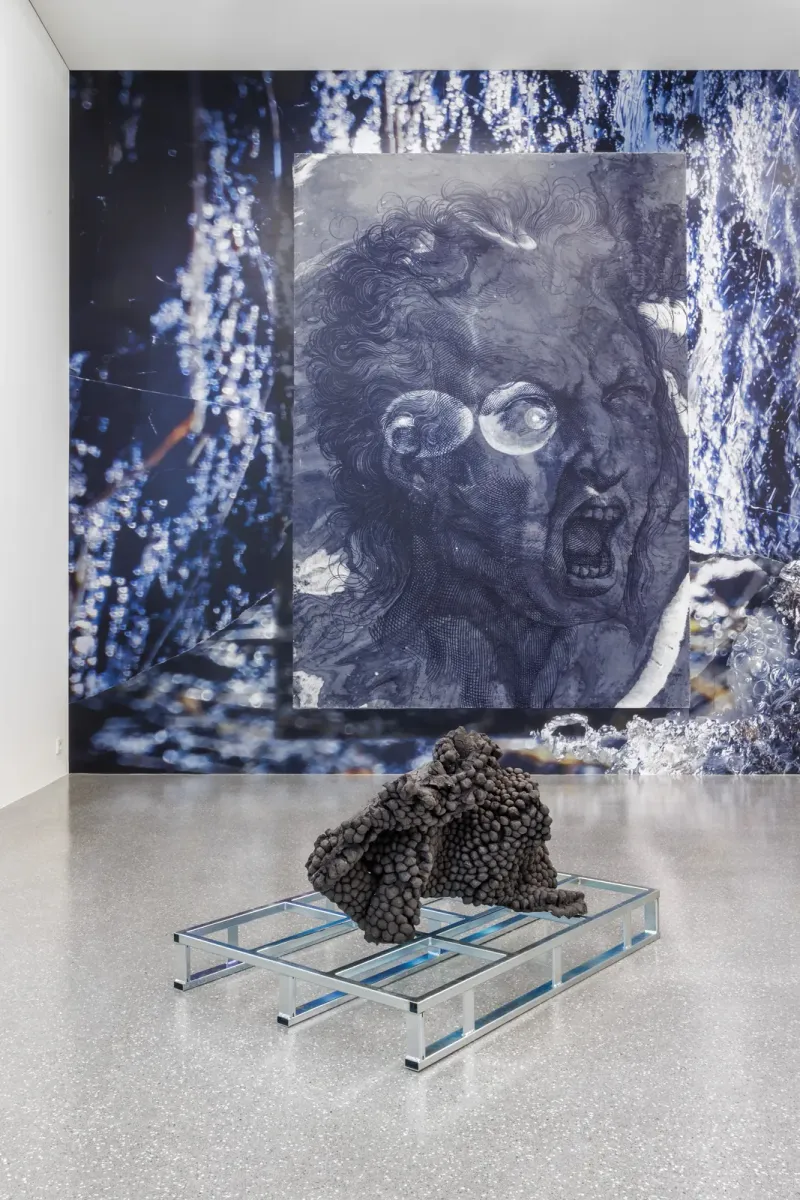
Klaus in Vorarlberg / 2026
Der Kopf ist rund, damit das Denken die Richtung wechseln kannGalerie Brugger
Klaus in Vorarlberg / 2026
Der Kopf ist rund, damit das Denken die Richtung wechseln kannGalerie Brugger
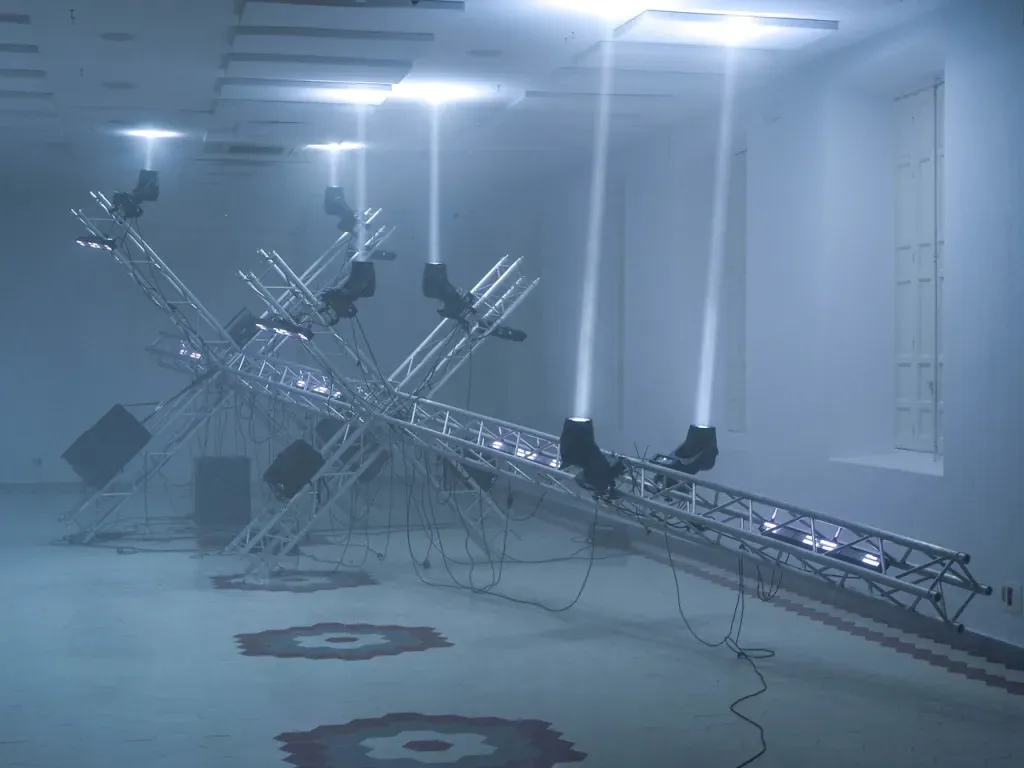
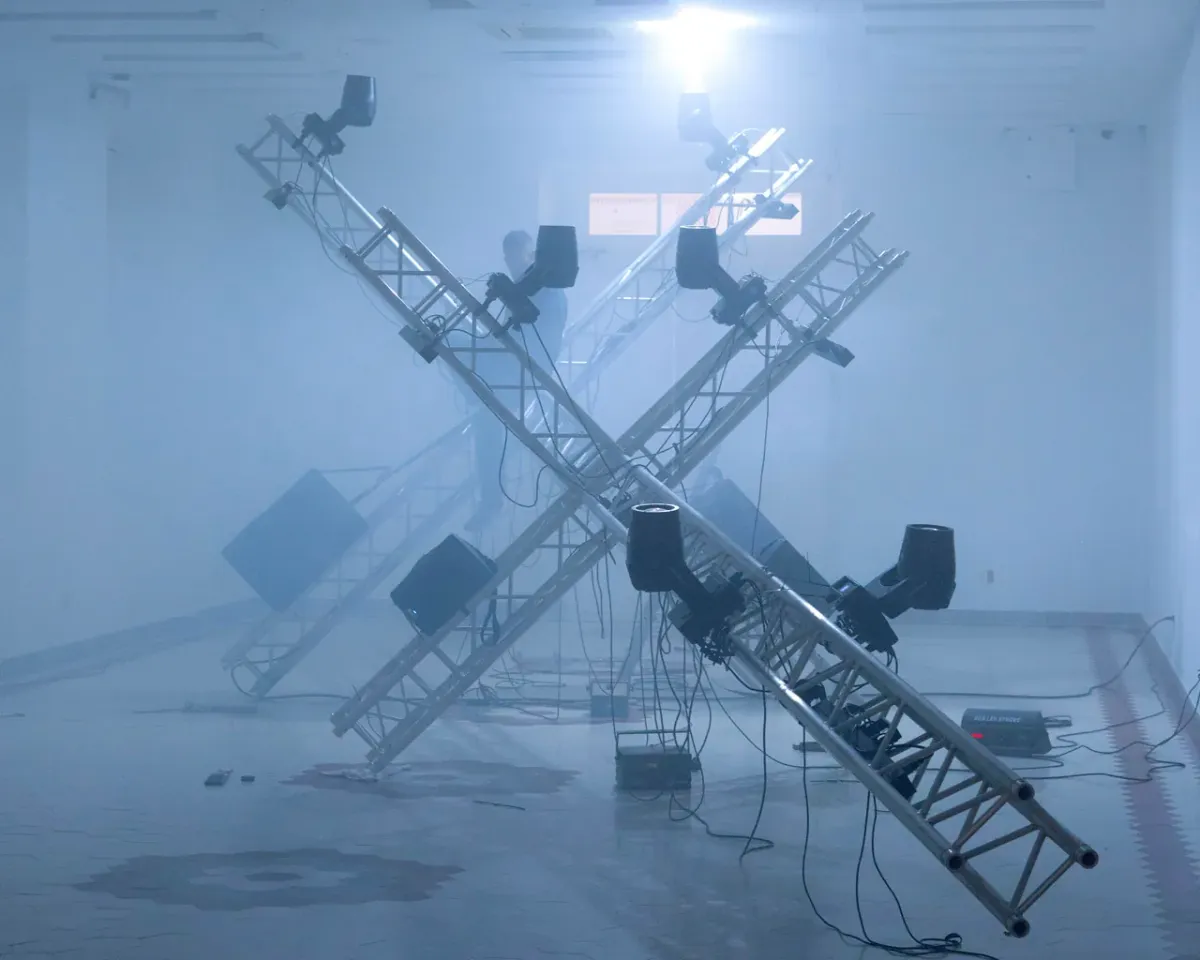
May 22 — June 01, 2026
Leo Pum @La Térmica, Málaga KRVCE festival

Everything you need to plan, apply, and move your art career forward.
Seoul / 2026
Białystok / 2026
Napoli / 2026
Köln / 2026
Kraków / 2026
Porto / 2026
Stockholm / 2026
Seoul / 2026
Helsinki / 2026
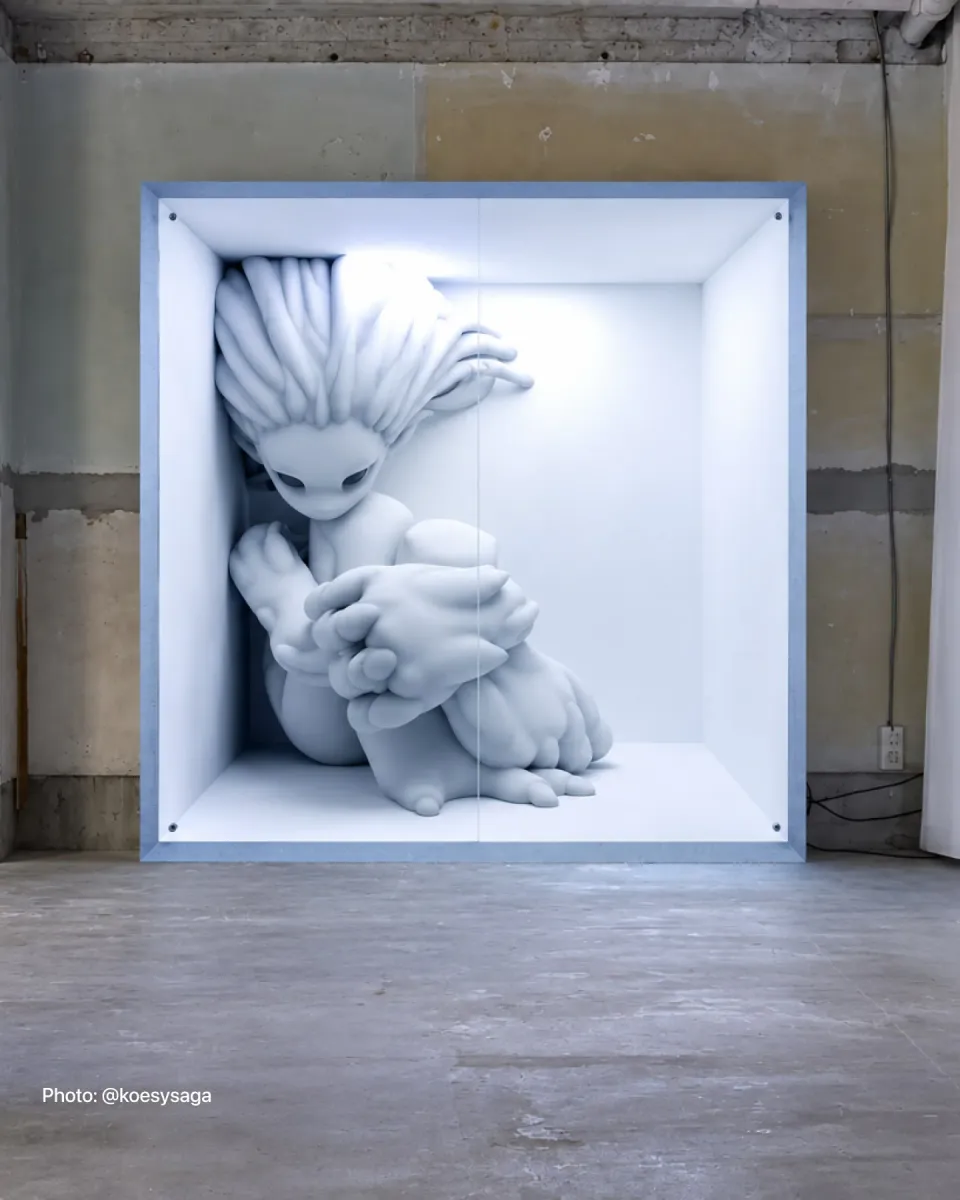
@koesysaga
/ 2026
Olomouc / 2026
Prague / 2026
Vilnius District Municipality / 2026
Słupsk / 2026
Poznań / 2026
Poznań / 2026

Brussels / 2026

Berlin / 2026


Istanbul / 2026
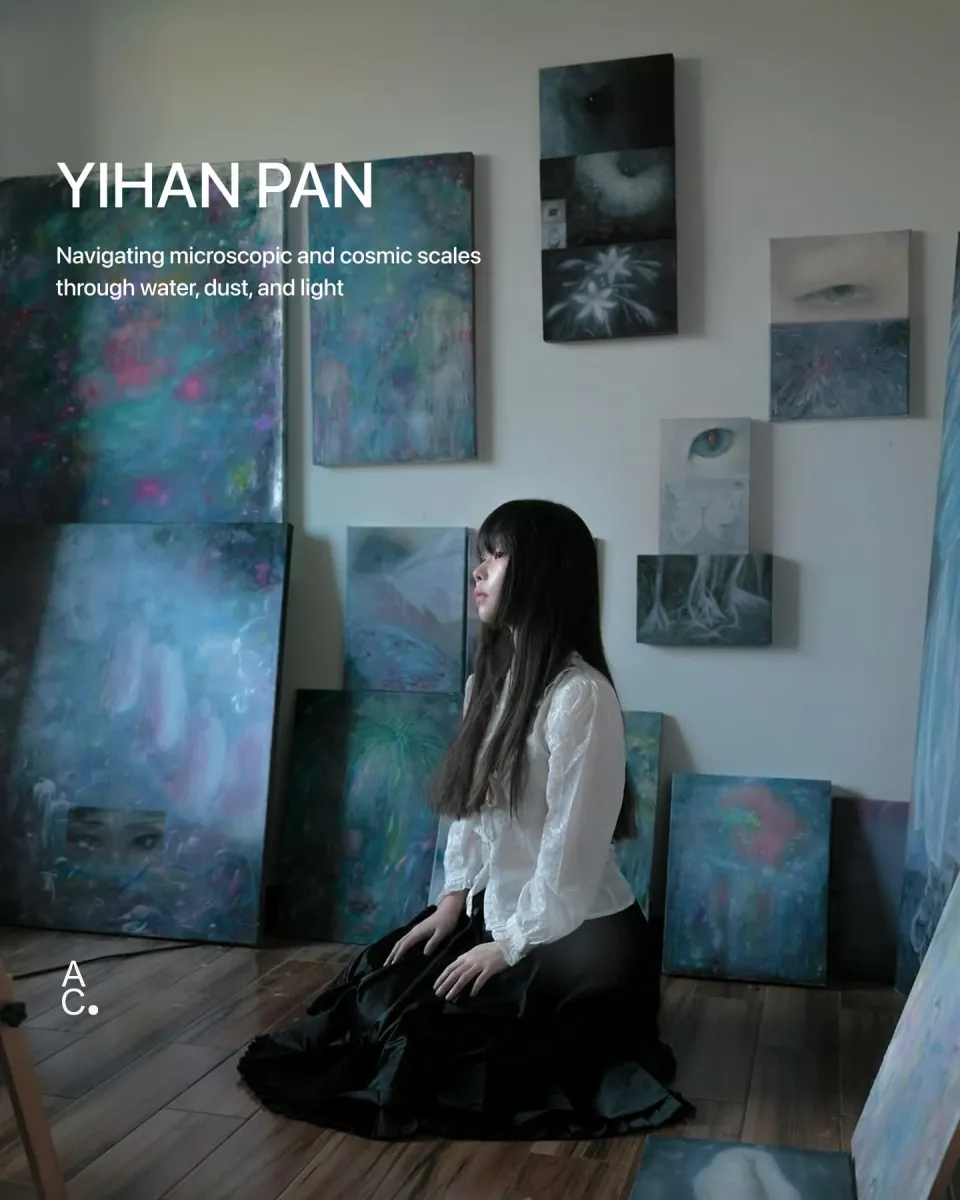
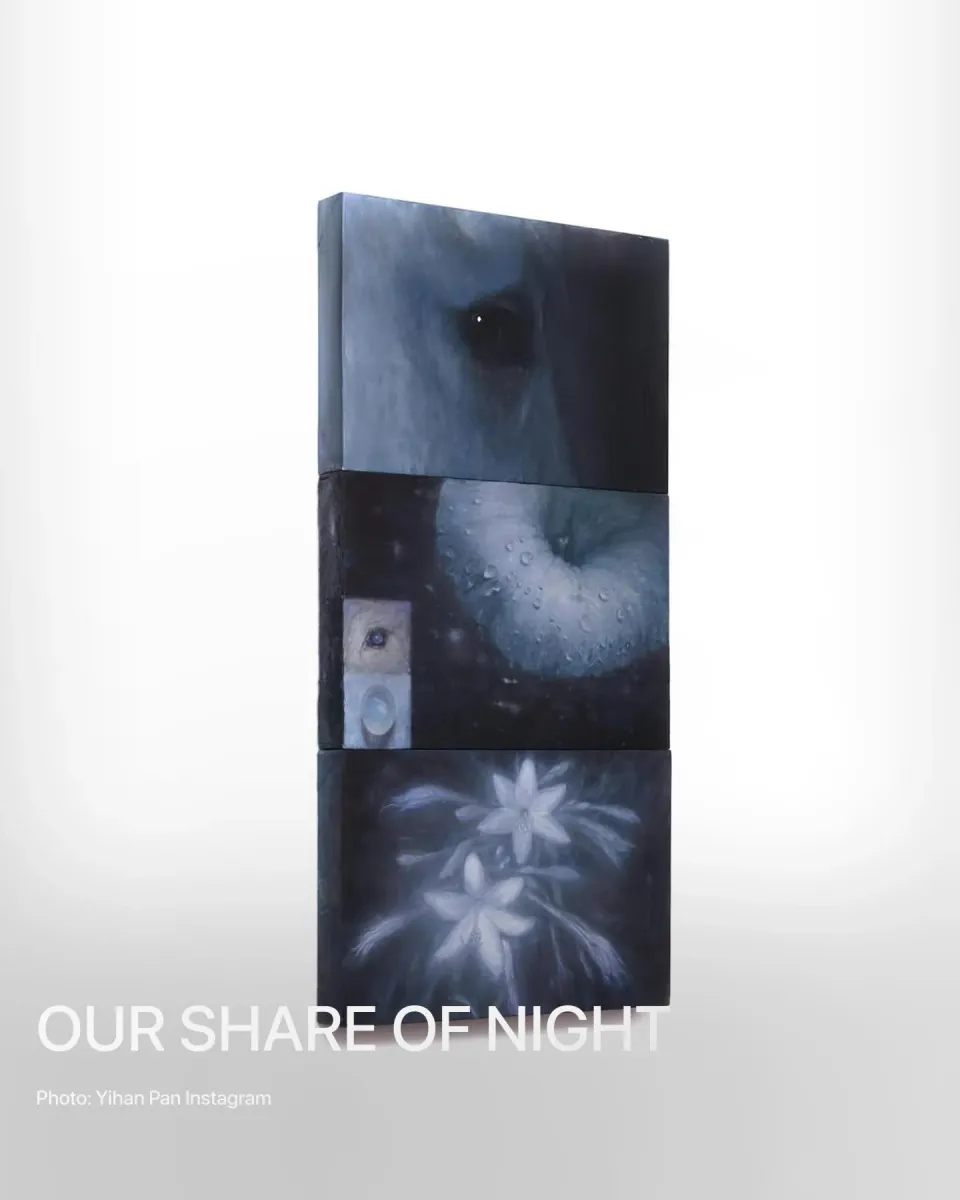
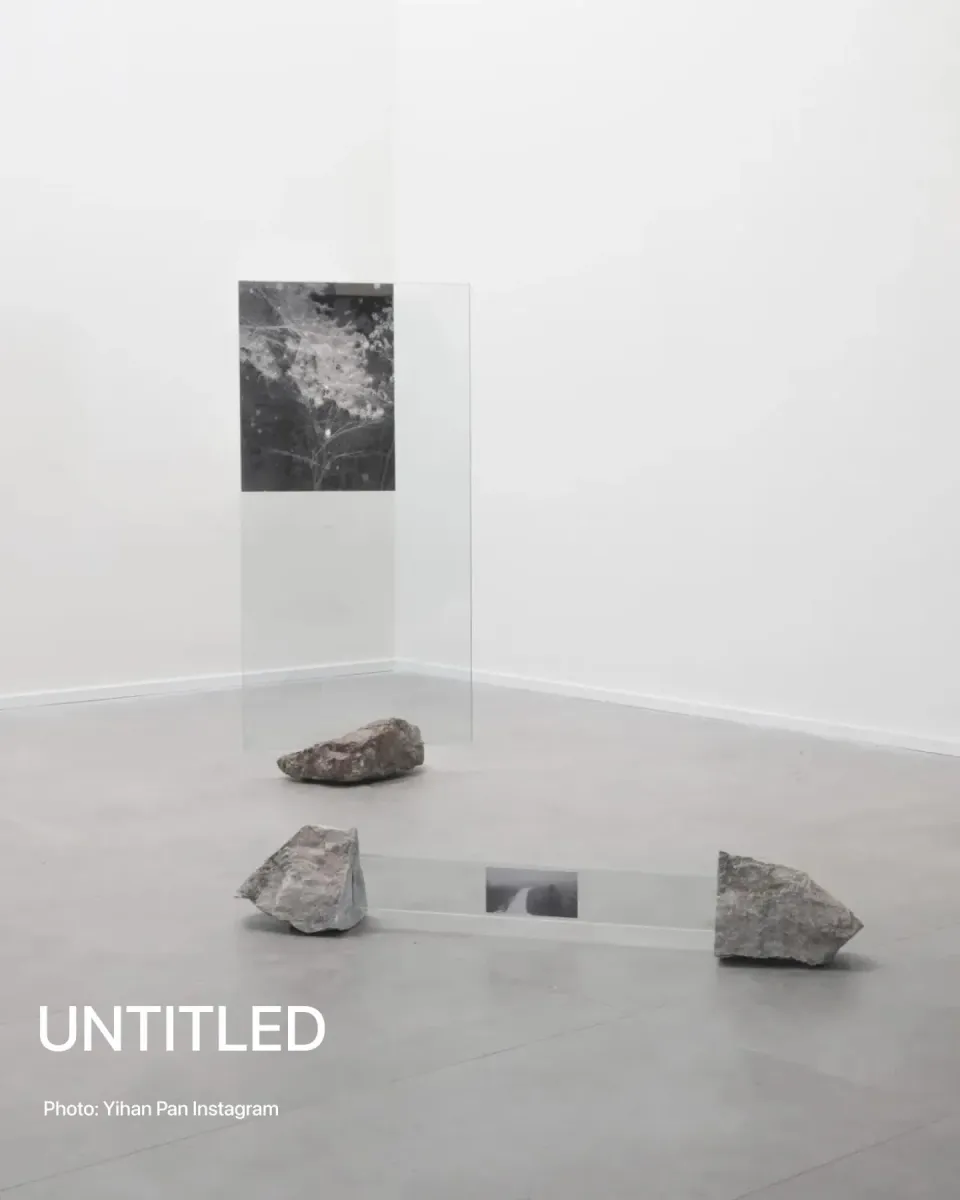
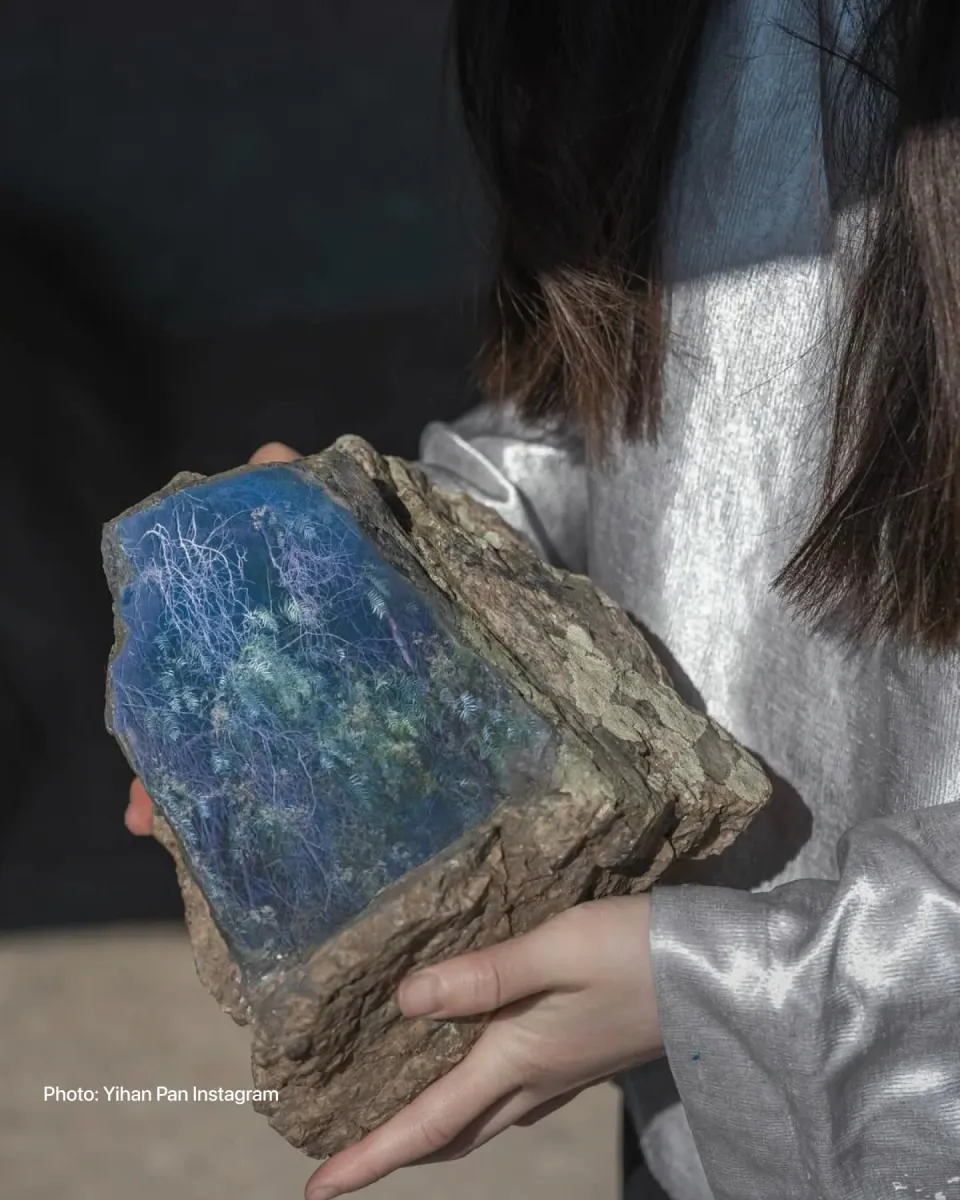
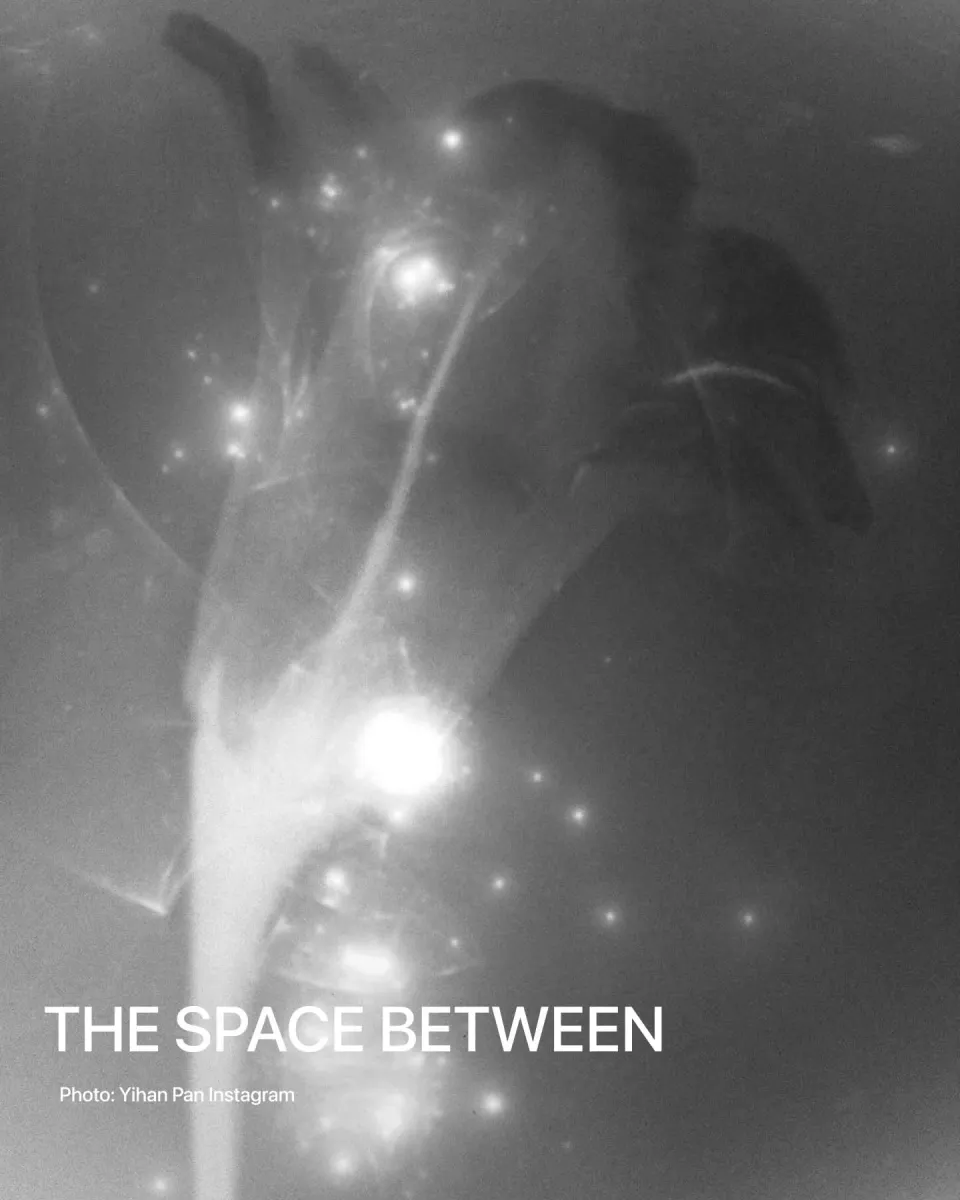
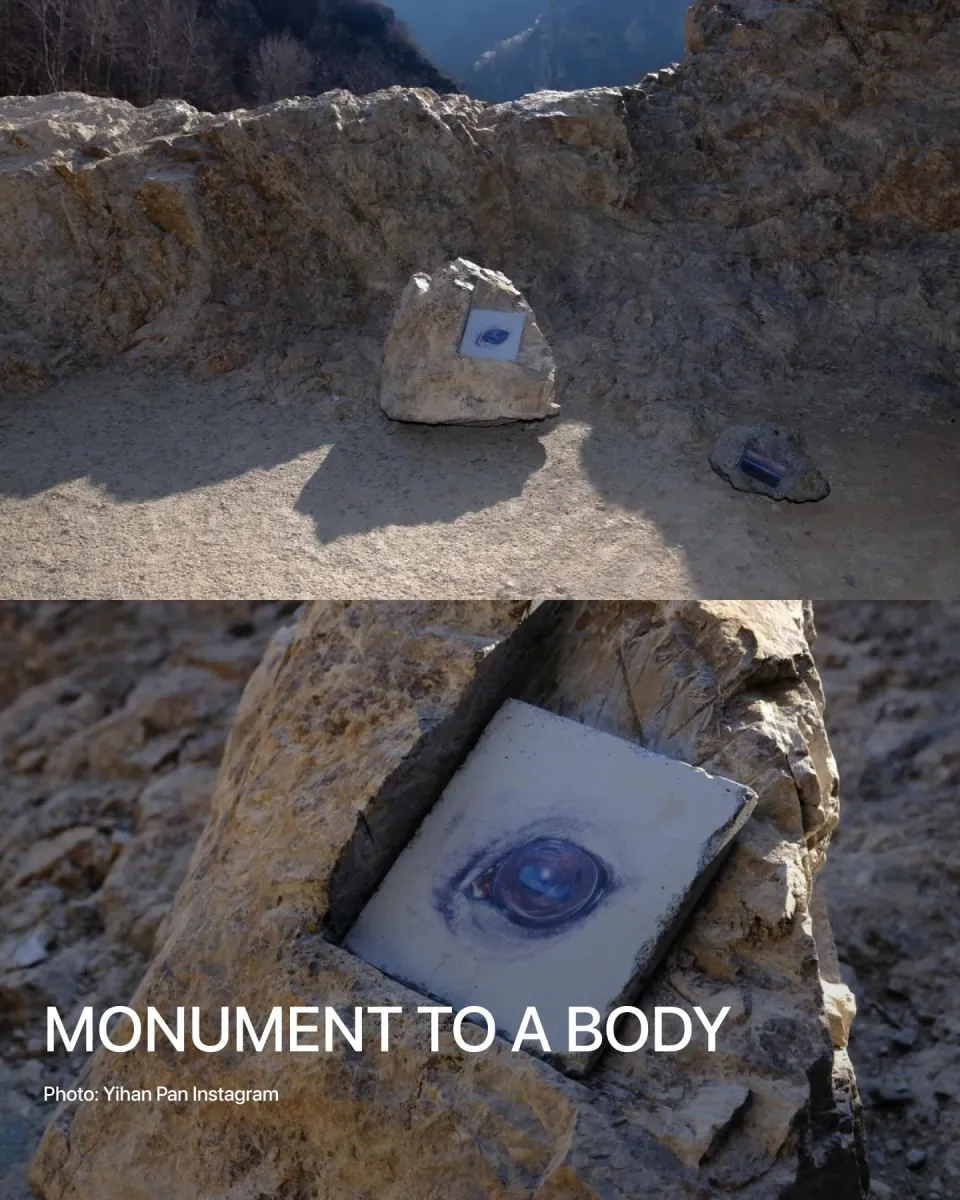
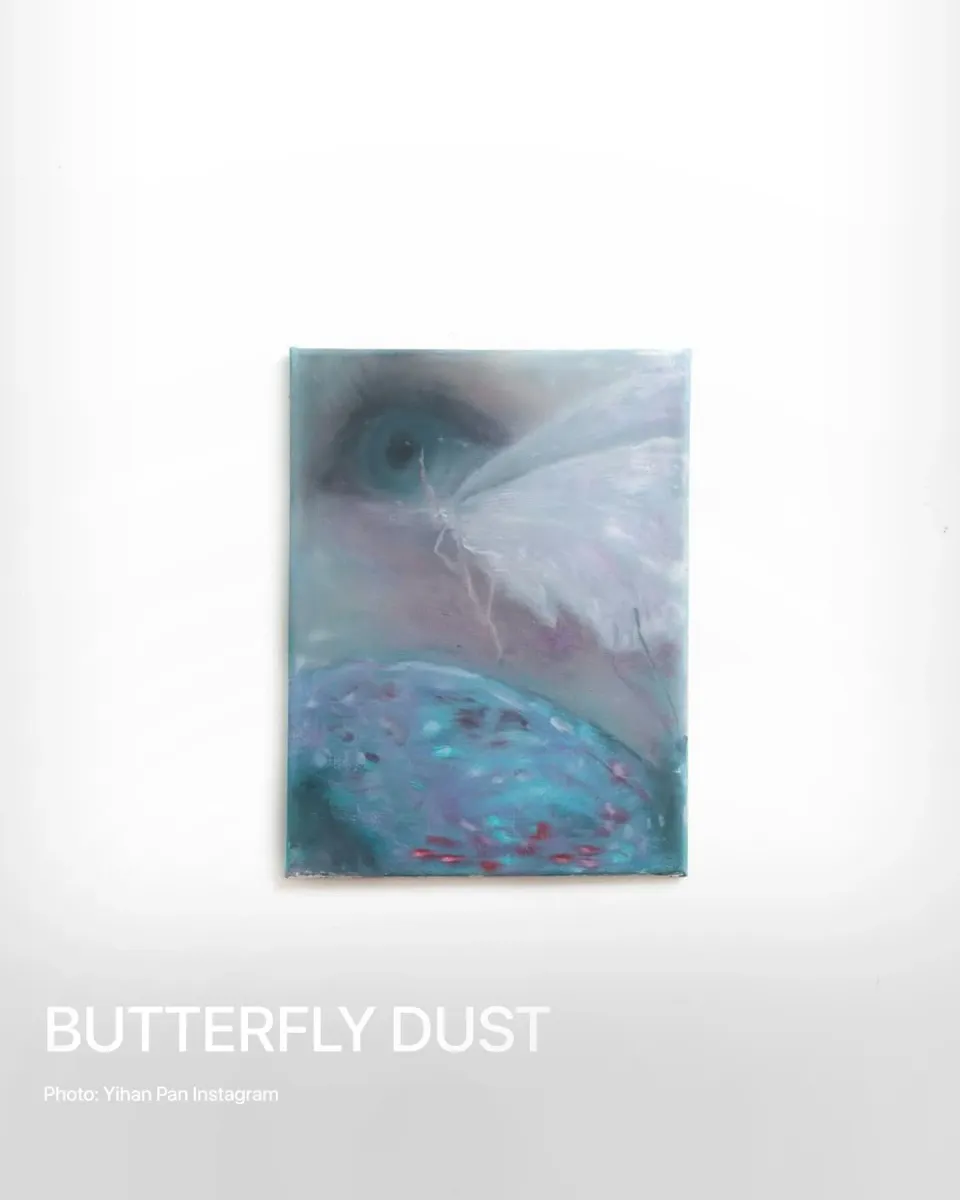
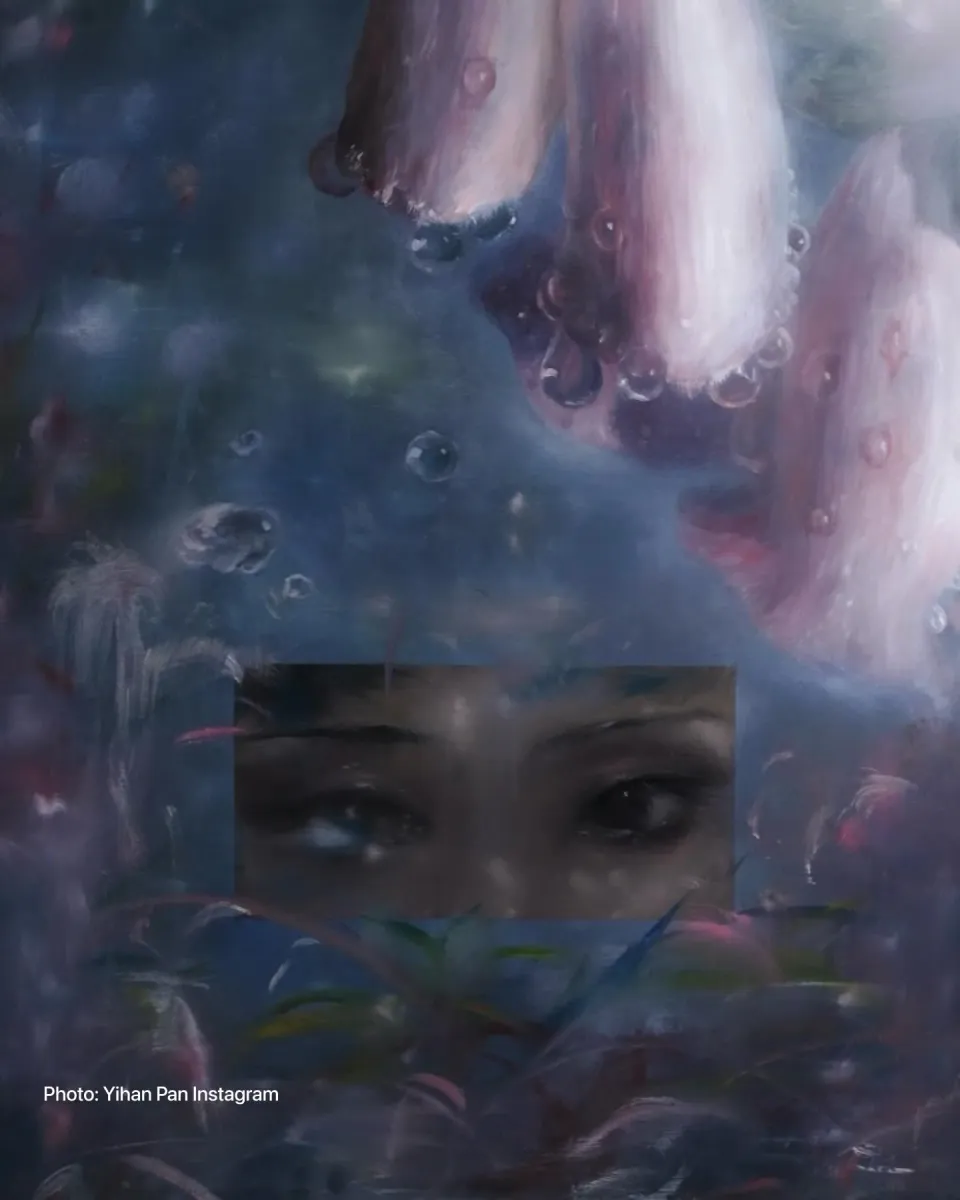
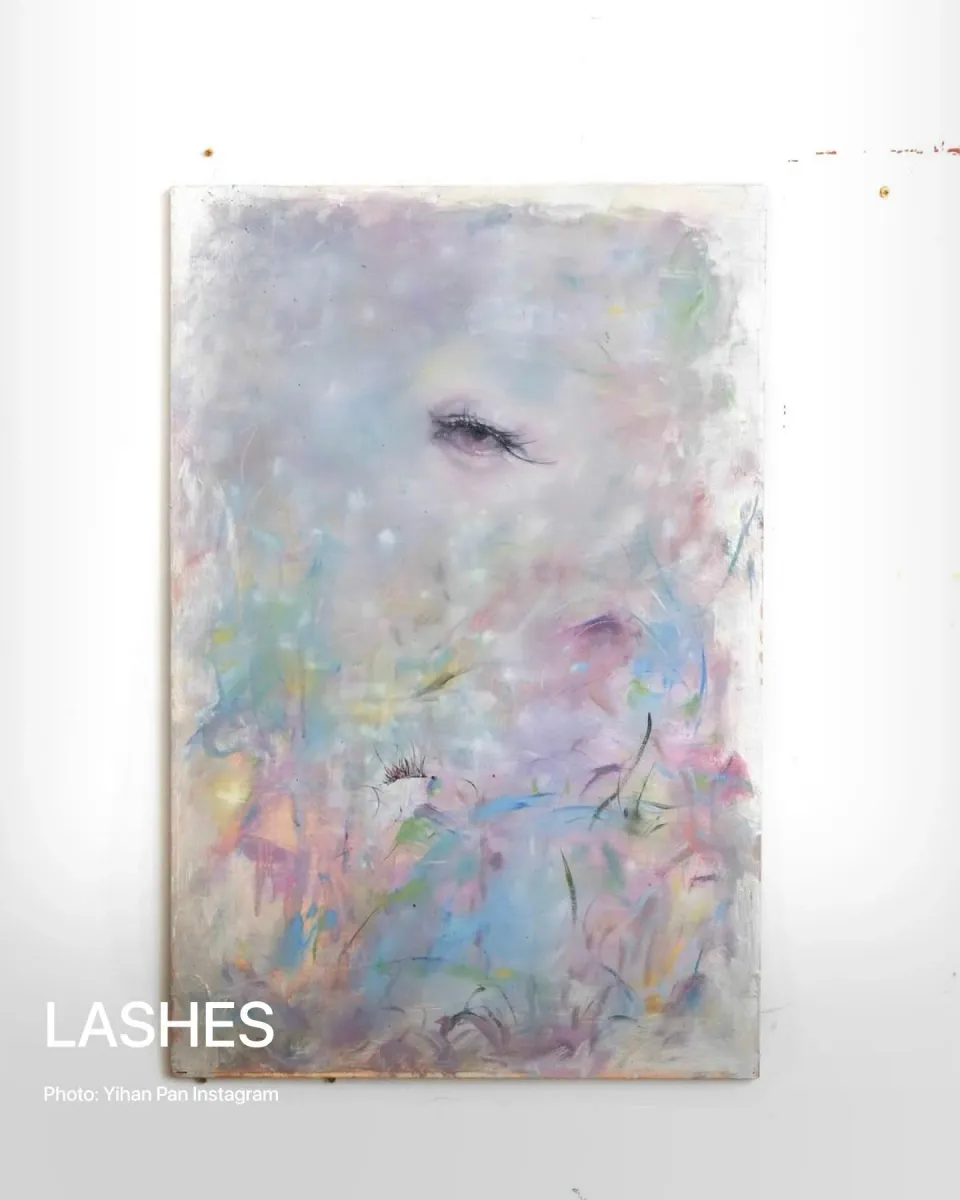
@pyhii
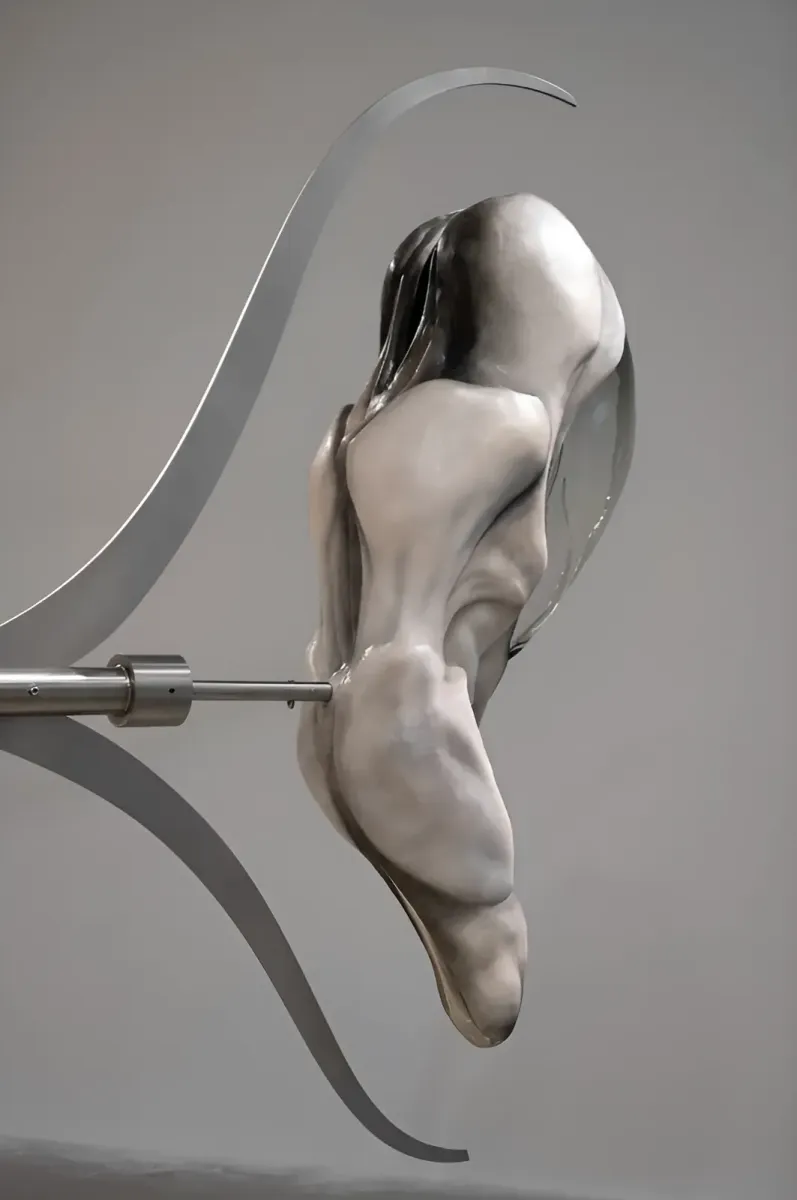
Montpellier / 2025


Brno / 2025
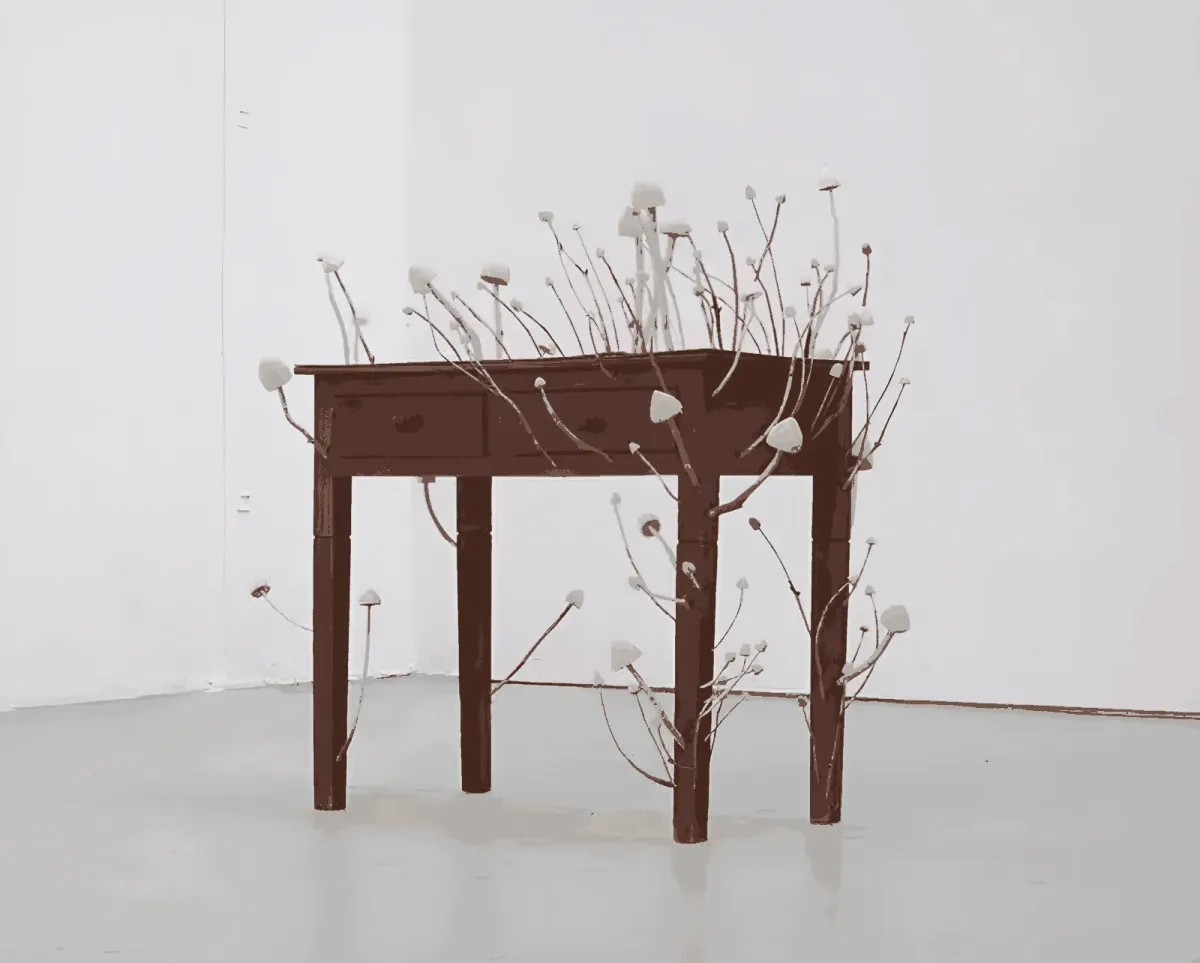
Lisbon / 2025

/ 2024


Shanghai / 2024
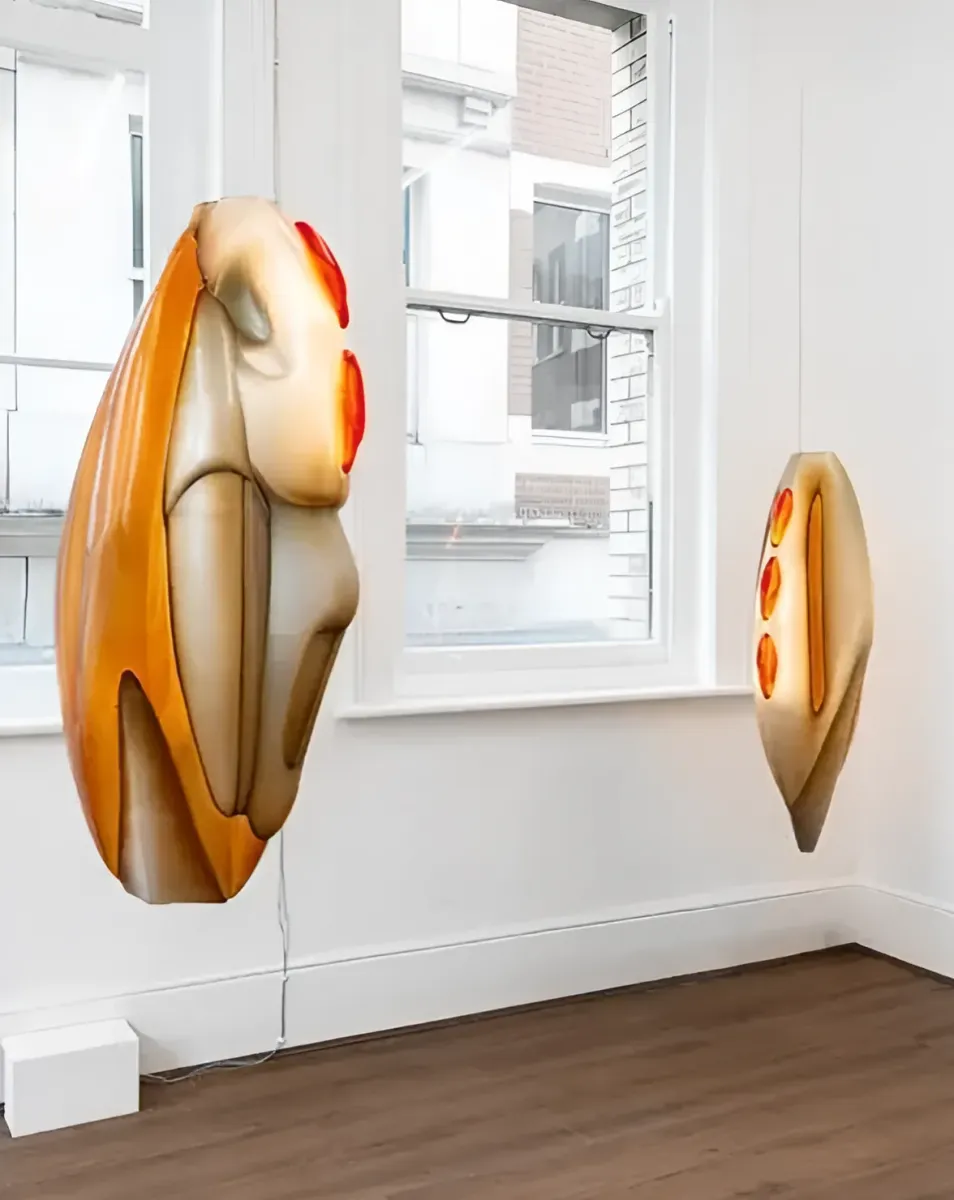
London / 2024

/ 2025

Innsbruck / 2025

Vienna / 2025


New York / 2025
@camelostrich
Busan / 2025

Berlin / 2025

Munich / 2026
Seoul / 2025-2026
Paris / 2026


Warsaw / 2026

Nurnberg / 2026

Offenbach am Main / 2026


/ 2025
Berlin / 2026
/ 2026
@xolo_cuintle
 Features
Berlin / 2026


Cologne / 2026
Saarbrücken / 2026
Berlin / 2026
Suwon / 2026
Hurup / 2026
/ 2026
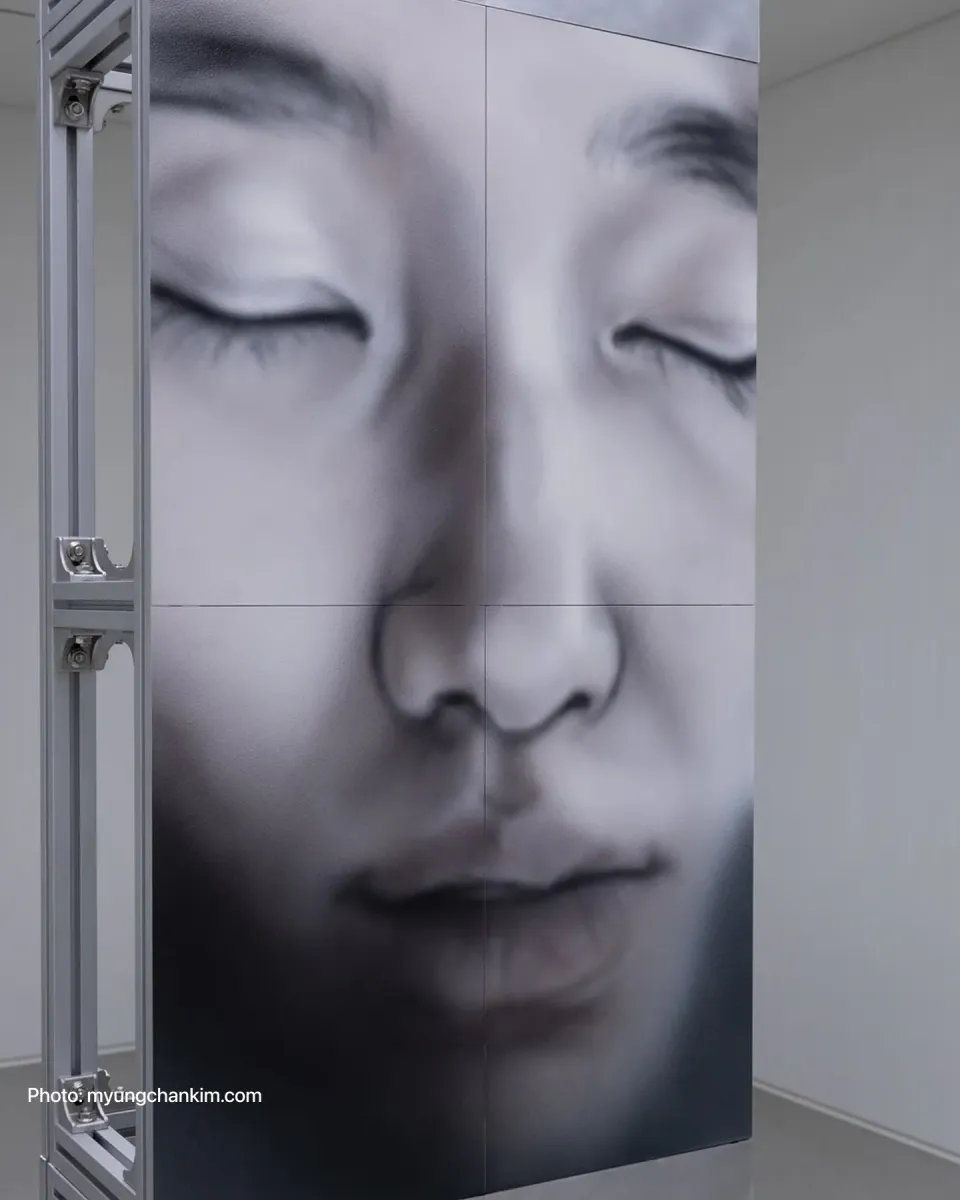
@kim.myungchan
Shanghai / 2026
Paris / 2026
Brescia / 2026
Munich / 2026
Lima / 2026


Mexico City / 2026
.webp)
Cergy / Paris / 2026


New York / 2026

Düsseldorf / 2026
Kraków / 2025
@emma.beatrez

Brussels / 2025-2026

/ 2024


Tartu / 2024

Wroclaw / 2024

Stockholm / 2024-2025

Geneva / 2024
Paris / 2025

Santiago / 2025

Warsaw / 2025


Milan / 2025
@nadaecc
Dornbirn / 2026
Prague / 2026


Seoul / 2025

Buenos Aires / 2026

Seoul / 2026


Berlin-Schöneberg / 2025

Białystok / 2025
Lima / 2026
Vienna / 2026
Antwerpen / 2026
Warsaw / 2026
Madrid / 2026
Istanbul / 2026
Berlin / 2026
Lladó / 2026
Santiago / 2026
Paris / 2026
Tisbury / 2026
Berlin / 2026
Málaga / 2026
@yukino_yamanaka
Klaus in Vorarlberg / 2026
Genk / 2026
Turin / 2026

Vienna / 2026

Oslo / 2026

Warsaw / 2026


Düsseldorf / 2026


Berlin / 2025
Shanghai / 2025


/ 2023
@s_gatzkan
Vilnius / 2024
Prague / 2024


Jung-gu, Seoul / 2025

Ljubljana / 2025


Bratislava / 2025


/ 2025
Bratislava / 2025

Kraków / 2025

Milan / 2025


Graz / 2026
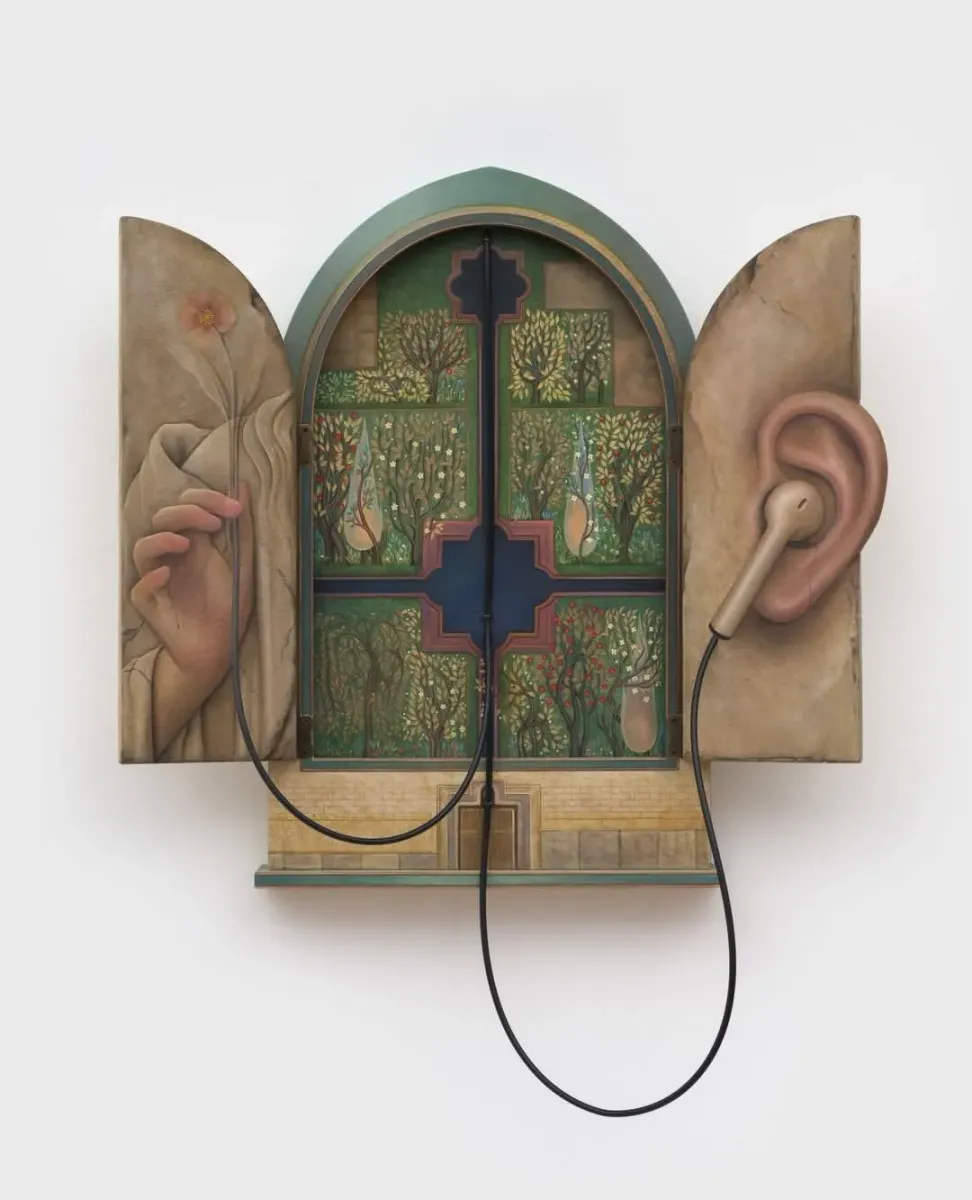
@arghavan_khosravi
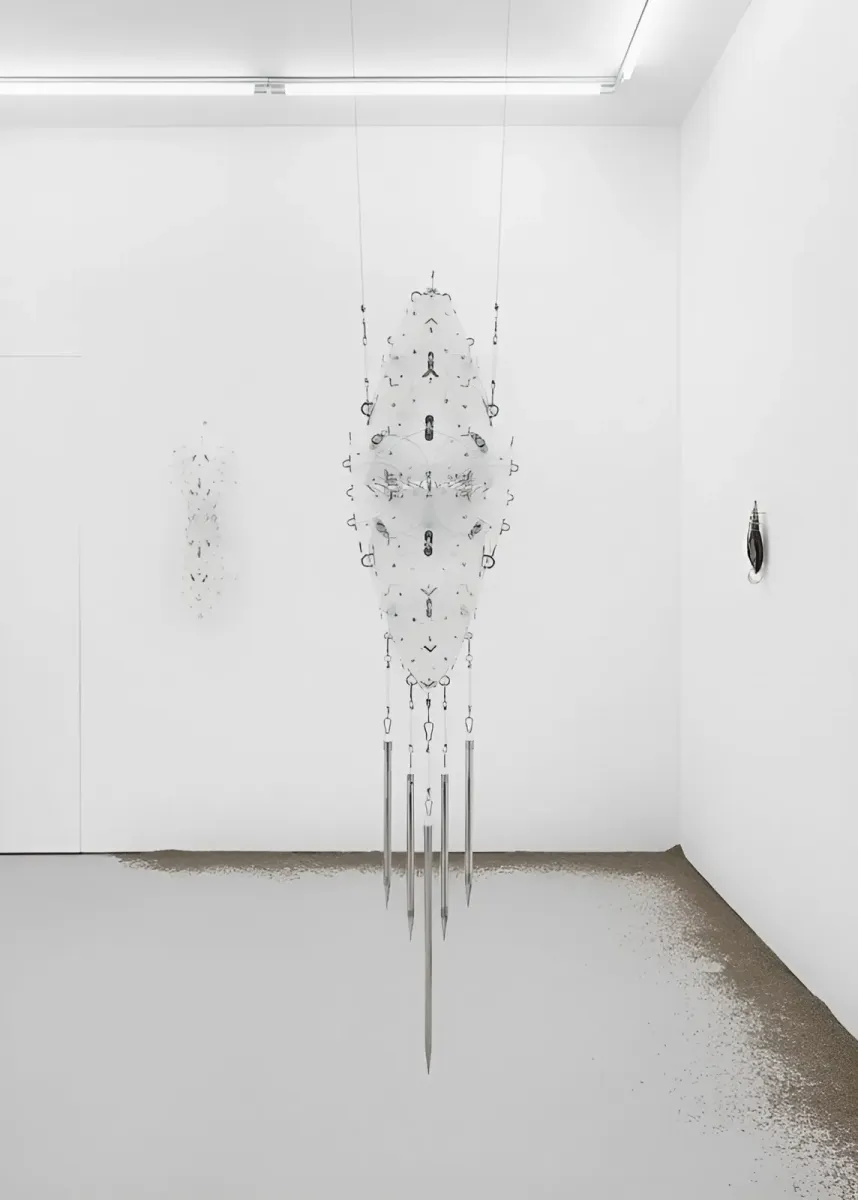
London / 2026

Vorarlberg / 2026
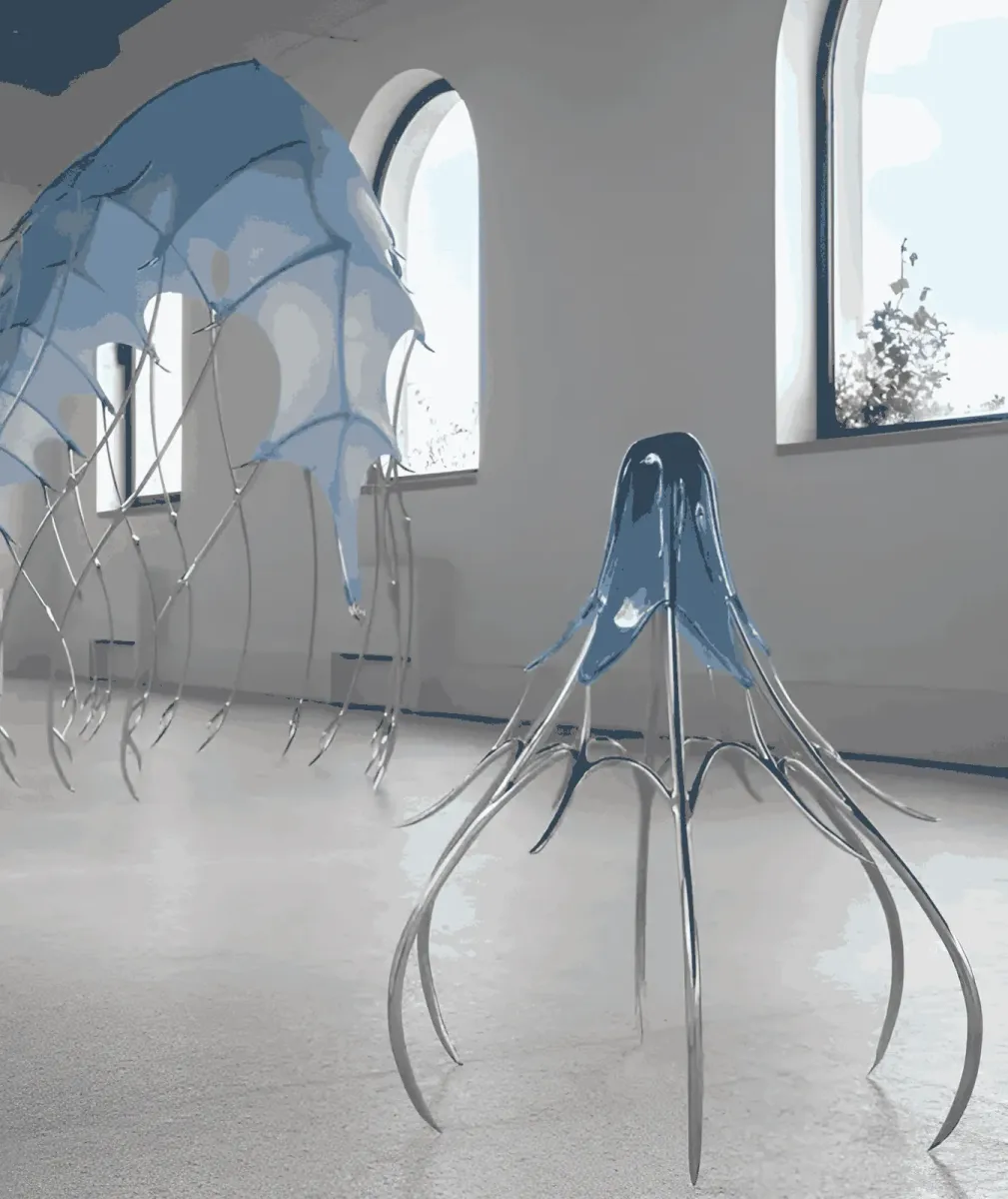
Sardinia / 2026

/ 2025
.webp)
Seoul / 2025
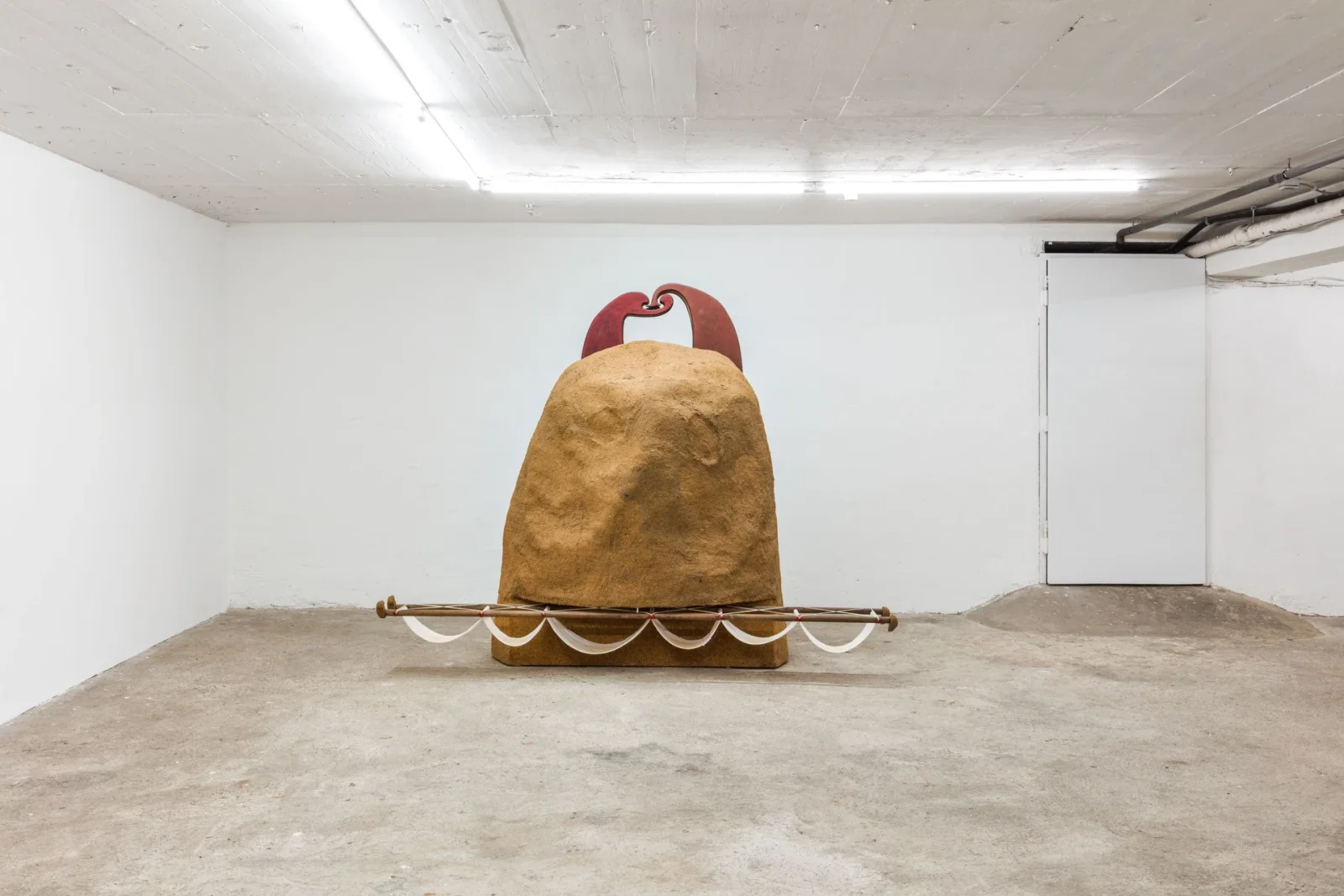
Düsseldorf / 2026
 Submit Exhibition
Prague / 2026
Tokyo / 2026
@dew_needs_you
Miami / 2026
Berlin / 2026
Norwich / 2026
Vilnius / 2026
Brno / 2026
Avigliana / 2026
Shanghai / 2026
Copenhagen / 2026
Ciudad de México / 2026
Angers / 2026
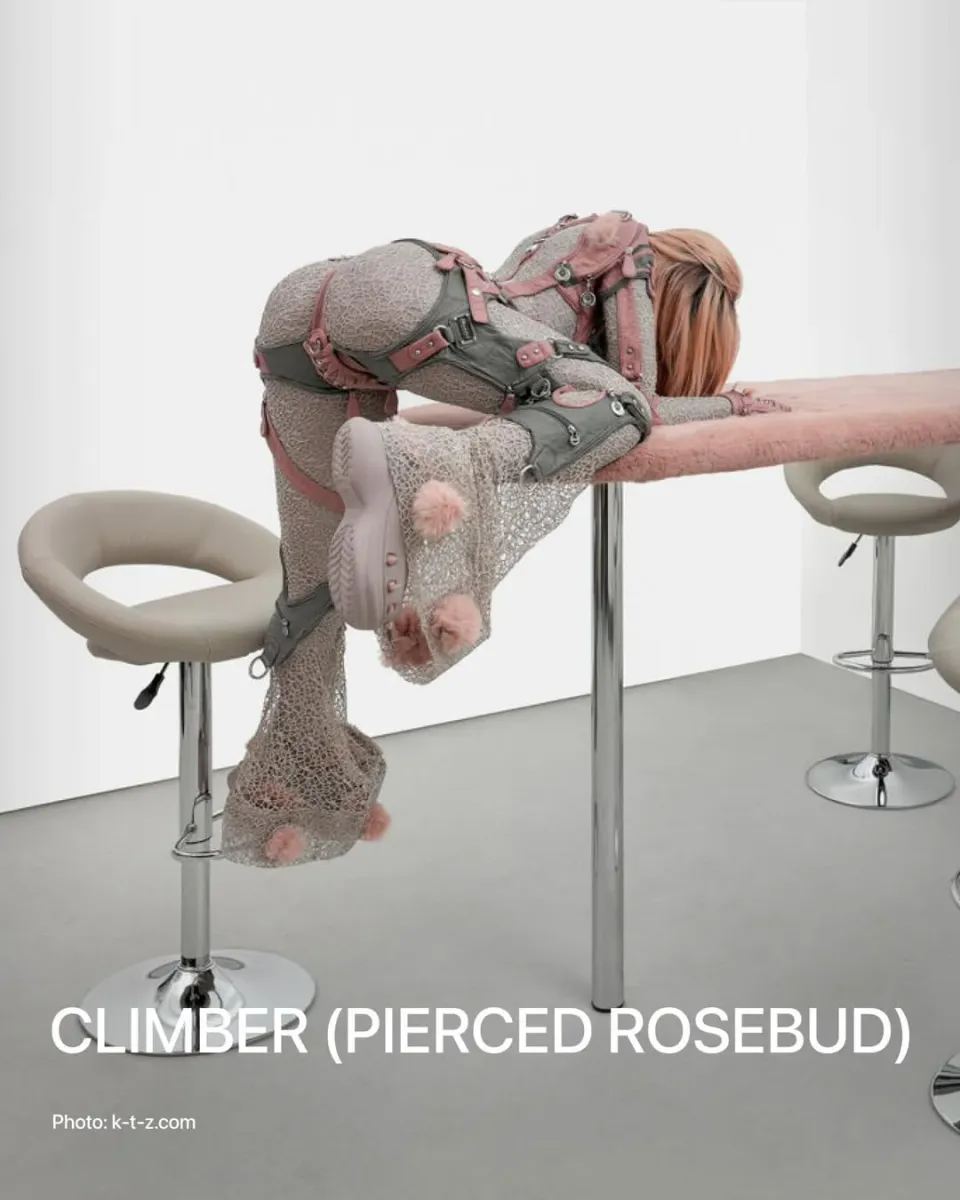
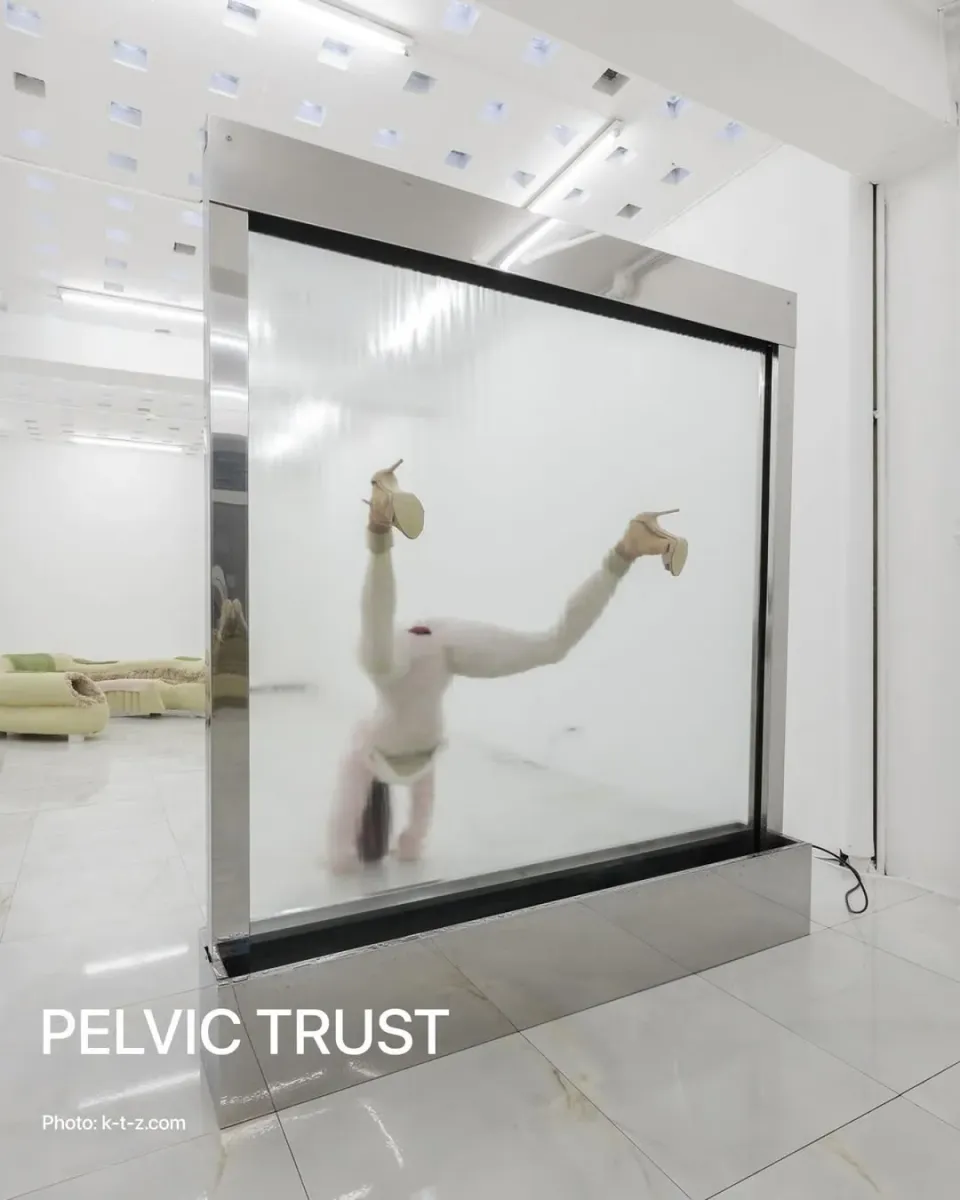
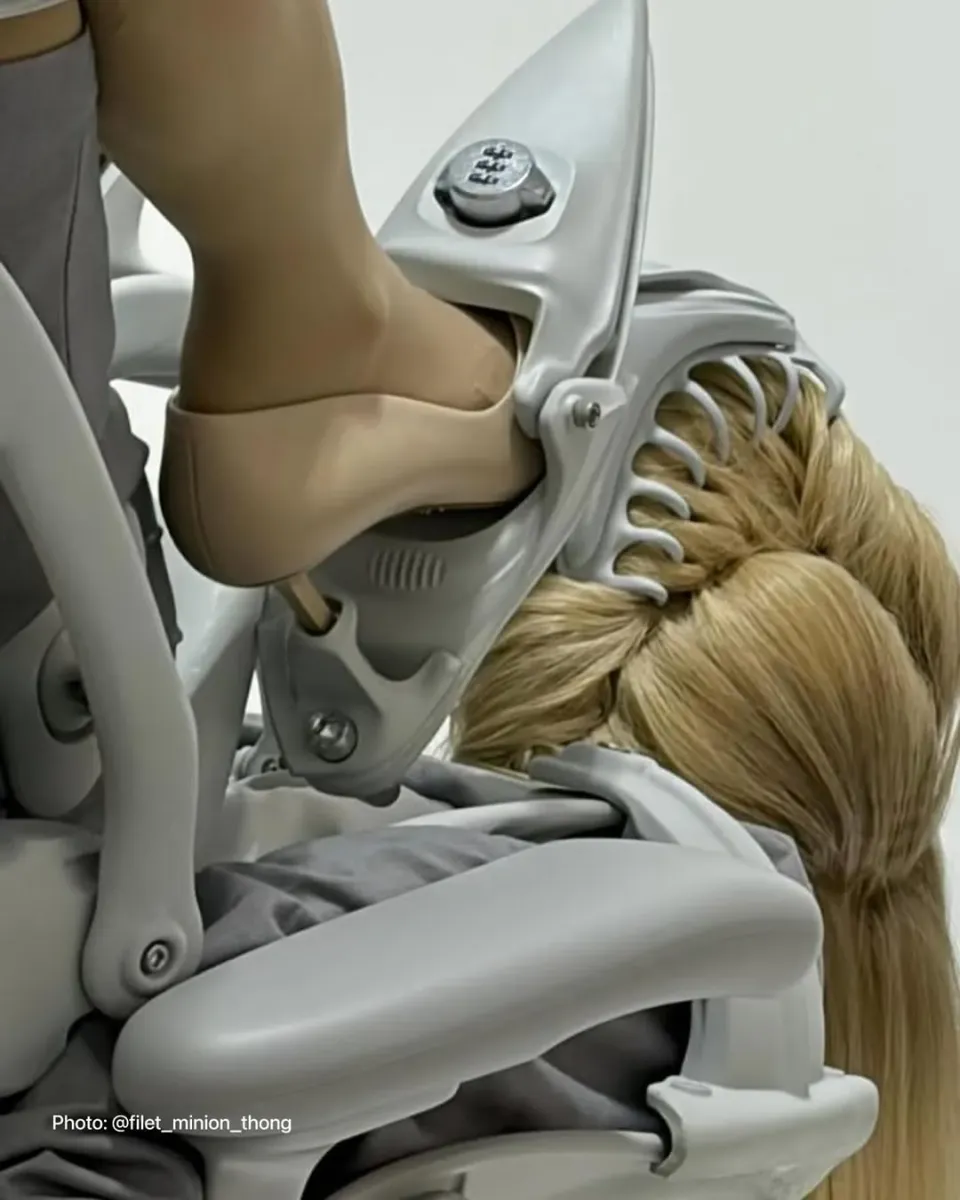
@filet_minion_thong
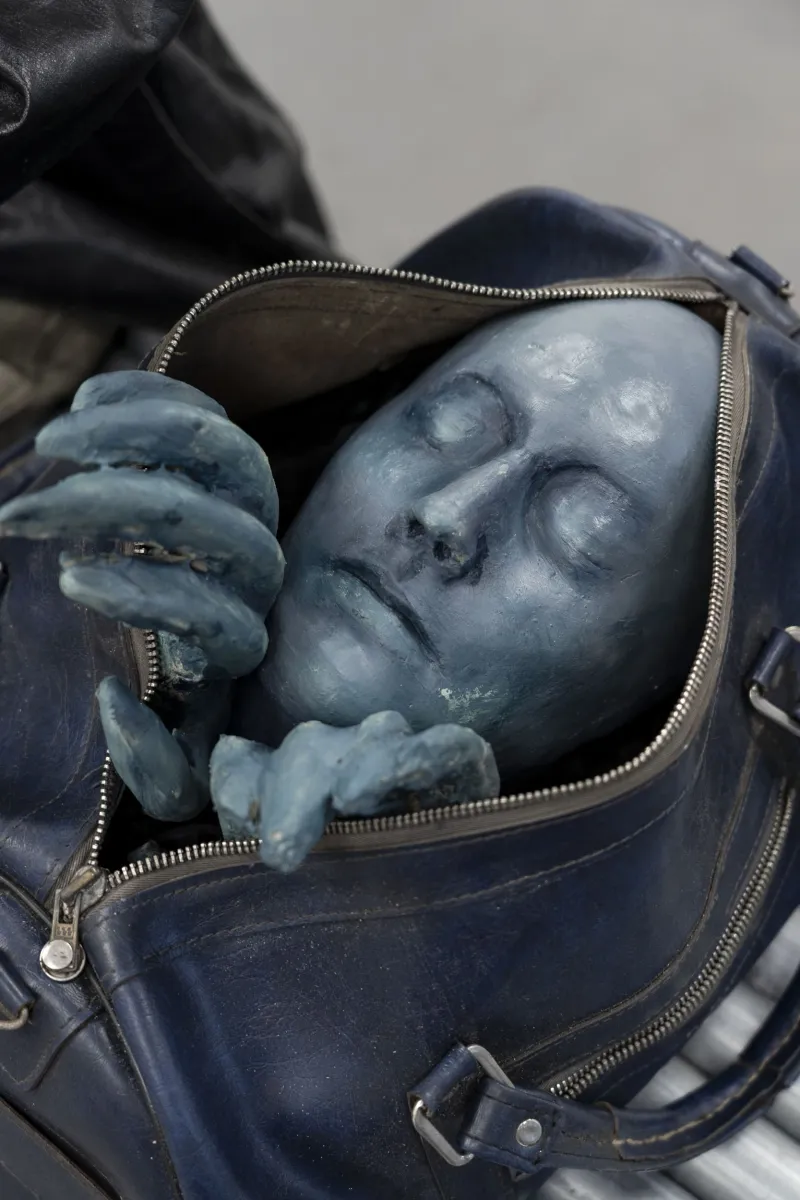
Kraków / 2026


Paris / 2026

Poznań / 2026

Bucharest / 2026

Tokyo / 2026
New York City (NY) / 2025
Göteborg / 2025


/ 2024

Lisboa / 2023


Budapest / 2024
@pax_aliena

Milan / 2025


Barcelona / 2024-2025


Milan / 2025
Berlin / 2025

Århus / 2025


Paris / 2025
Berlin / 2025

Seoul / 2026
Leipzig / 2026

Dornbirn / 2026
@que.fresca

Paris / 2026


Paris / 2025

Seoul / 2025
Sherbrooke / 2026
Warsaw / 2026
Riga / 2026
Brussels / 2026
Berlin / 2026
Munich / 2026
@isabellealbuquerque
Münster / 2026
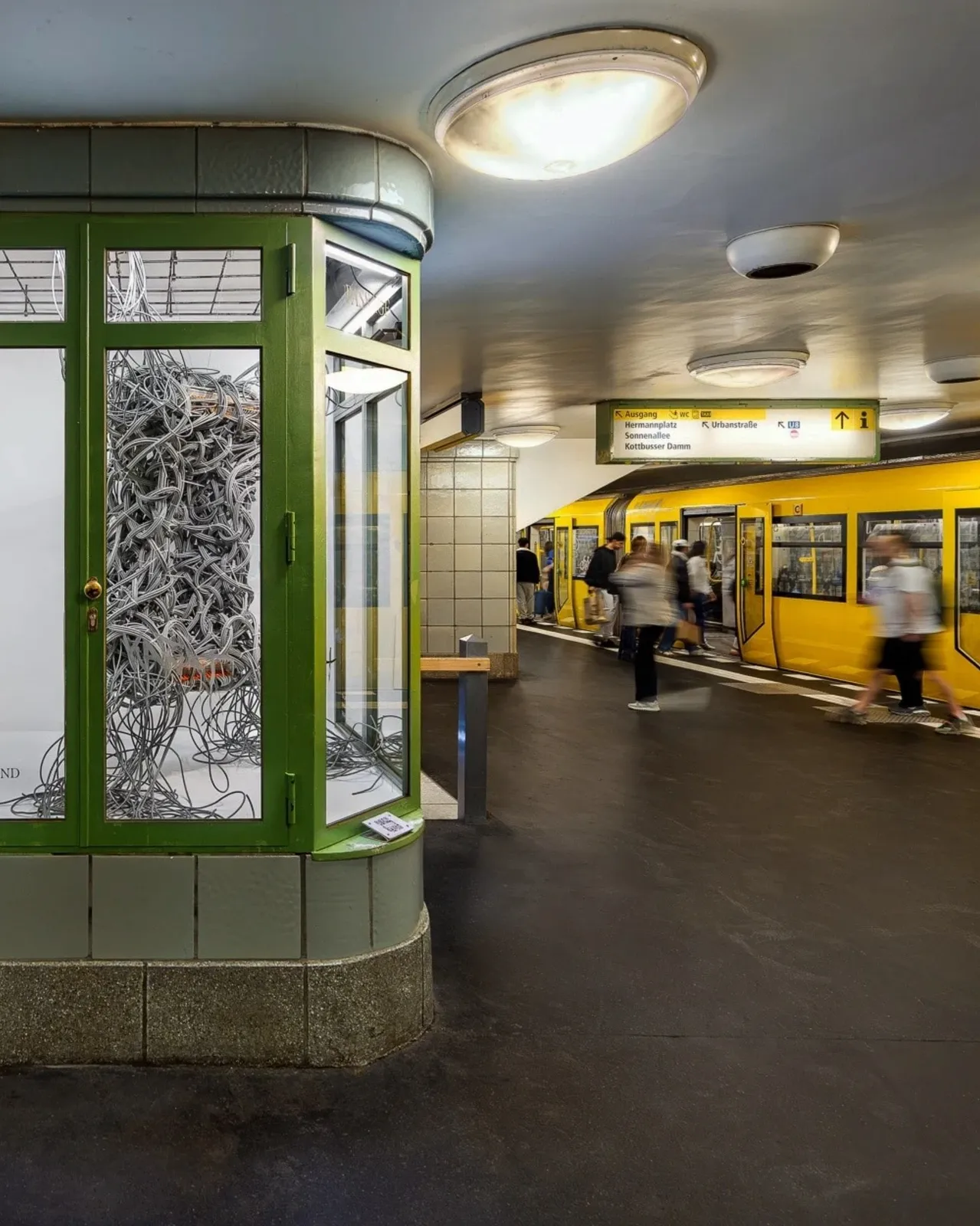
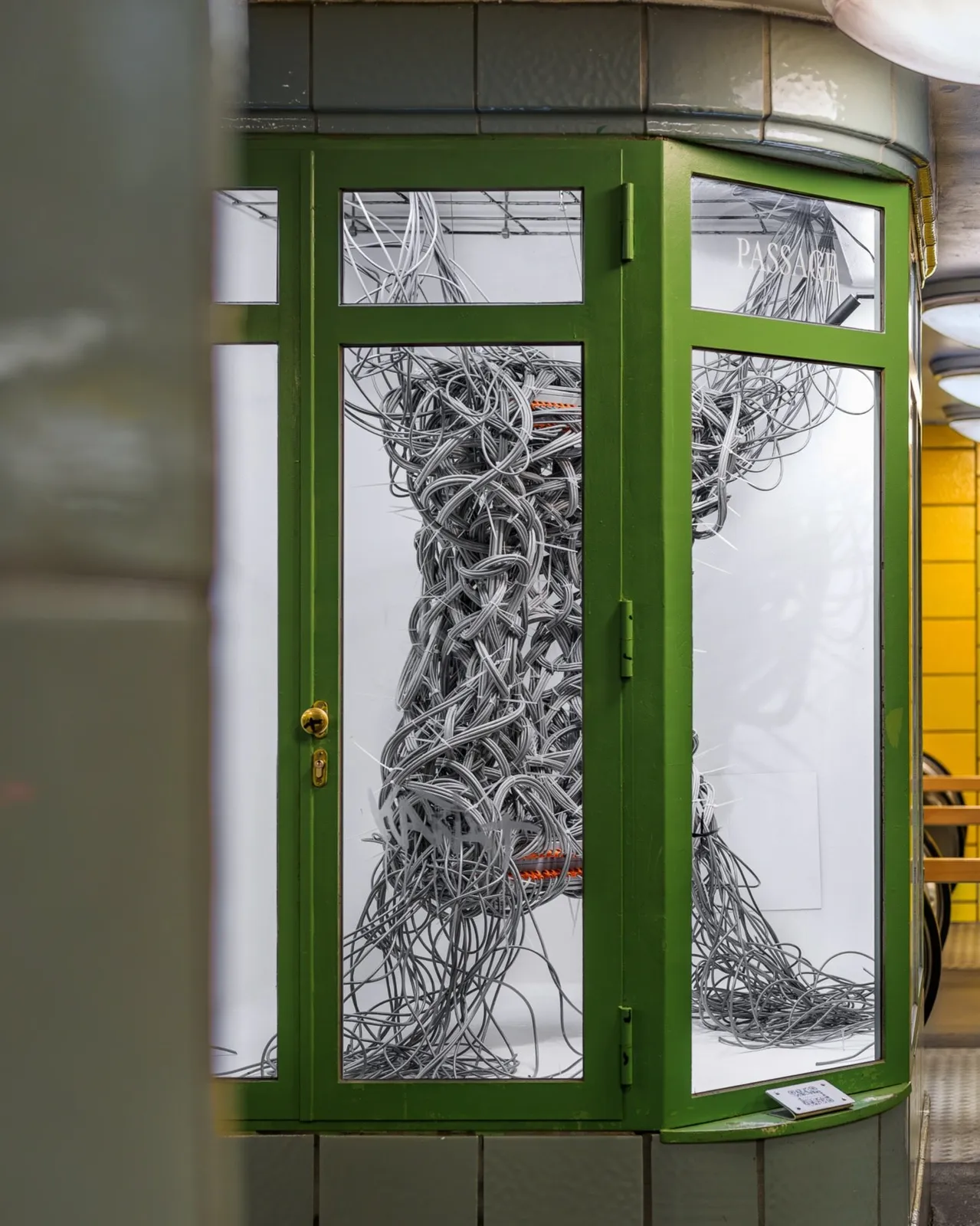
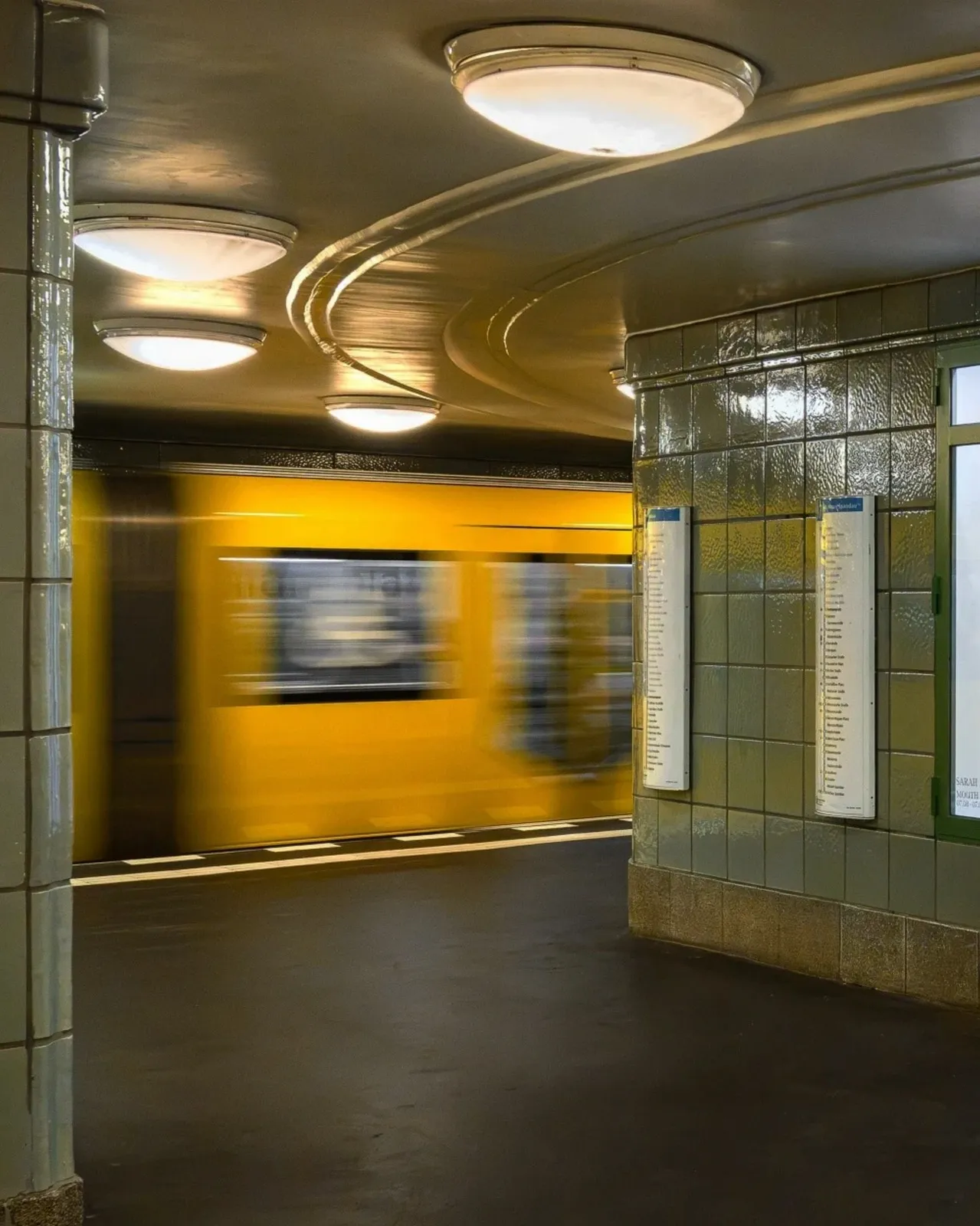
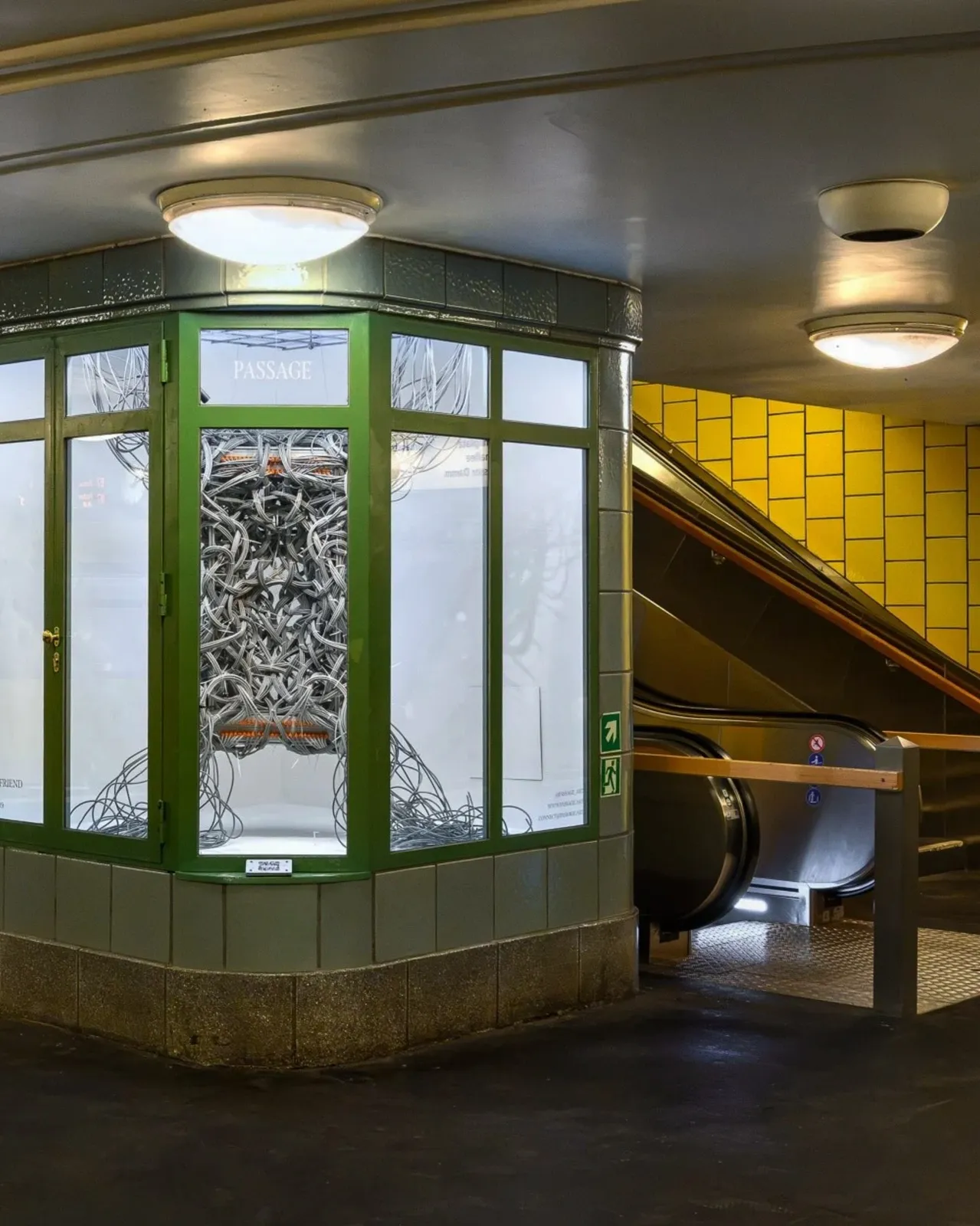
/ 2026
Warsaw / 2026
Seoul / 2026
Brussels / 2026
Seoul / 2026
Paris / 2026
Seoul / 2026
London / 2026
Vienna / 2026
@aio0o0o0
Munich / 2026

Ljubljana / 2026


Warsaw / 2024-2025
London / 2025


Brescia / 2025-2026

/ 2024

/ 2023

Berlin / 2023


London / 2024

Berlin / 2025
#DorisSalcedo
Arnsberg / 2025

Hamburg / 2025

Prague / 2025
Seoul / 2026

London / 2025
 (GROUP SHOW).webp)
Berlin / 2026


Dortmund / 2026
Kraków / 2026


Lisbon / 2026


New York City / 2026
@ppuri_

Madrid / 2025
Veranda / Julie De Kezel
Julie De Kezel’s practice begins with a simple, almost compulsive gesture: collecting. A shed
animal skin, a piece of moss, a mineral, an unknown organism, an image captured under a
microscope. Things encountered are picked up and taken home, as if the world were
constantly leaving behind traces that ask to be kept. What first appears as a natural object
becomes a token of attention, a way of holding onto an encounter and giving form to
something that might otherwise disappear.
Collecting, here, is less an attempt to archive nature than a way of remembering through
matter. Found objects become an external memory system, as well as entrances into further
research: an organism can lead to a piece of folklore, an image to a scientific experiment or
a new technique, a memory to a fictional world. Knowledge enriches the experience of
finding, while the found object sends the artist back into research. Her practice moves
continuously between these directions, growing like a rhizome, without a fixed centre or
predetermined destination.
Along the way, the sense of scale in her work shifts continually. A patch of moss can grow
into an endless forest; a city can shrink into a miniature world. Enlargement, reduction and
digital reconstruction allow De Kezel to move between recognition and estrangement,
testing how an object might change when its familiar proportions no longer hold. The
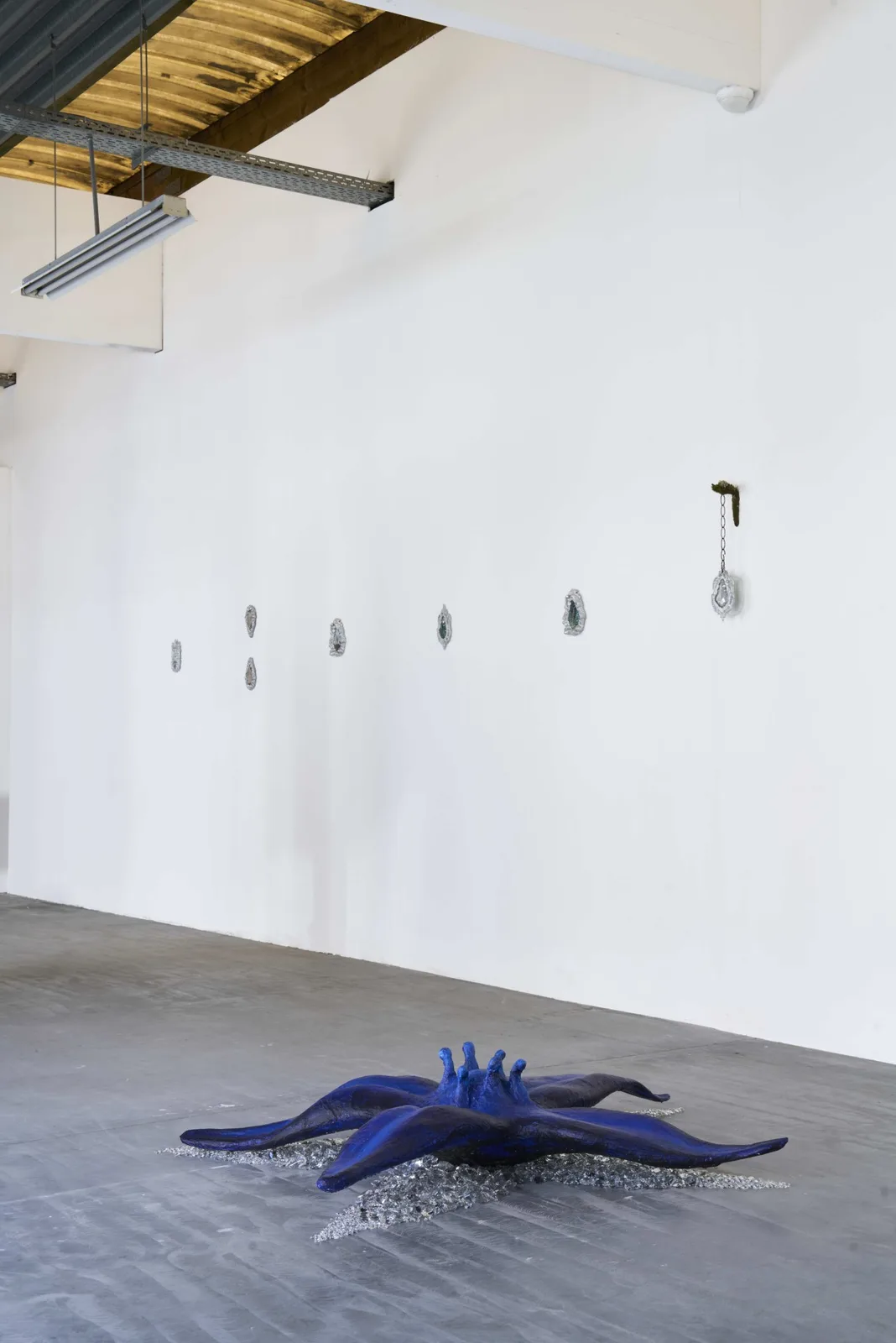
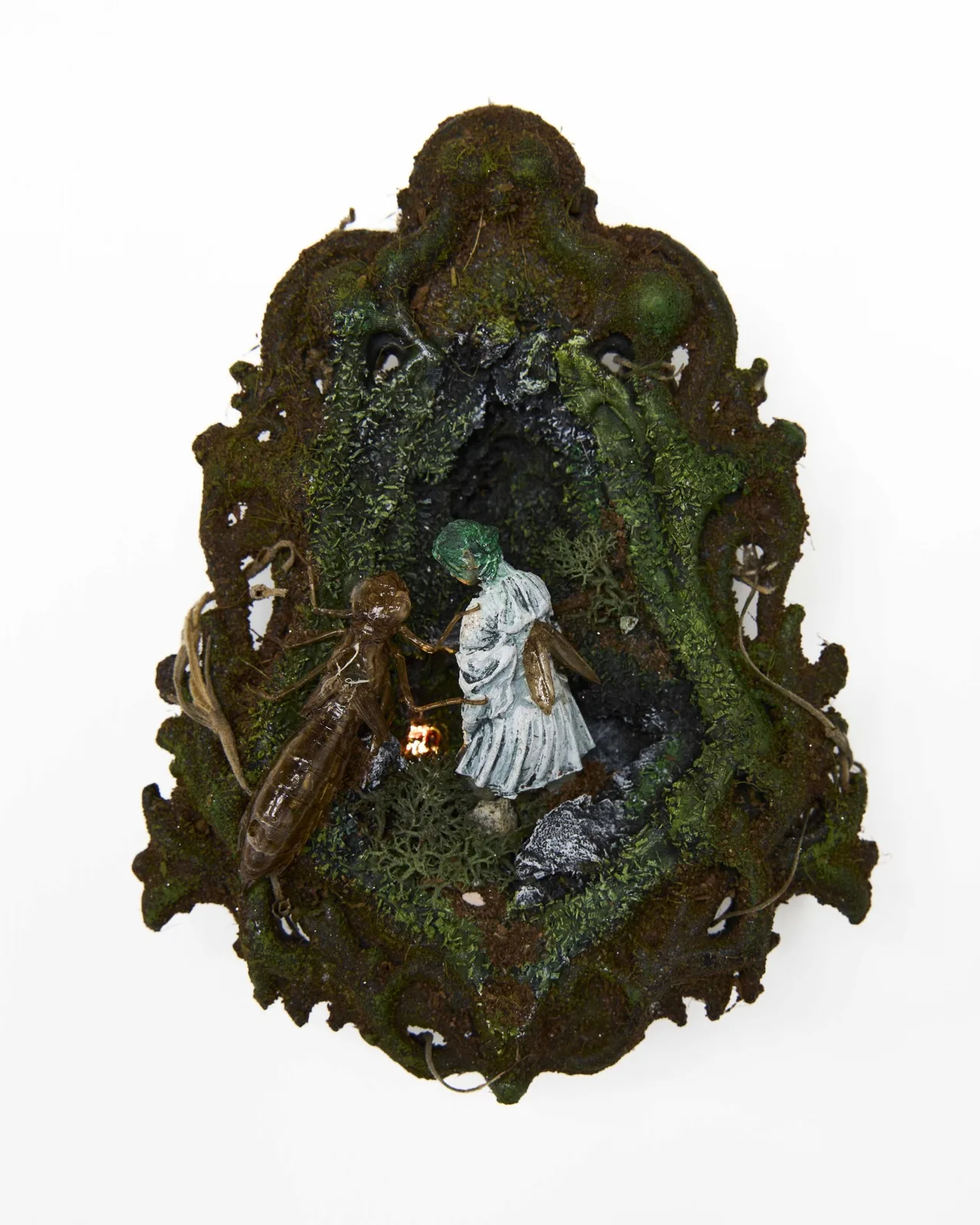
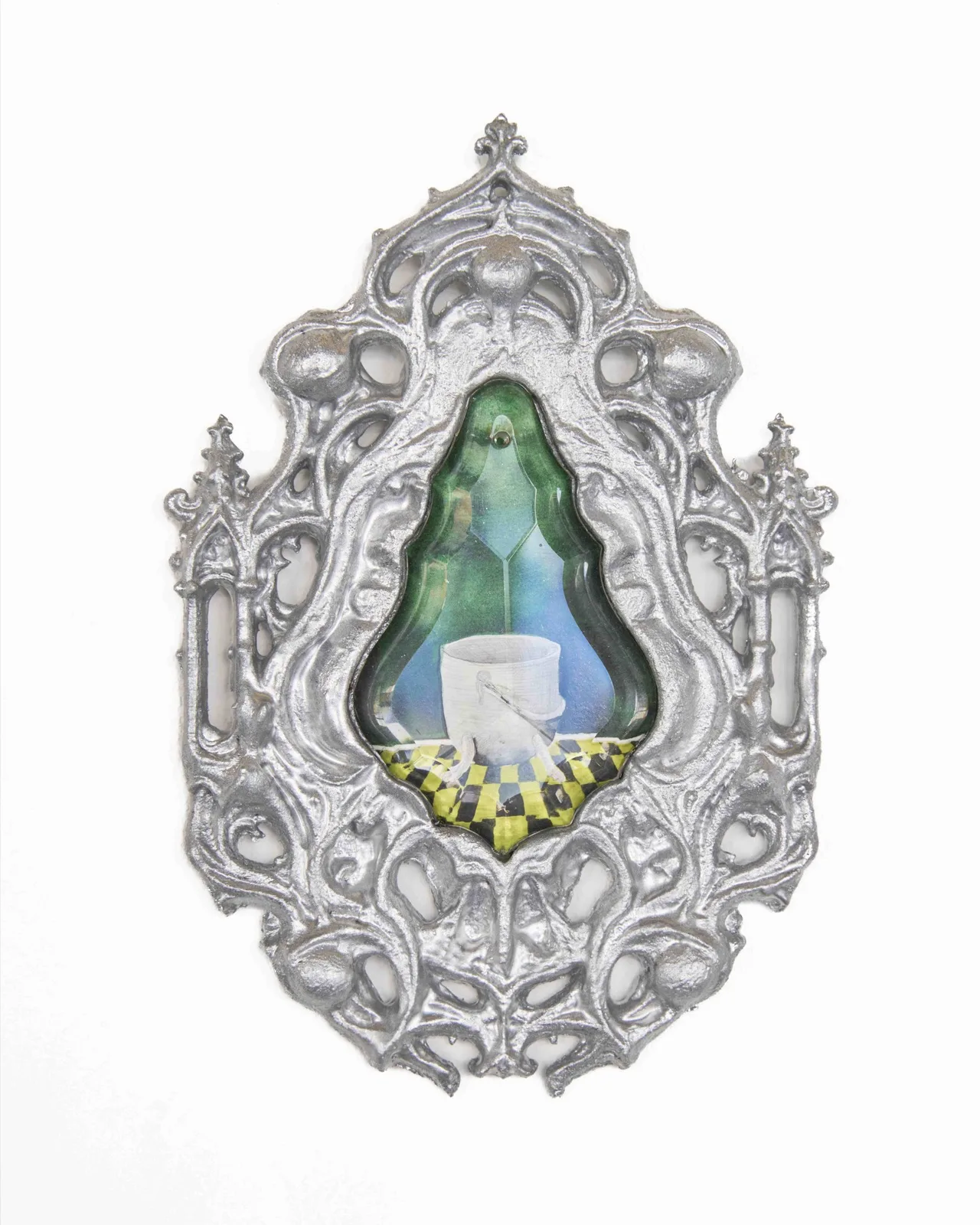
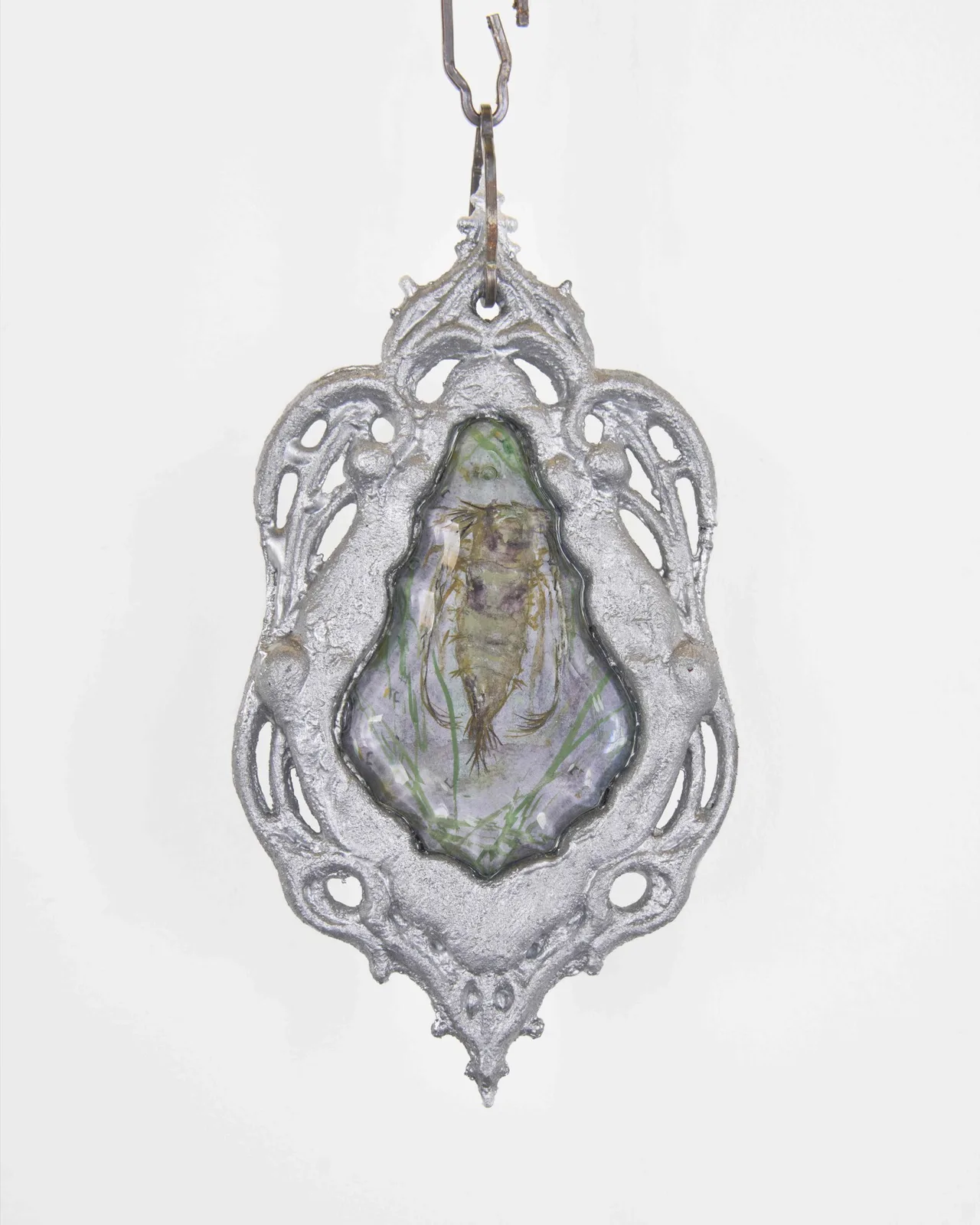
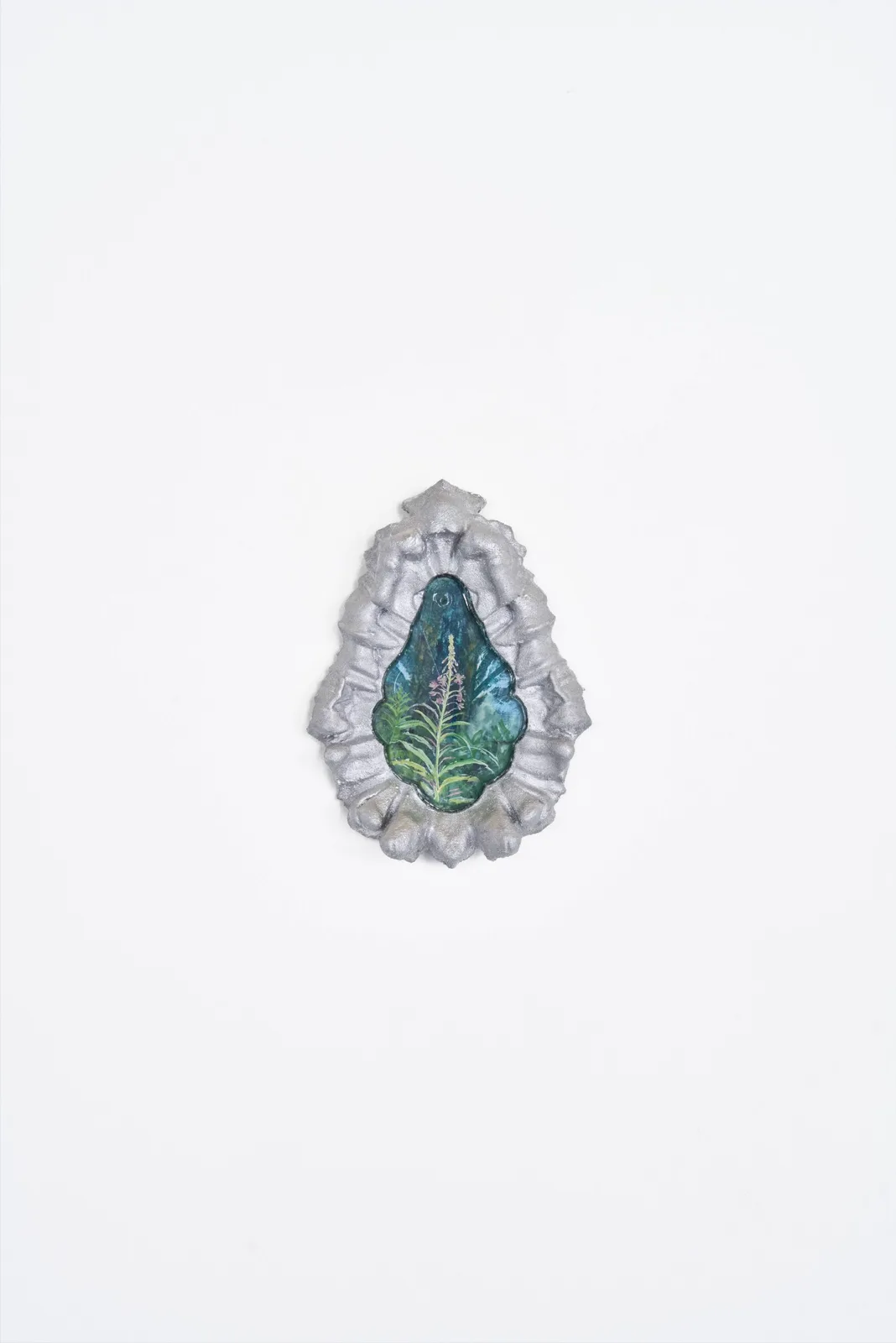
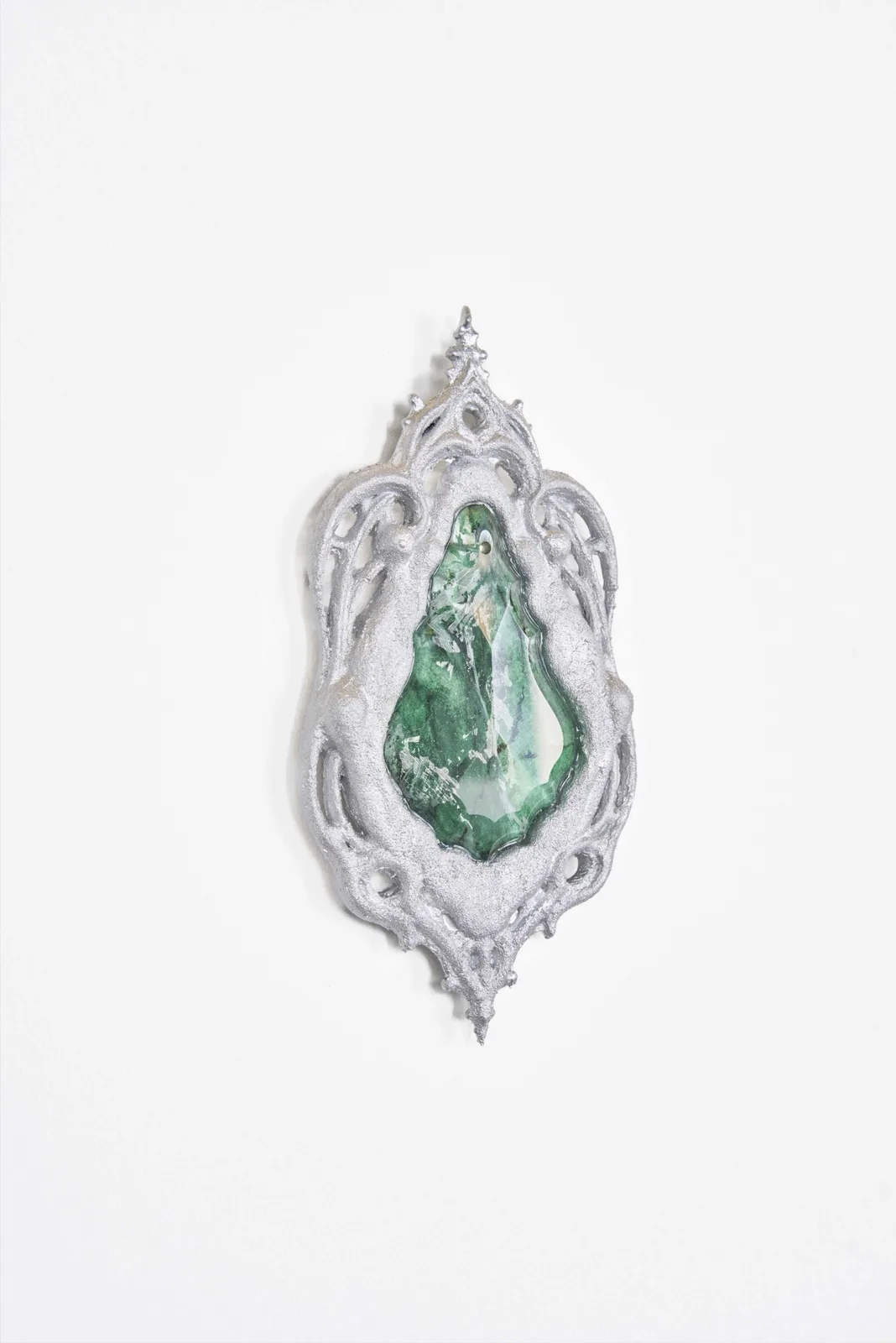
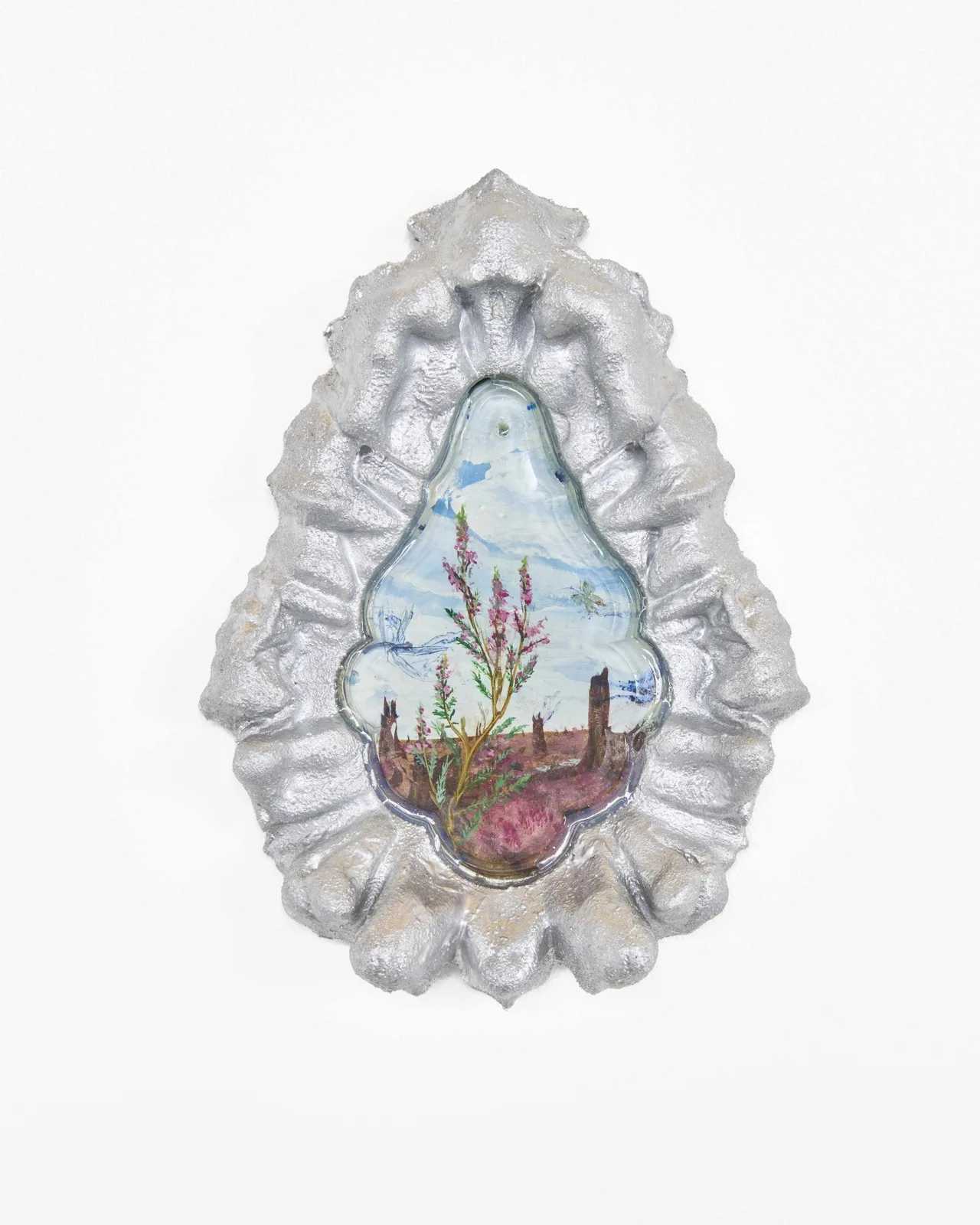
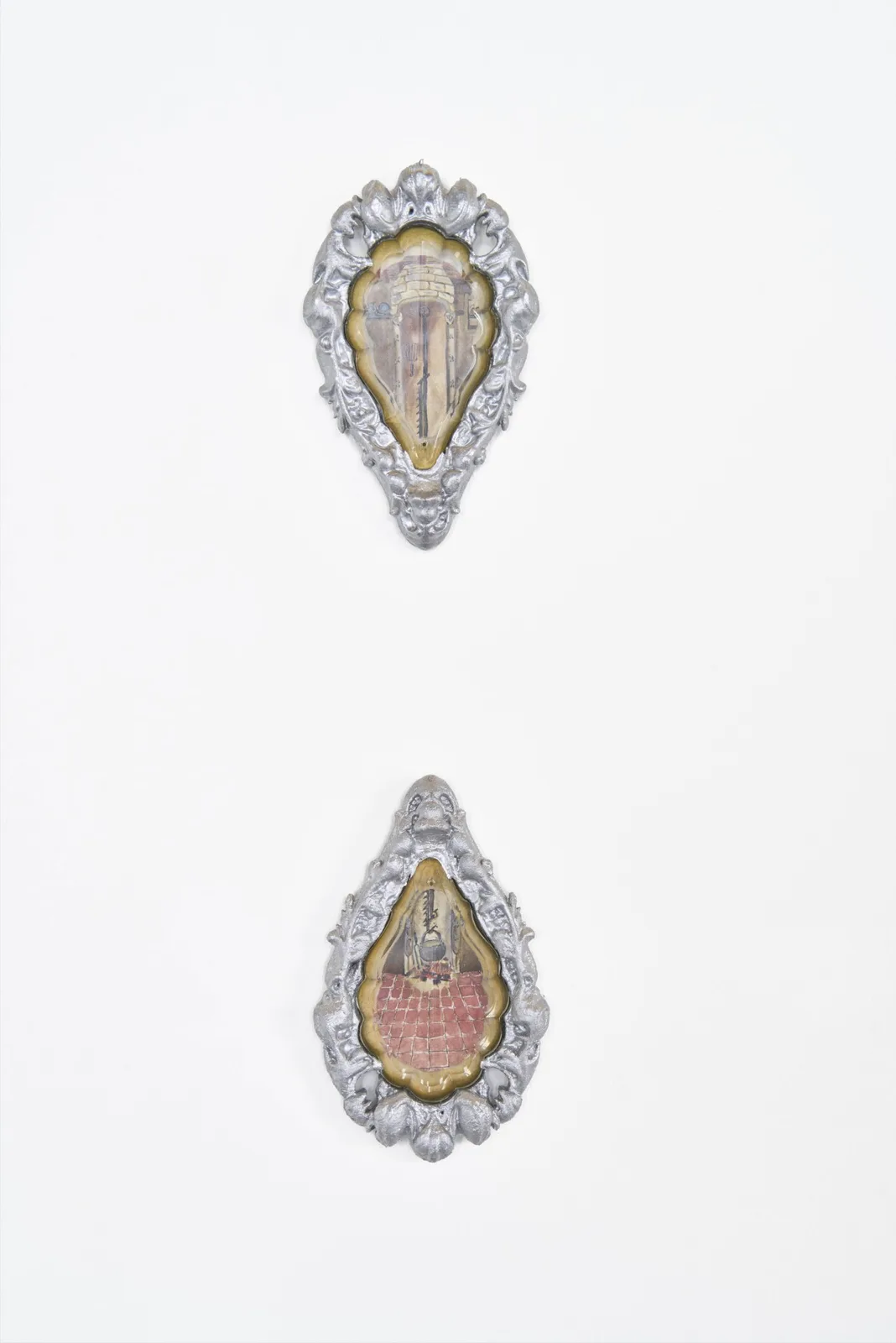
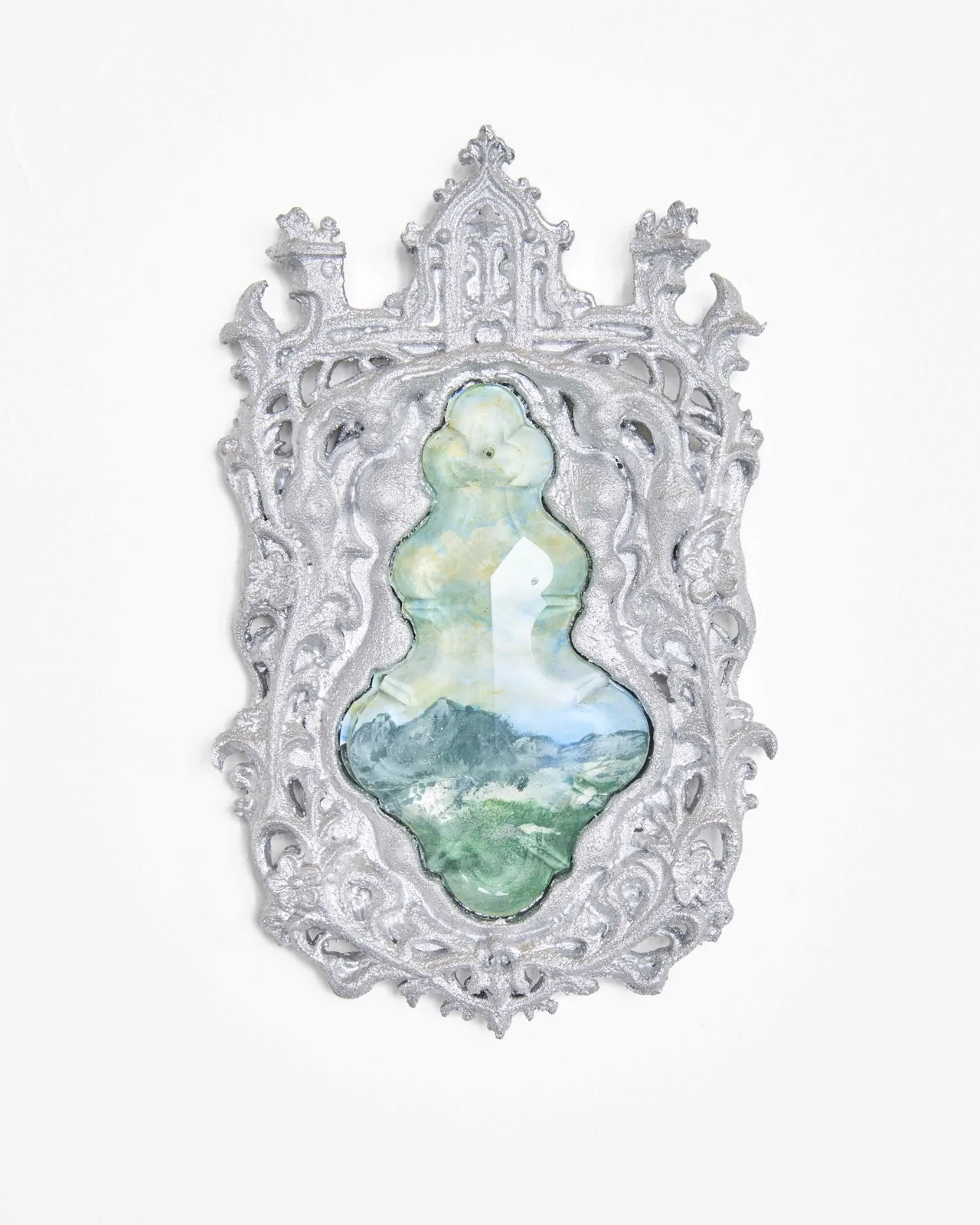
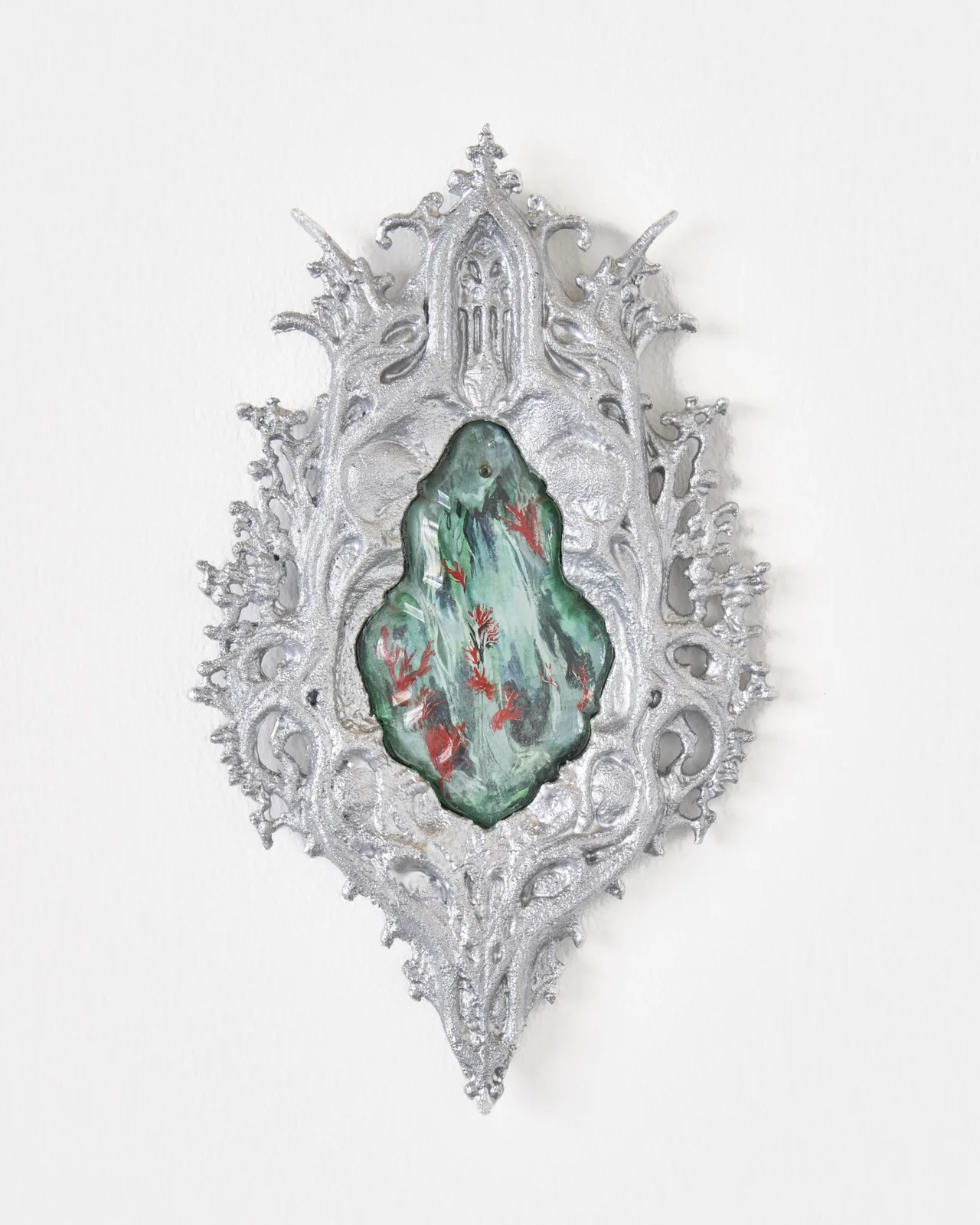
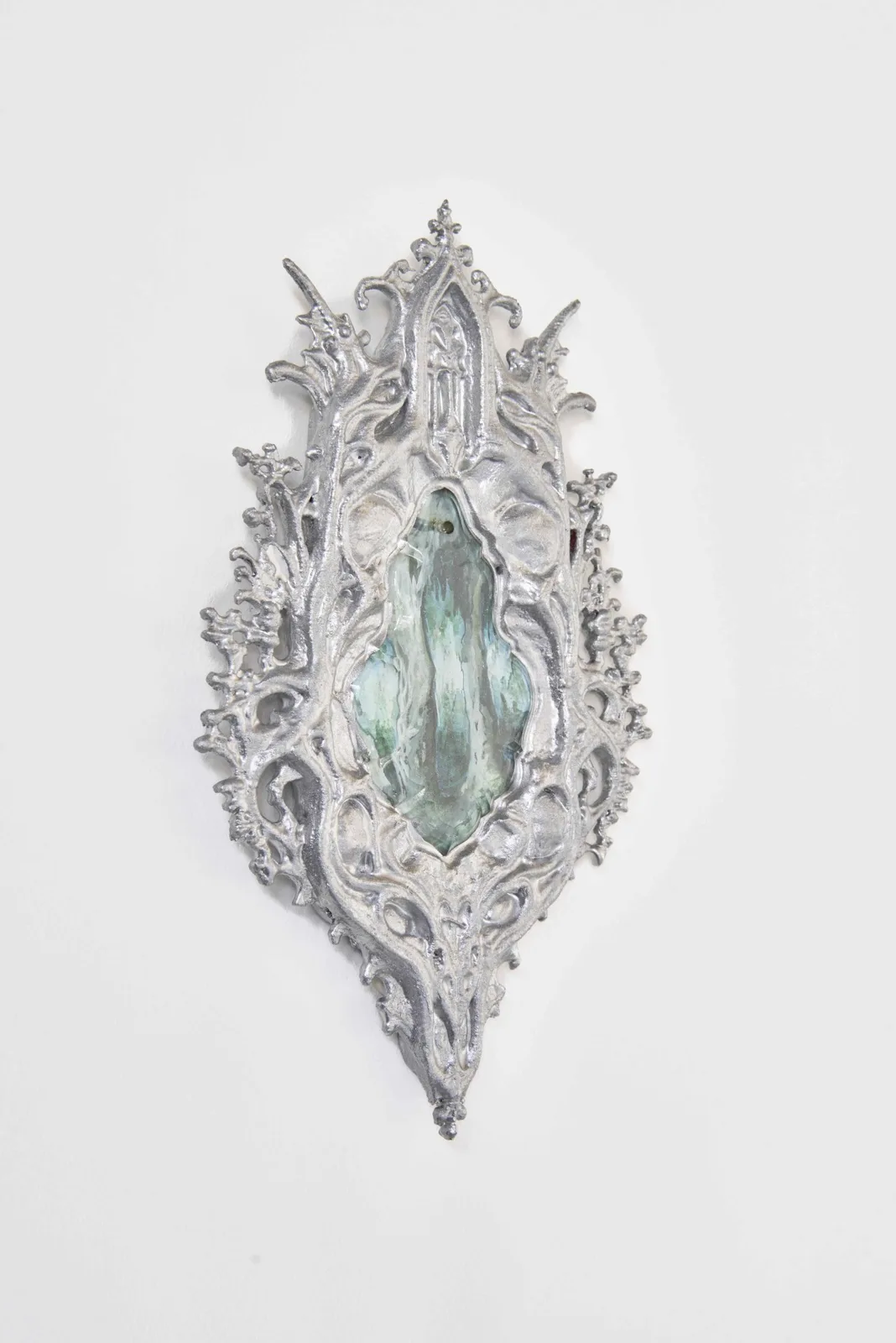
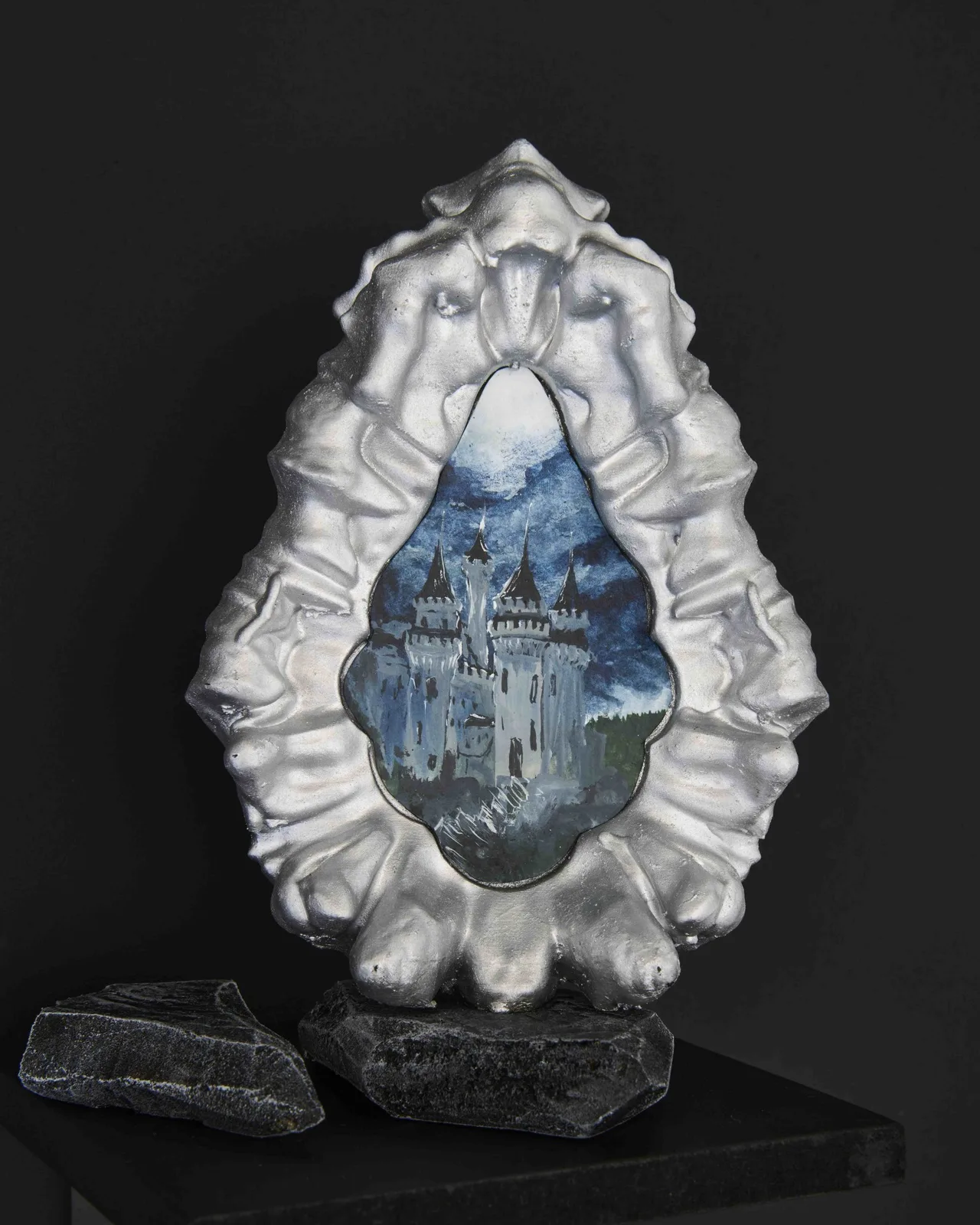
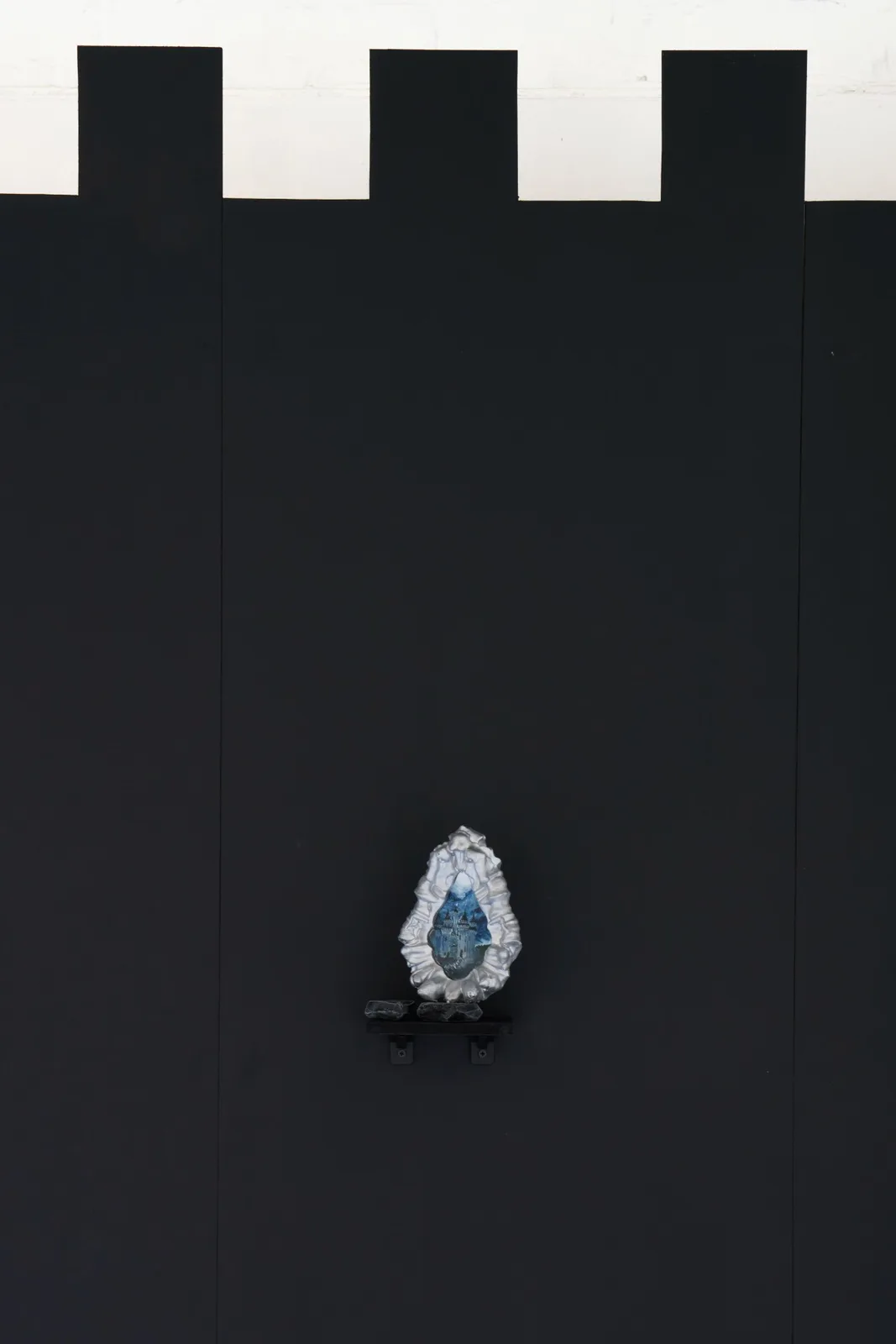
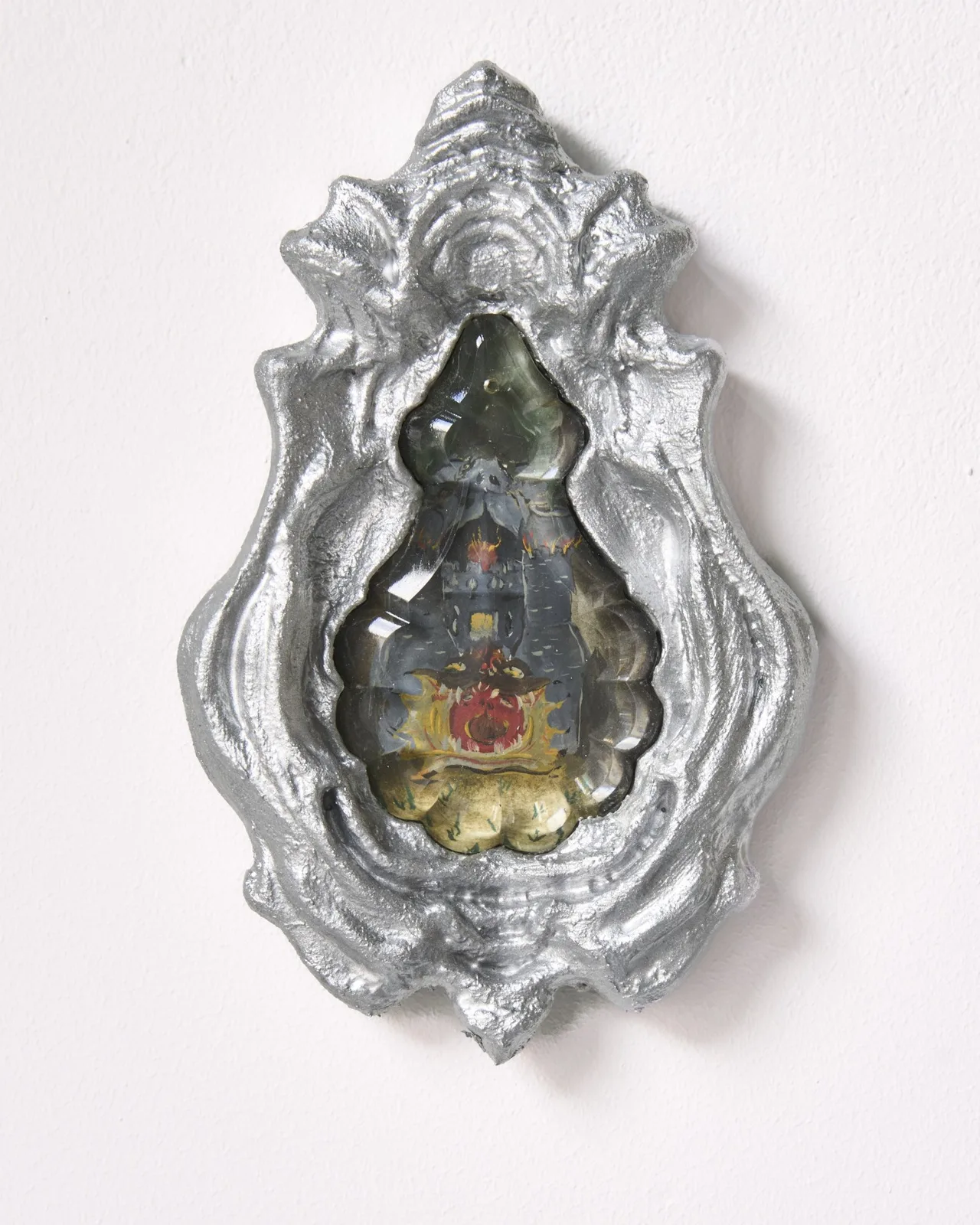
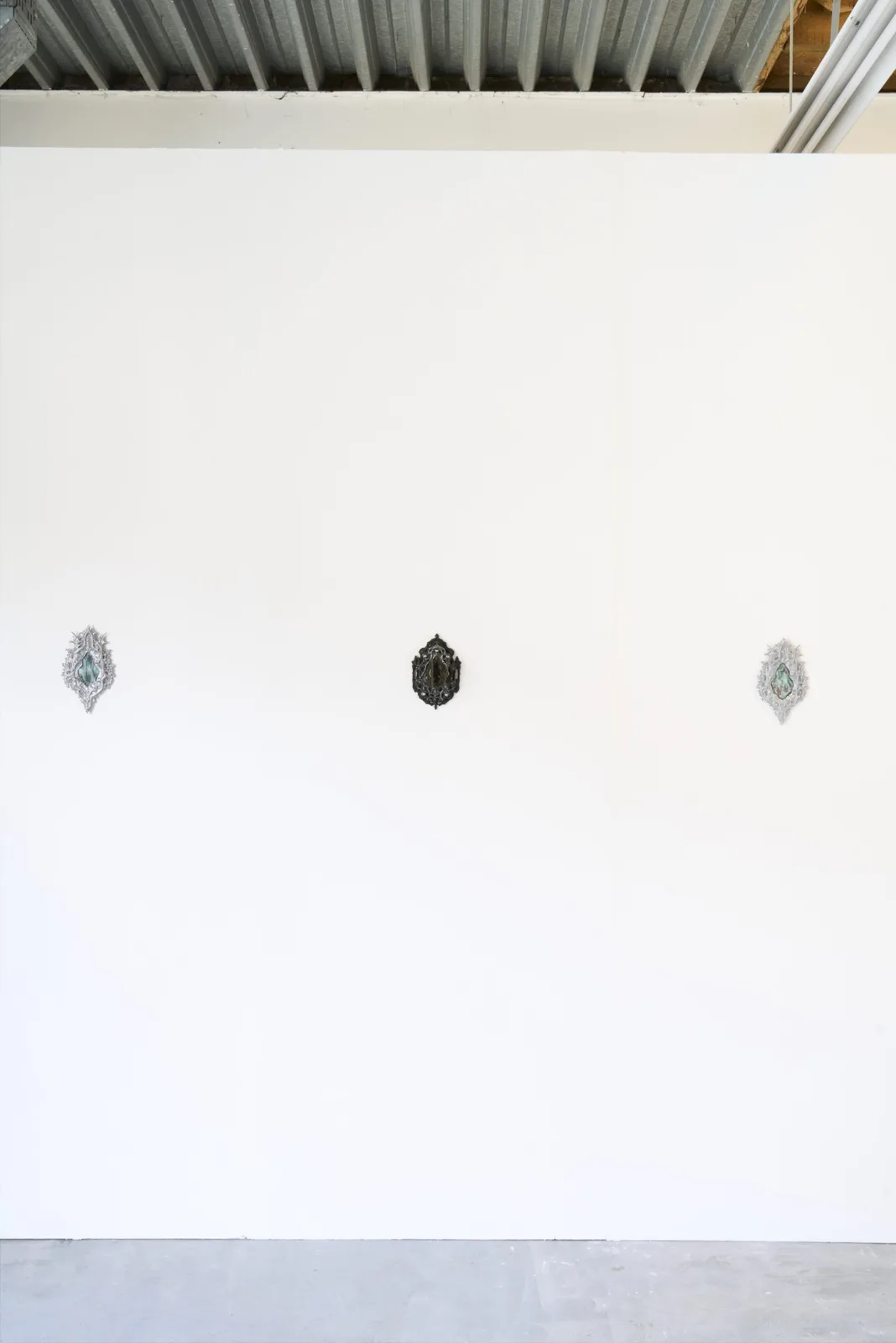
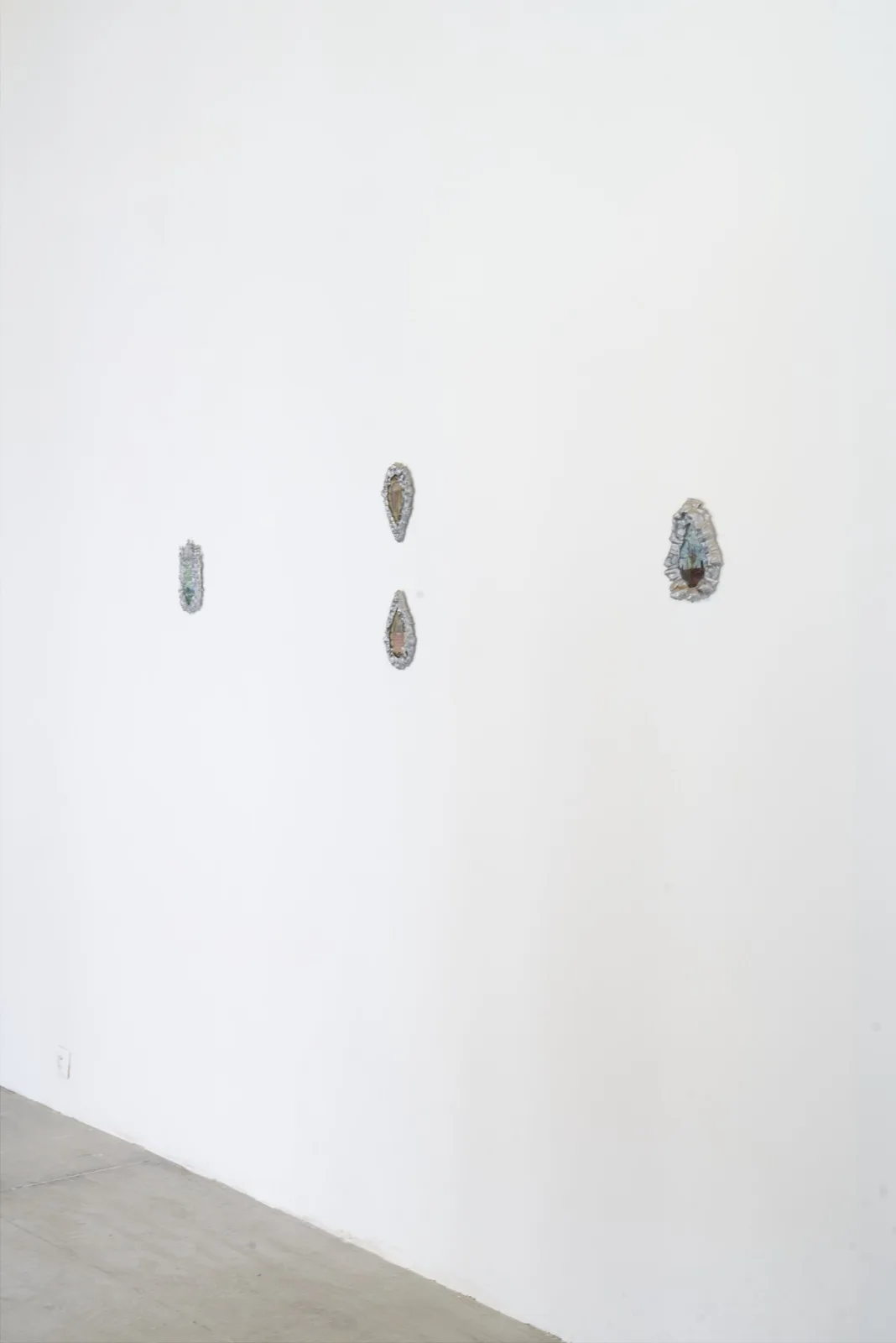
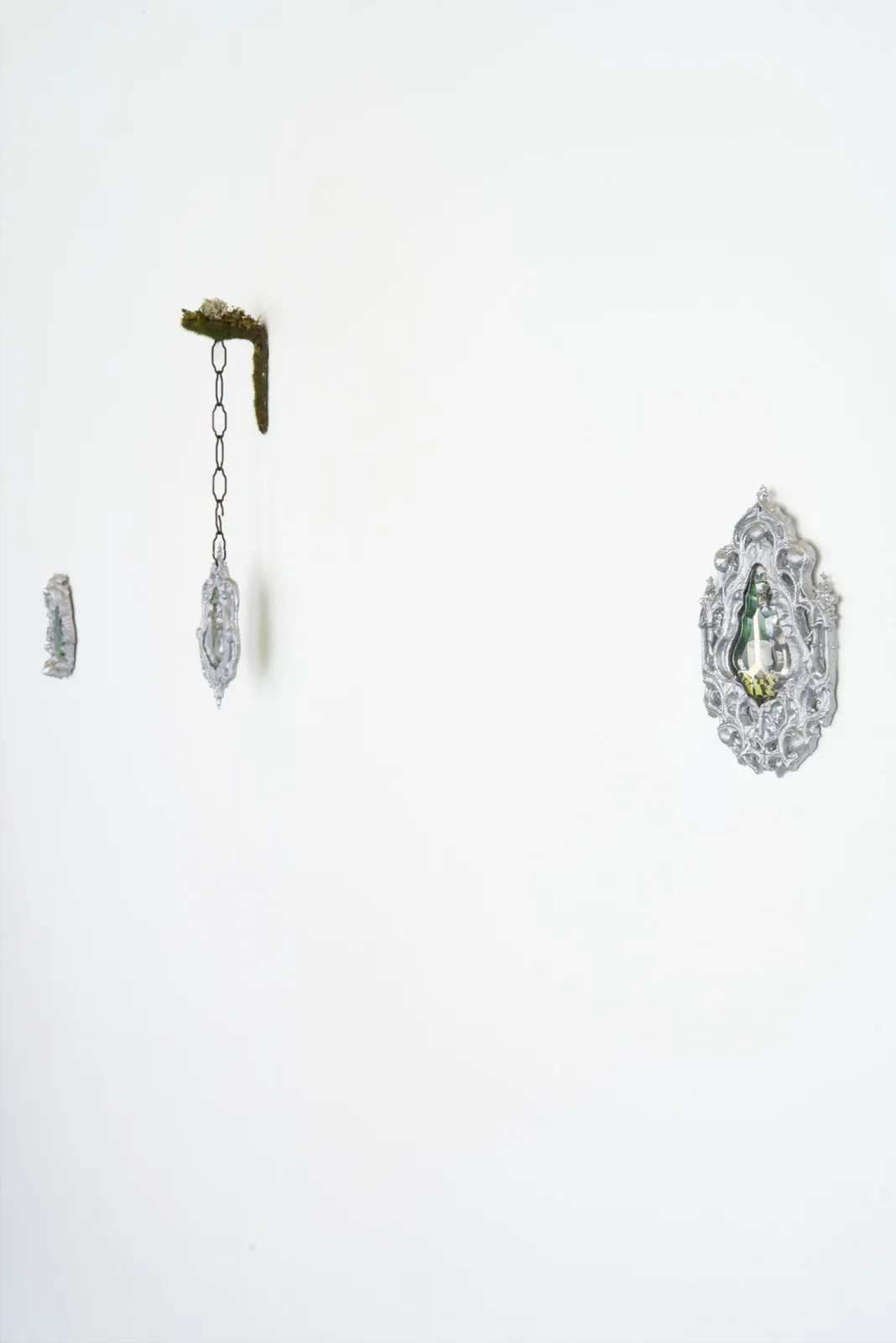
miniature paintings placed across the walls of Larval Tears operate according to this logic.
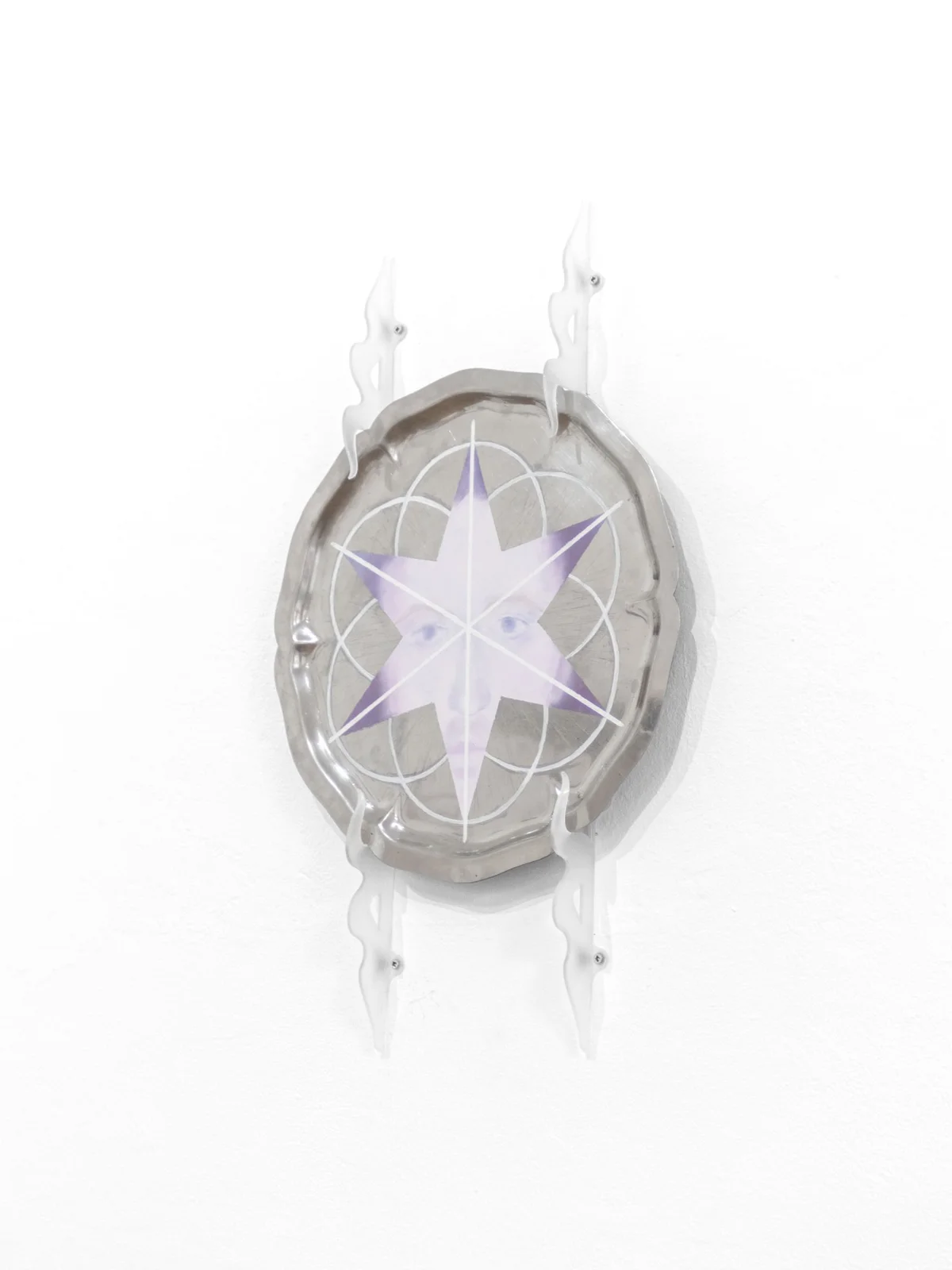
Enclosed in tear-shaped silver frames, caves sit beside microorganisms, plants and
landscapes. A stove, or a pot suspended over a fire, appears among them too – a quiet
reference to the French crémaillère, the iron hook once used to hang a cooking pot over the
hearth, and whose installation came to mark the moment a house was ready to be inhabited.
This merging of the domestic with the foraged recalls Ursula K. Le Guin’s The Carrier Bag
Theory of Fiction, in which she proposes the container, rather than the weapon, as another
possible origin for both human technology and storytelling: something made to gather, carry
and hold what has been found. Against the heroic narrative of conquest, singular action and
linear progress, Le Guin imagines a narrative form built through accumulation, relation and
return. De Kezel brings a similarly feminine mode of attention to the aesthetics of video
games and fantasy fiction. Rather than following the hero’s quest towards its conclusion, she
gravitates towards what surrounds it – wandering through landscapes, lingering at their
edges, gathering fragments and traces to carry home and fold into her own practice.
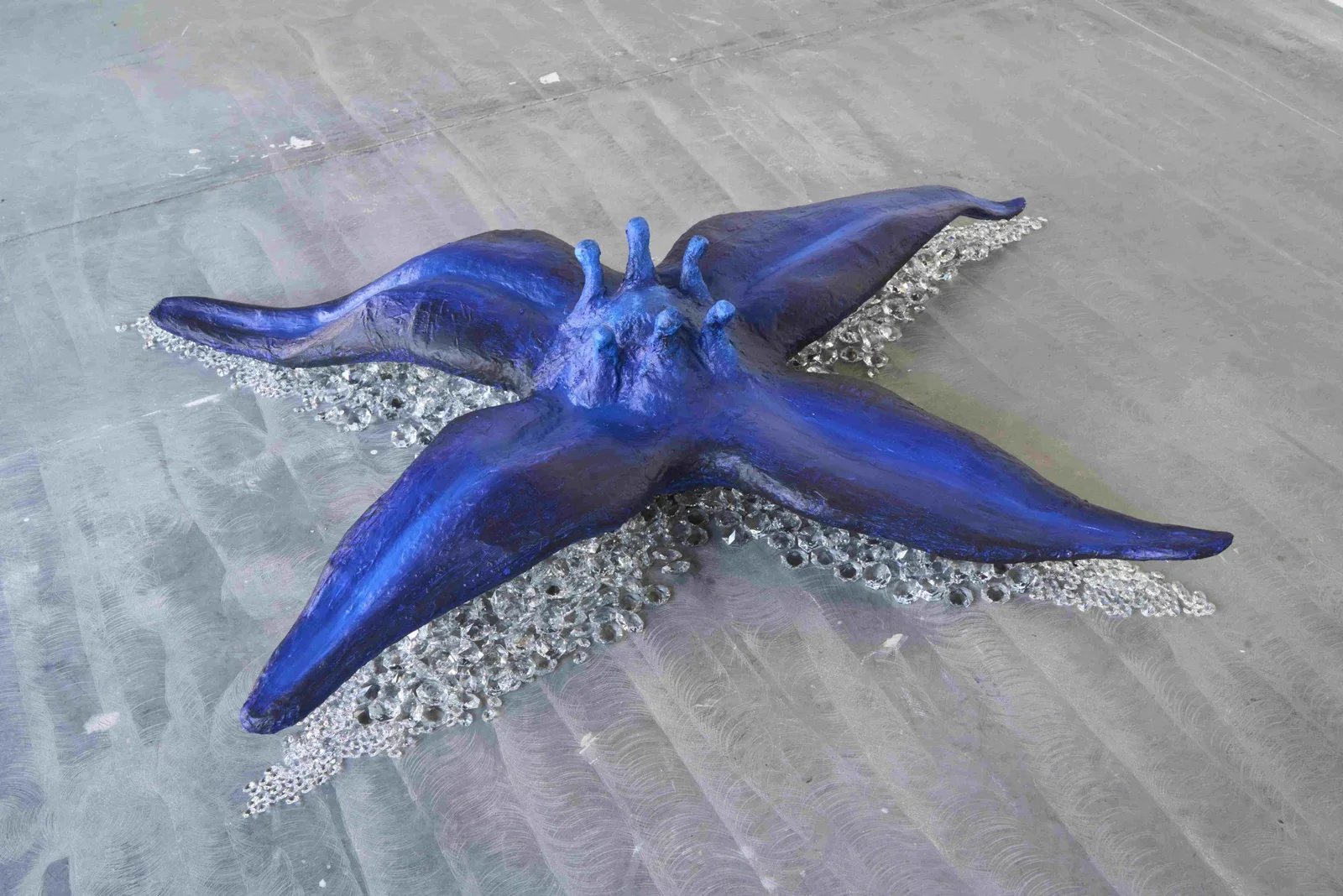
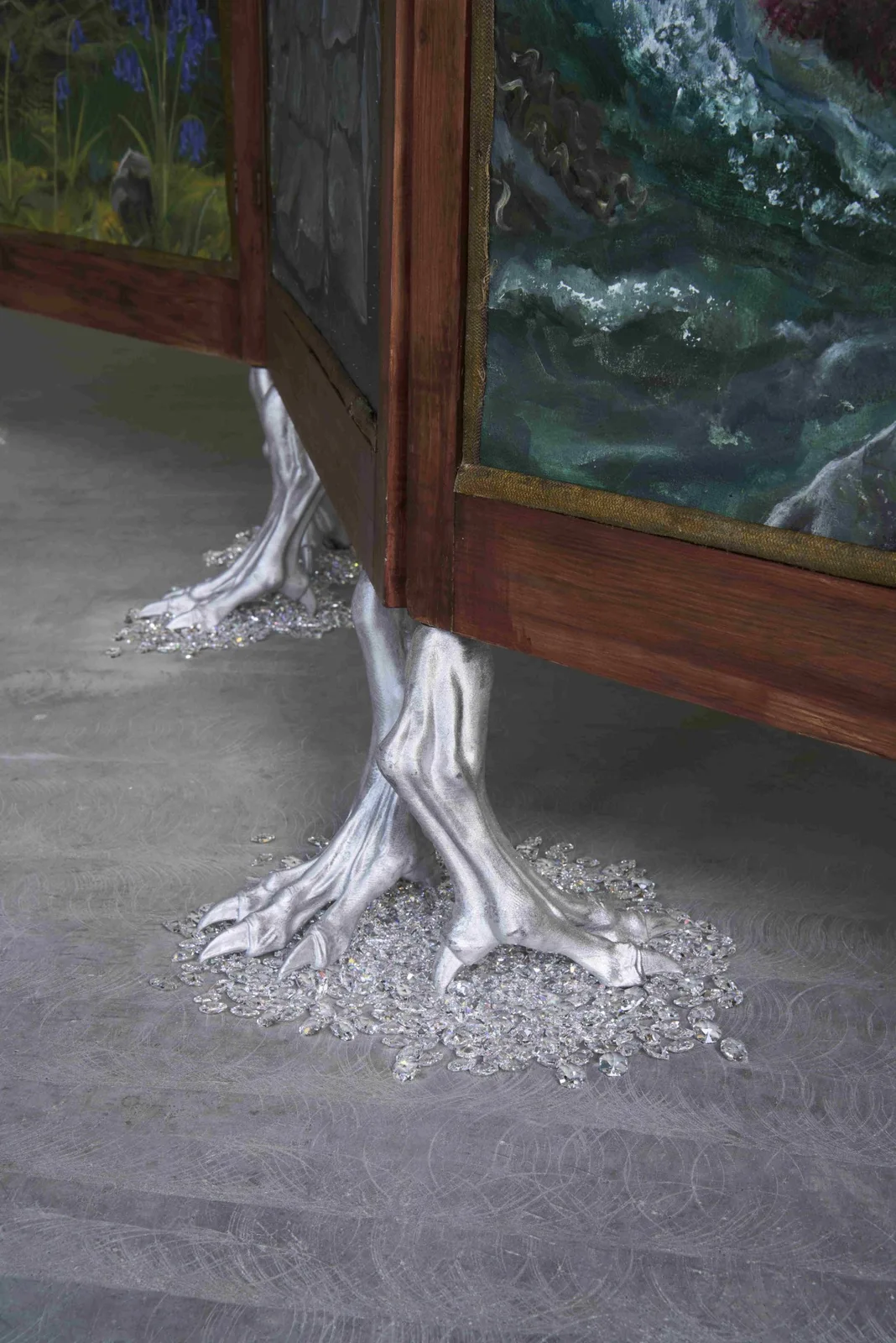
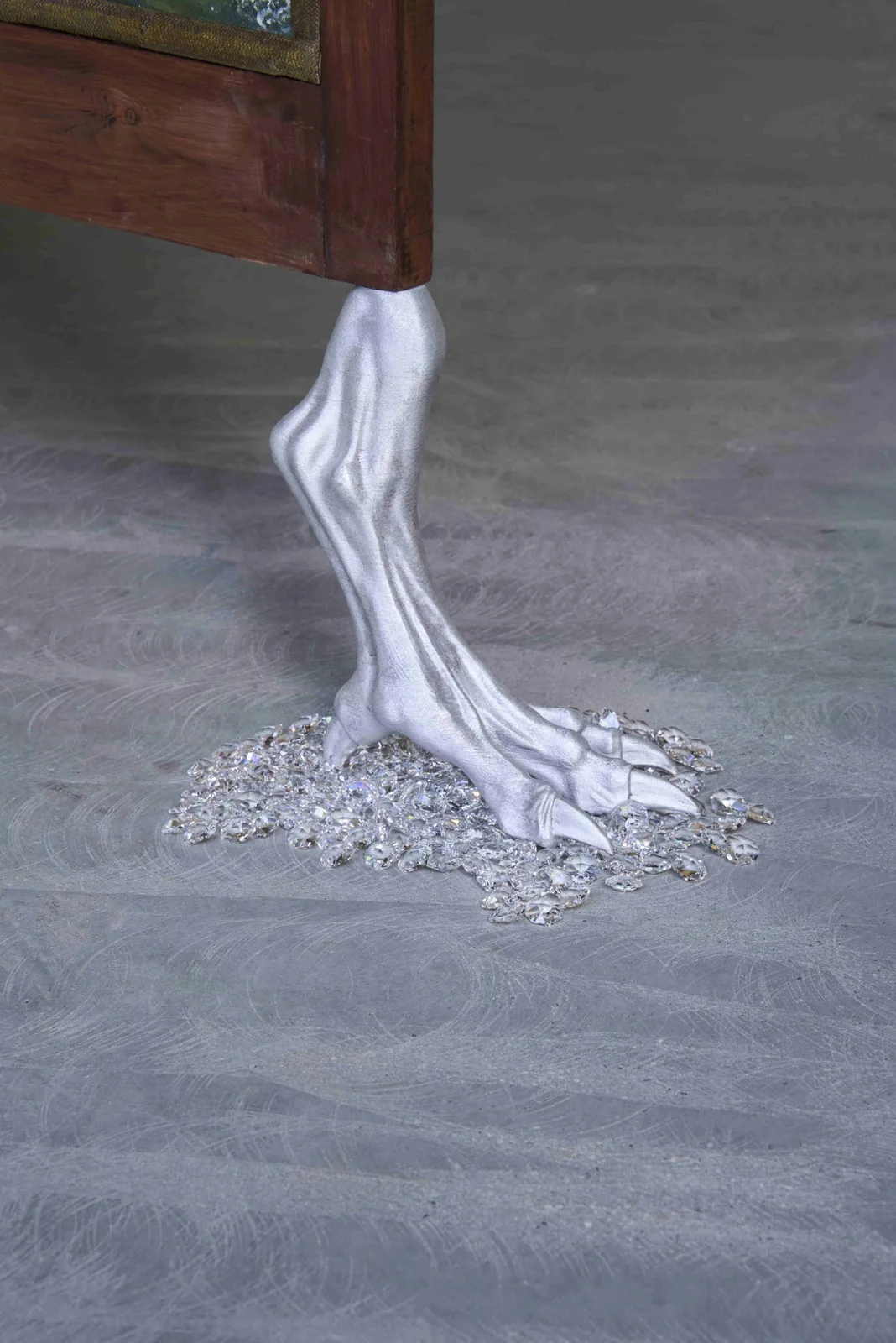
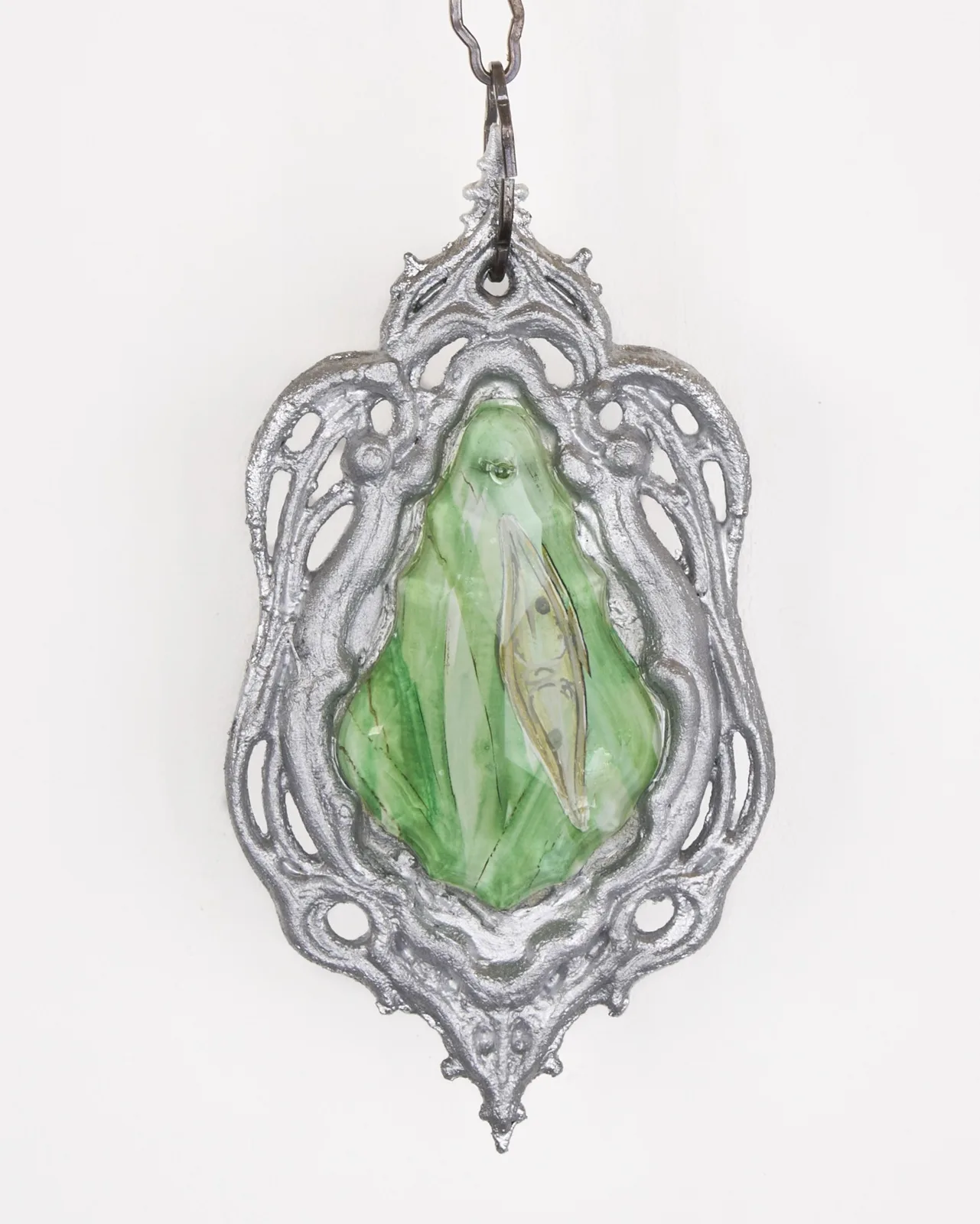
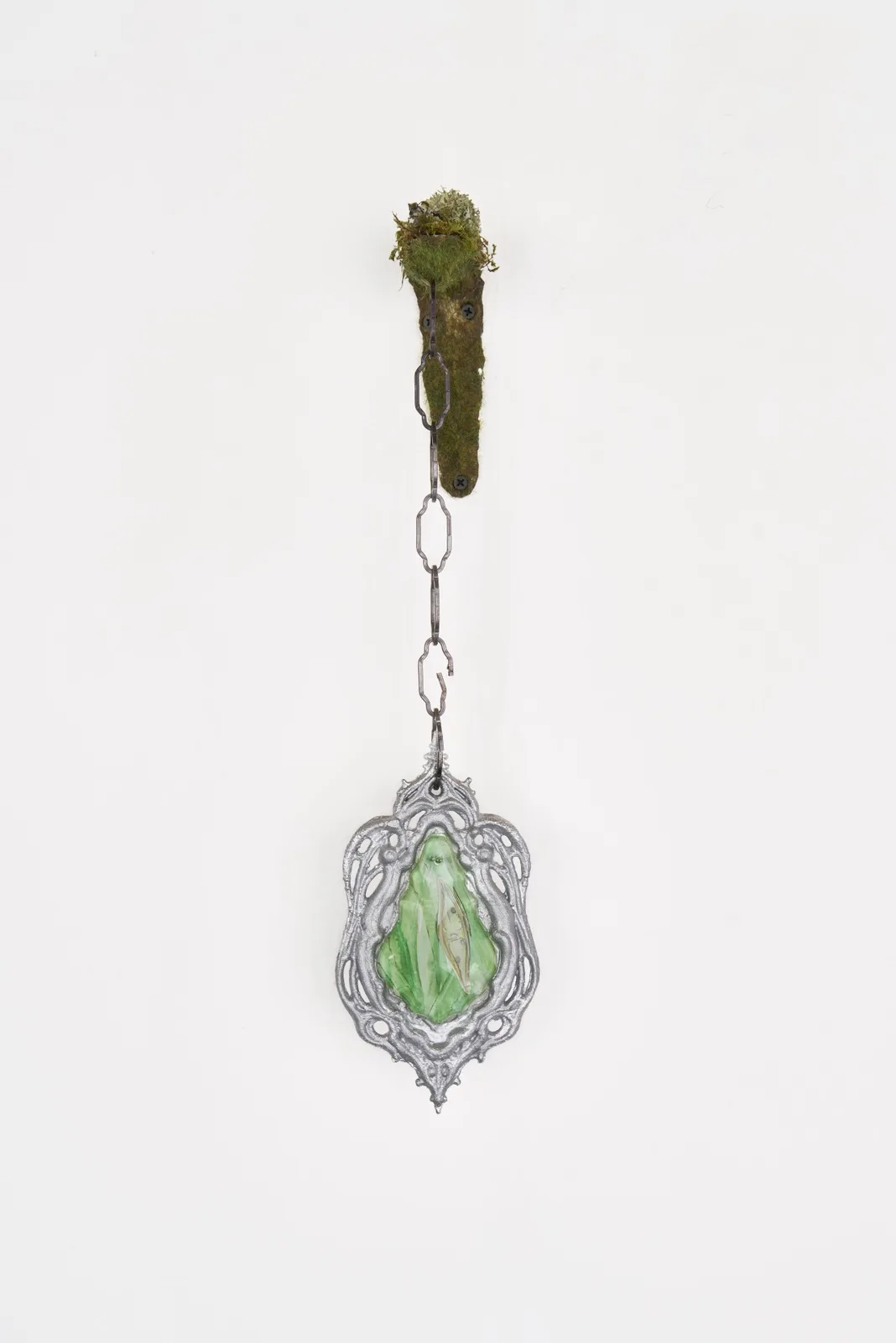
The miniature paintings are covered with chandelier crystals. Elsewhere in the exhibition,
crystals reappear, catching and refracting the light. A crystal does not simply show what is in
front of it: it splits a single view into several, bending light and revealing colours otherwise
hidden. In this sense, it becomes an apt figure for De Kezel’s movement between realities –
the collected world passes through a prism and emerges altered on the other side.
De Kezel traces her fascination with video game fantasy worlds back to watching her sister
play Forestia in 2005, a point-and-click game in which a forest could be explored through
small quests, encounters and acts of collection: endless picking without putting a biotope at
risk, endless walking and looking without disturbing the landscape. What interests her in
games is not only their imagery or narrative, but the particular way in which a world becomes
available through possible actions. Nature can be looked at, but also entered, traversed,
catalogued and collected.
Her relationship to these worlds nevertheless remains ambivalent. Uninterested in much of
the stress and violence demanded by gameplay, De Kezel describes herself instead as a kind
of professional spectator. She is drawn to recordings in which players wander for hours
through fictional landscapes, sometimes using modifications that prevent hostile entities
from attacking. Removed from the imperative to fight or progress, worlds such as Dark Souls,
Kingdom Come: Deliverance or Elden Ring become strange landscape films: places to walk
through, observe and gather from with the eyes.
Larval Tears takes its title from an object found in Elden Ring. Consuming a Larval Tear
allows a player to undergo “rebirth,” a redistribution of a character’s attributes, allowing an
already established identity to be reconstructed. De Kezel borrows this gesture for her own
practice: not to discard the archive she has accumulated, but to subject the collecting
impulse itself to another metamorphosis – to learn how to read what has been gathered
differently.
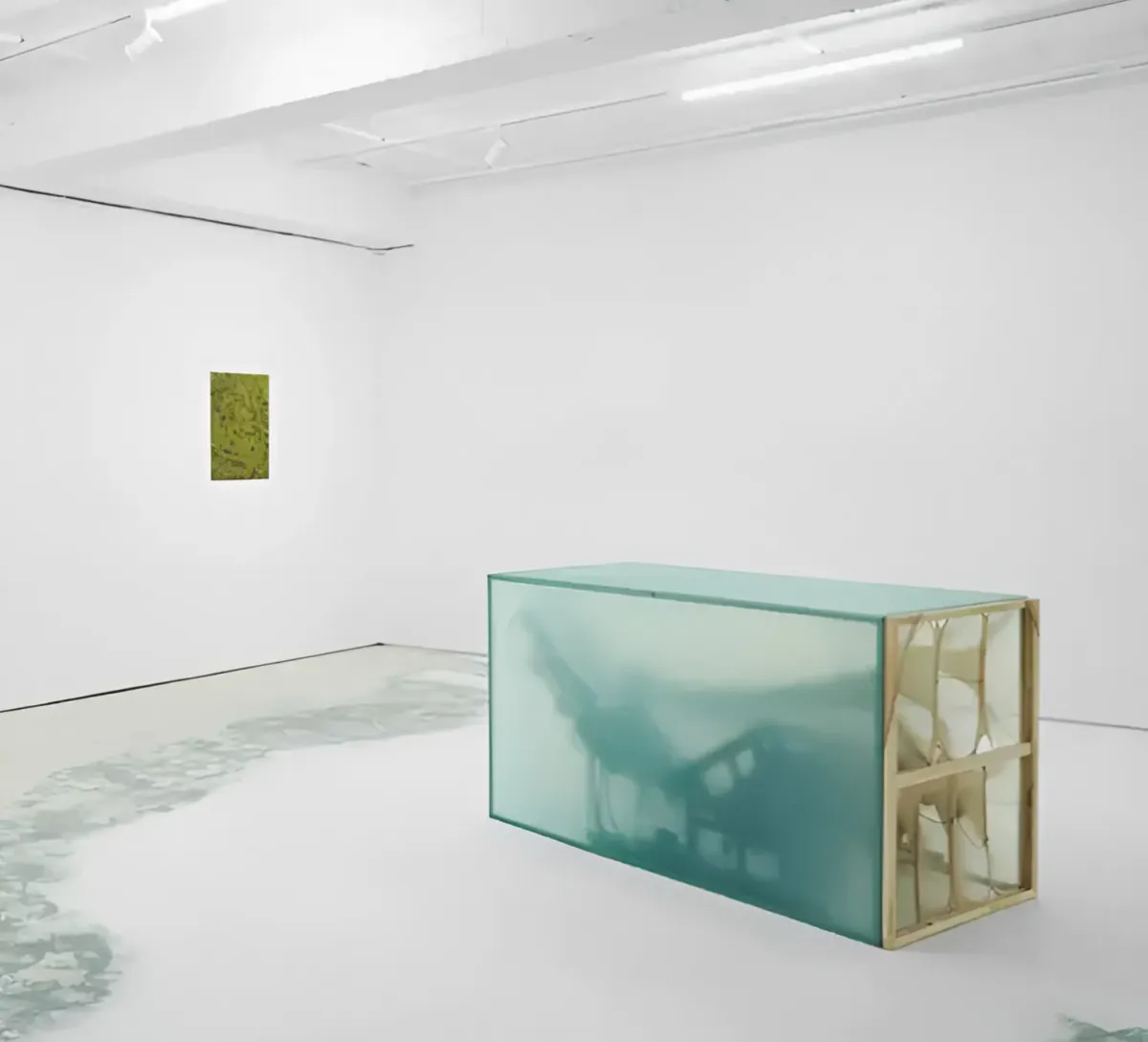
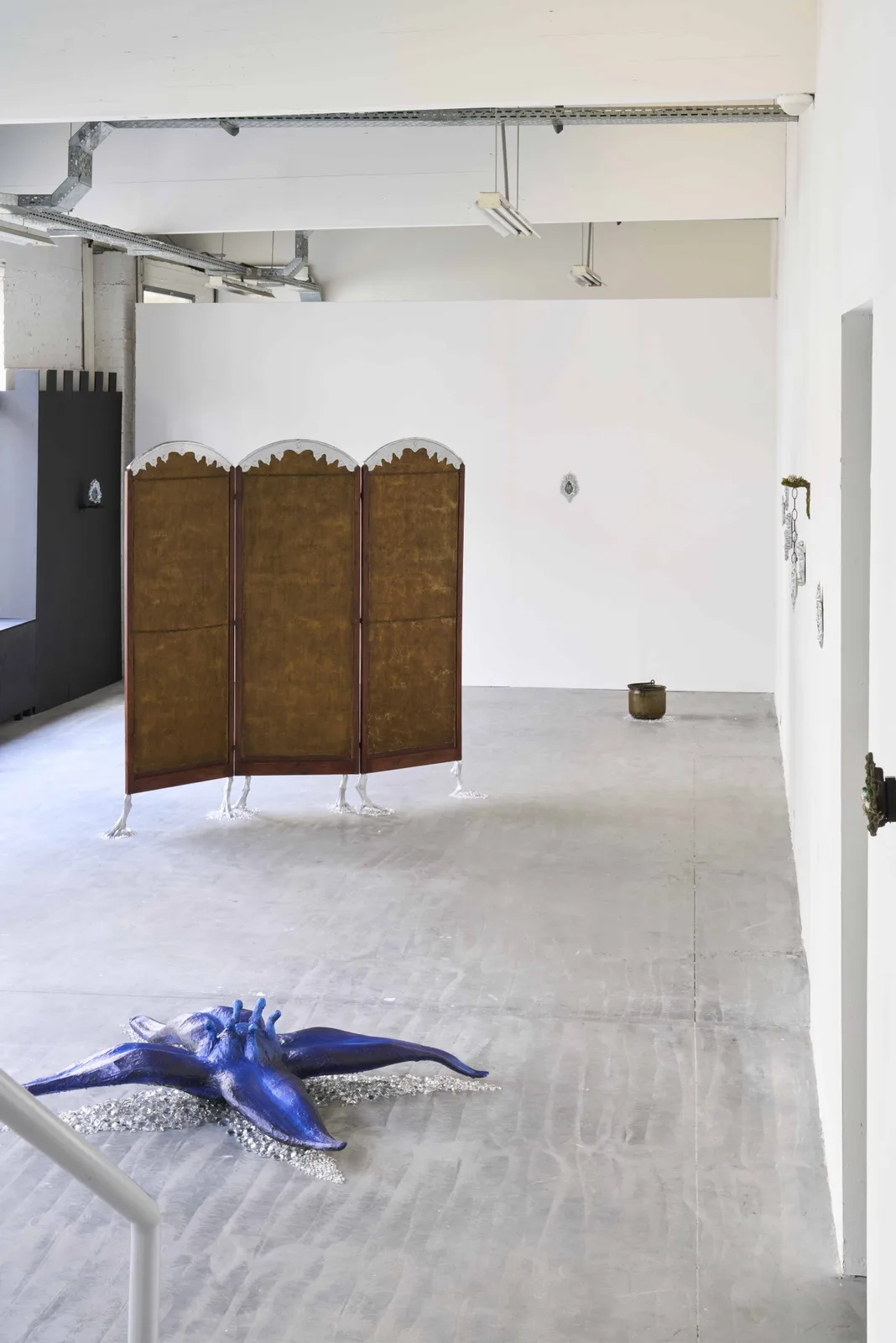
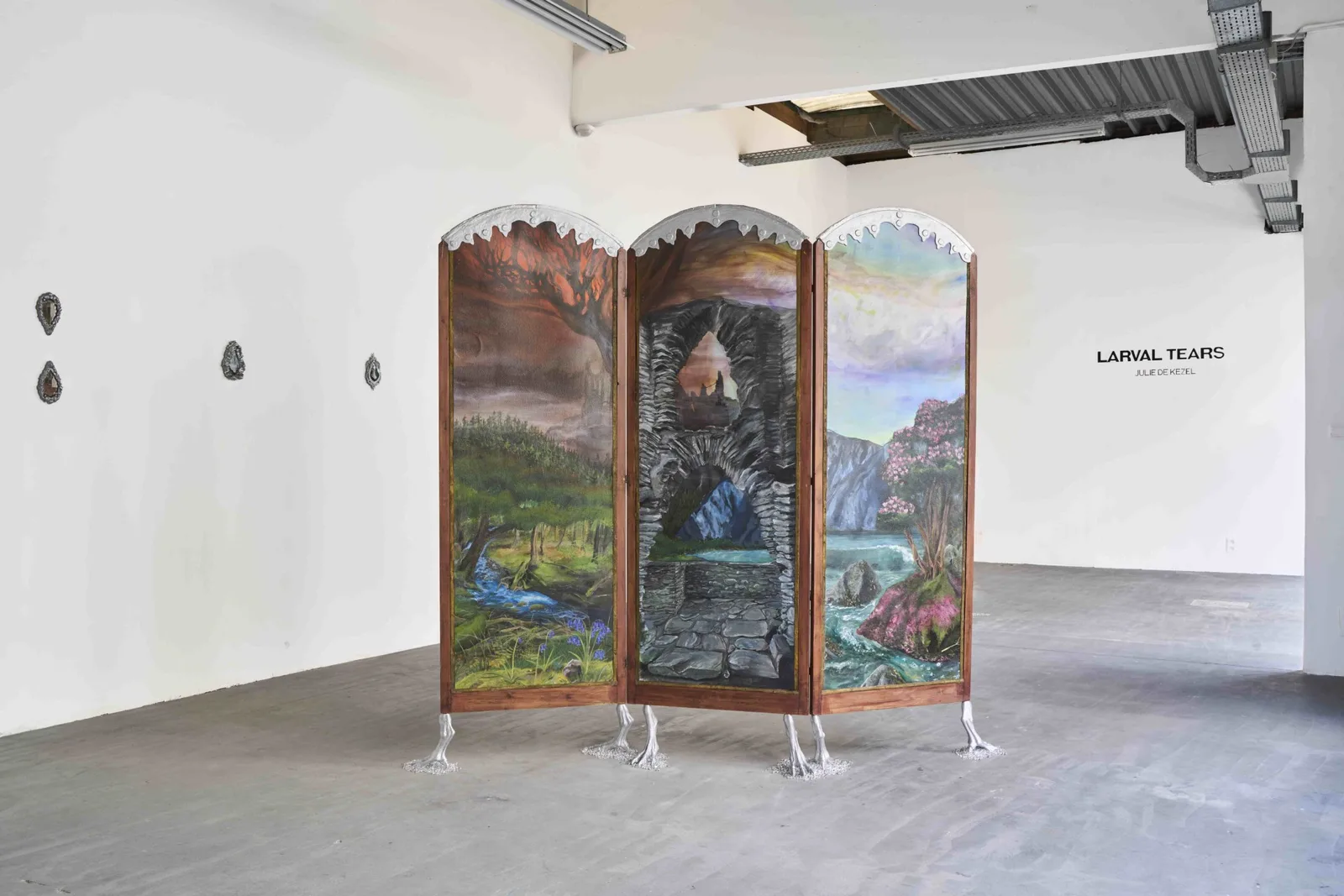
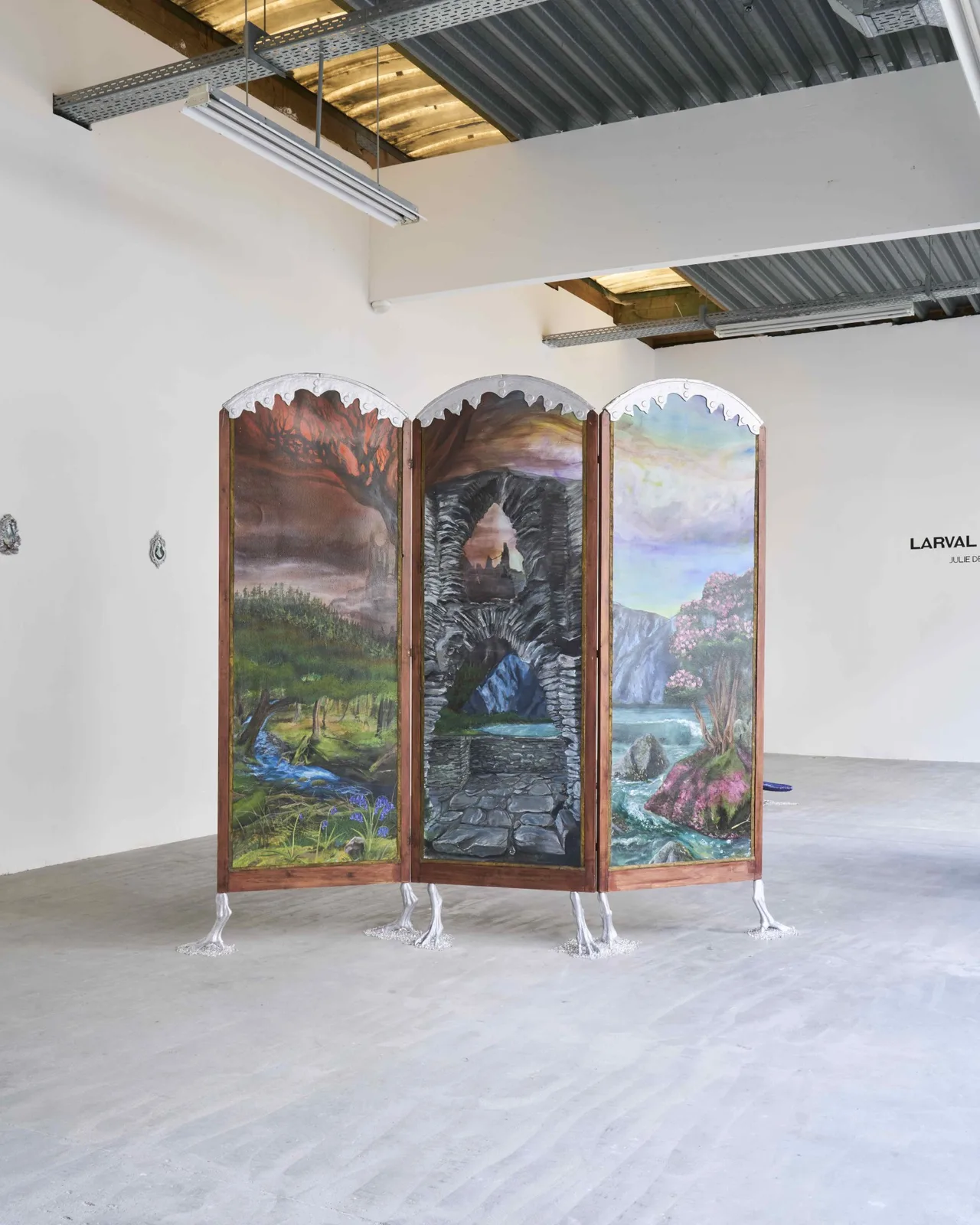
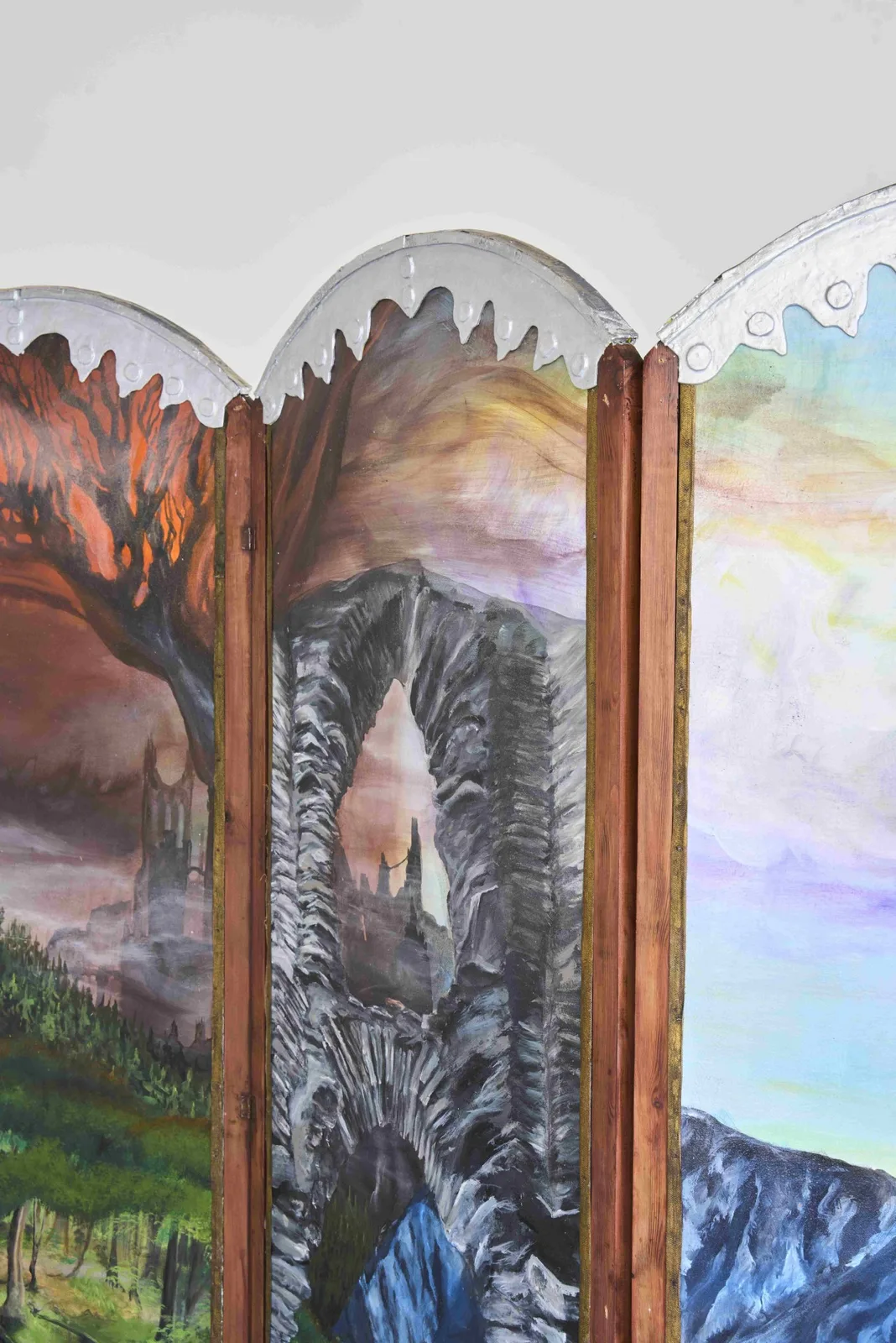
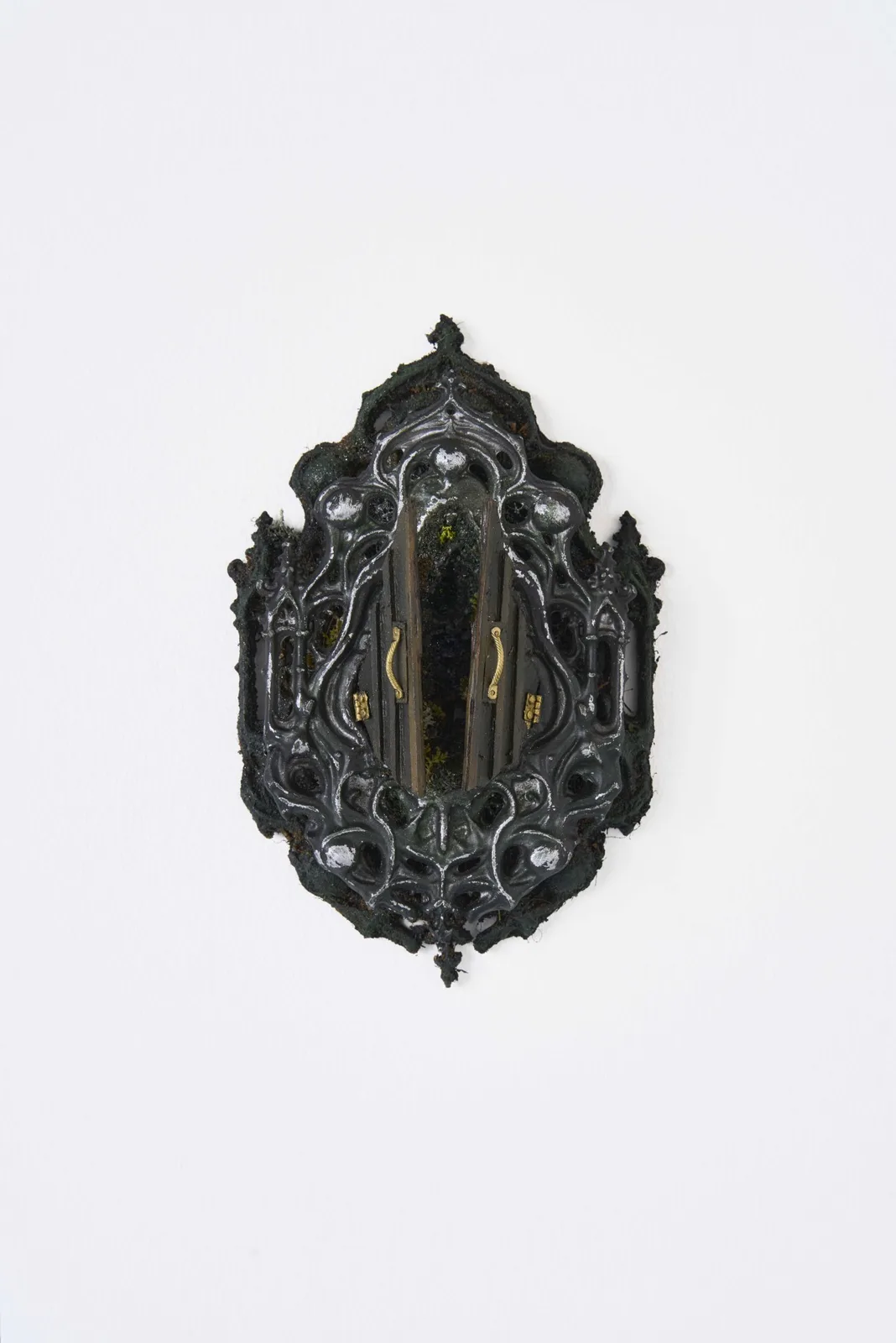
At the centre of the exhibition, a folding screen, or paravent, holds larger landscape
paintings. On its central panel, a dark, cave-like opening echoes the contours of the small
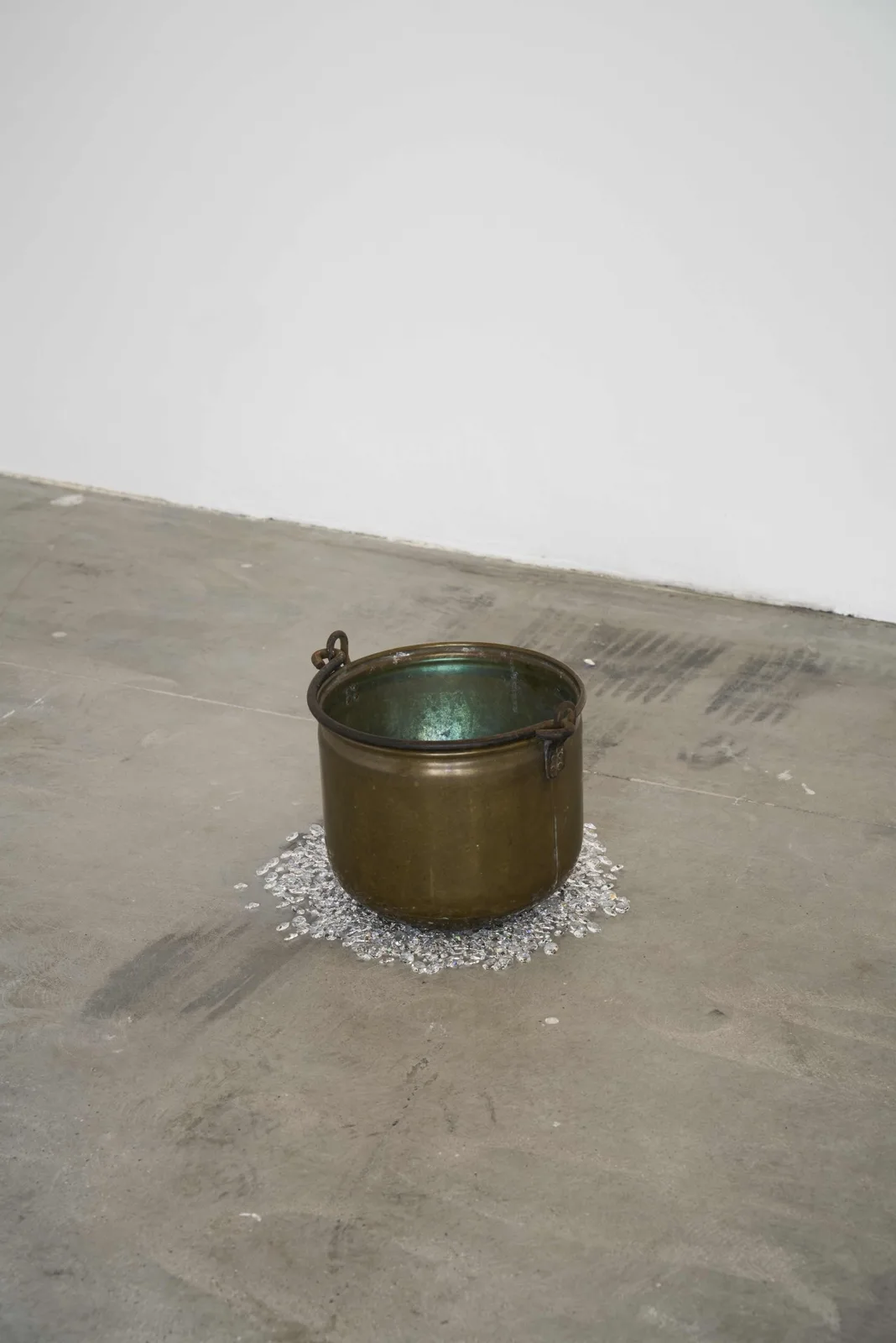
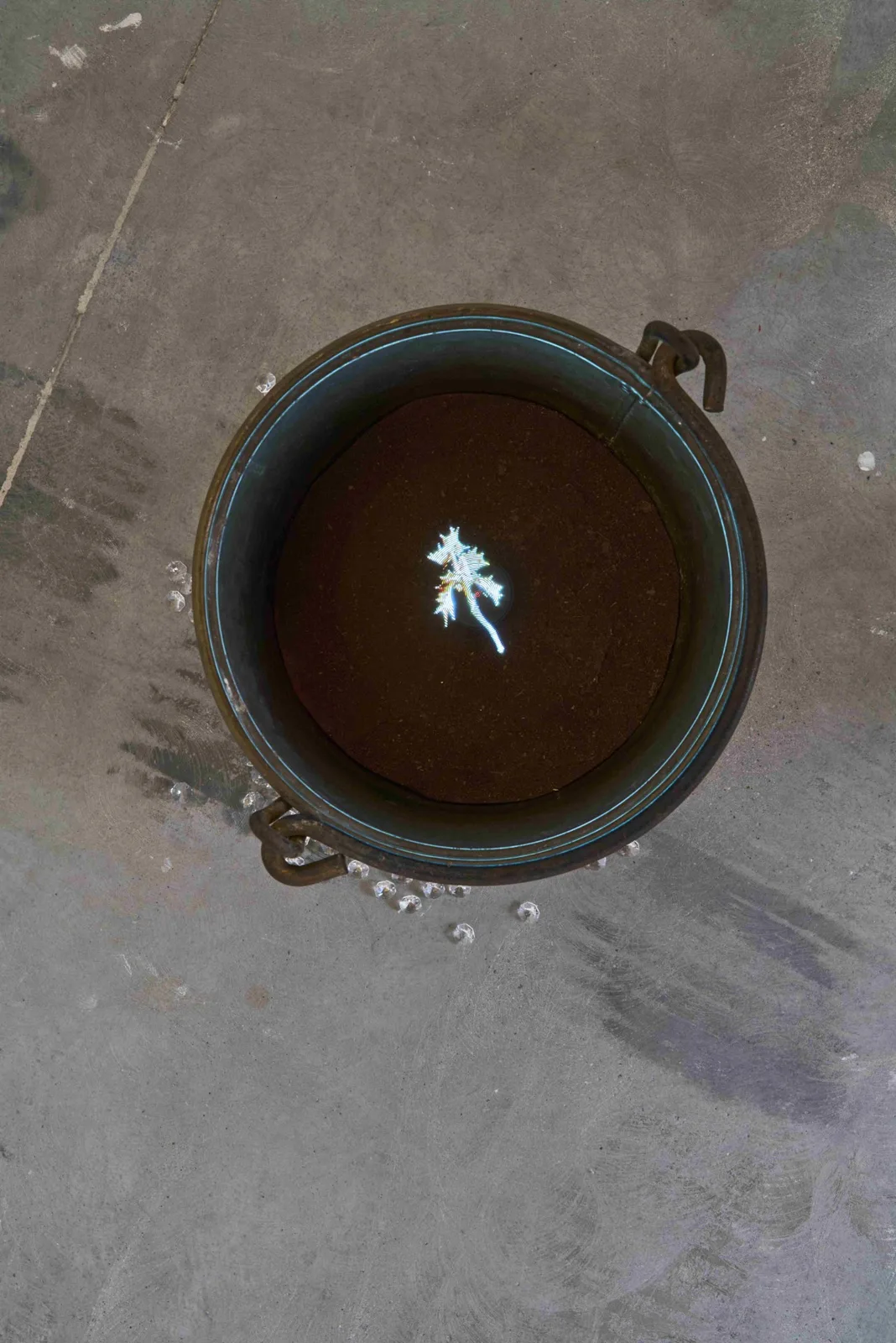
tear-shaped works surrounding it. Nearby, a bucket gathers another kind of holographic
objects, fragments and trinkets of imagination collected from the world De Kezel has been
constructing. Across Larval Tears, forms reiterate and return at shifting scales or
materialities, as if remembered imperfectly. A crystal refracts a landscape, a tear becomes a
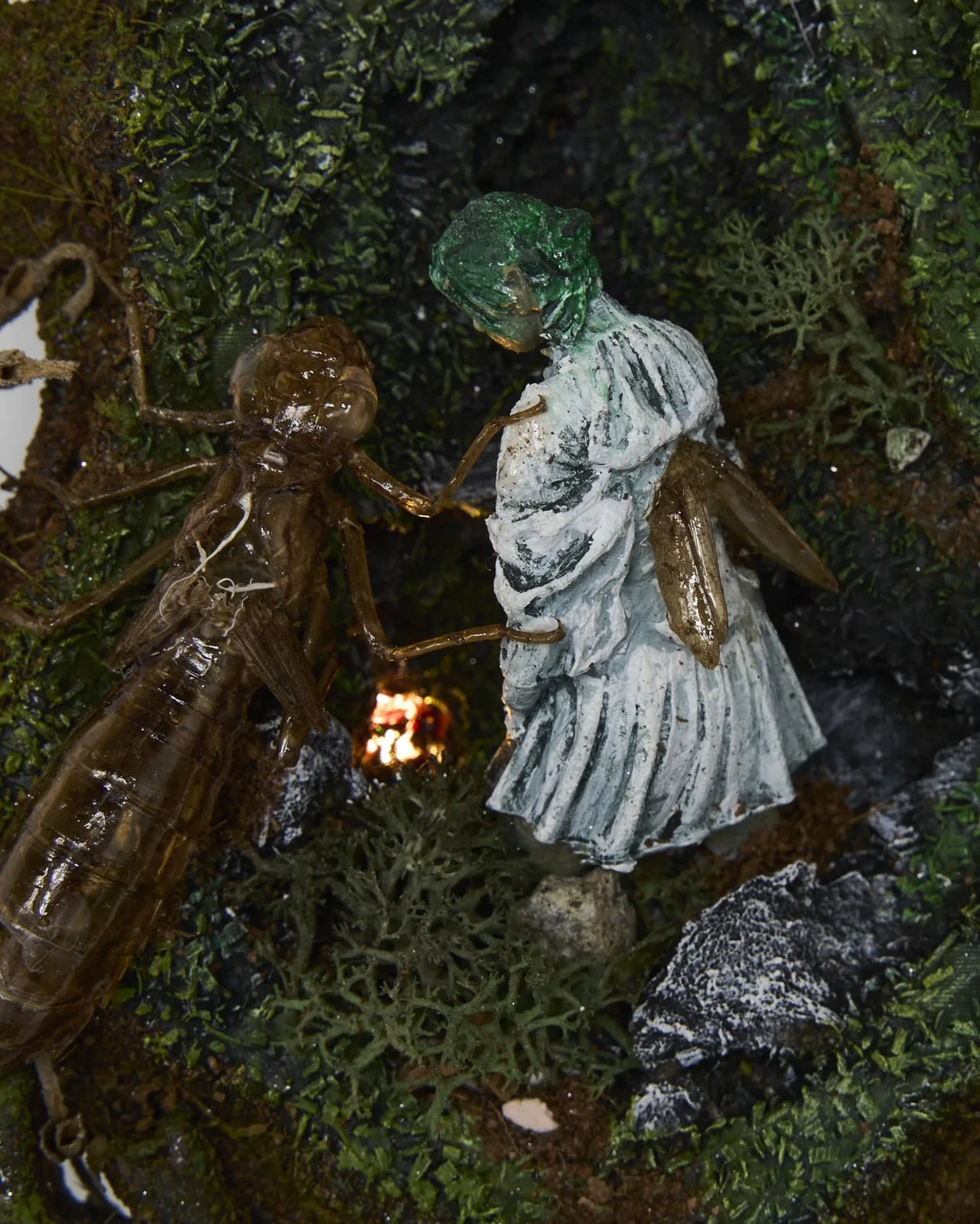
cave, and an insect-sized girl reaches towards a glimmer hidden in the moss.
— Text: Anna Laganovska, Julie De Kezel
Artists in this exhibition
More at Veranda
More in Brussels
Related topics

.webp)